Start with the day you actually have
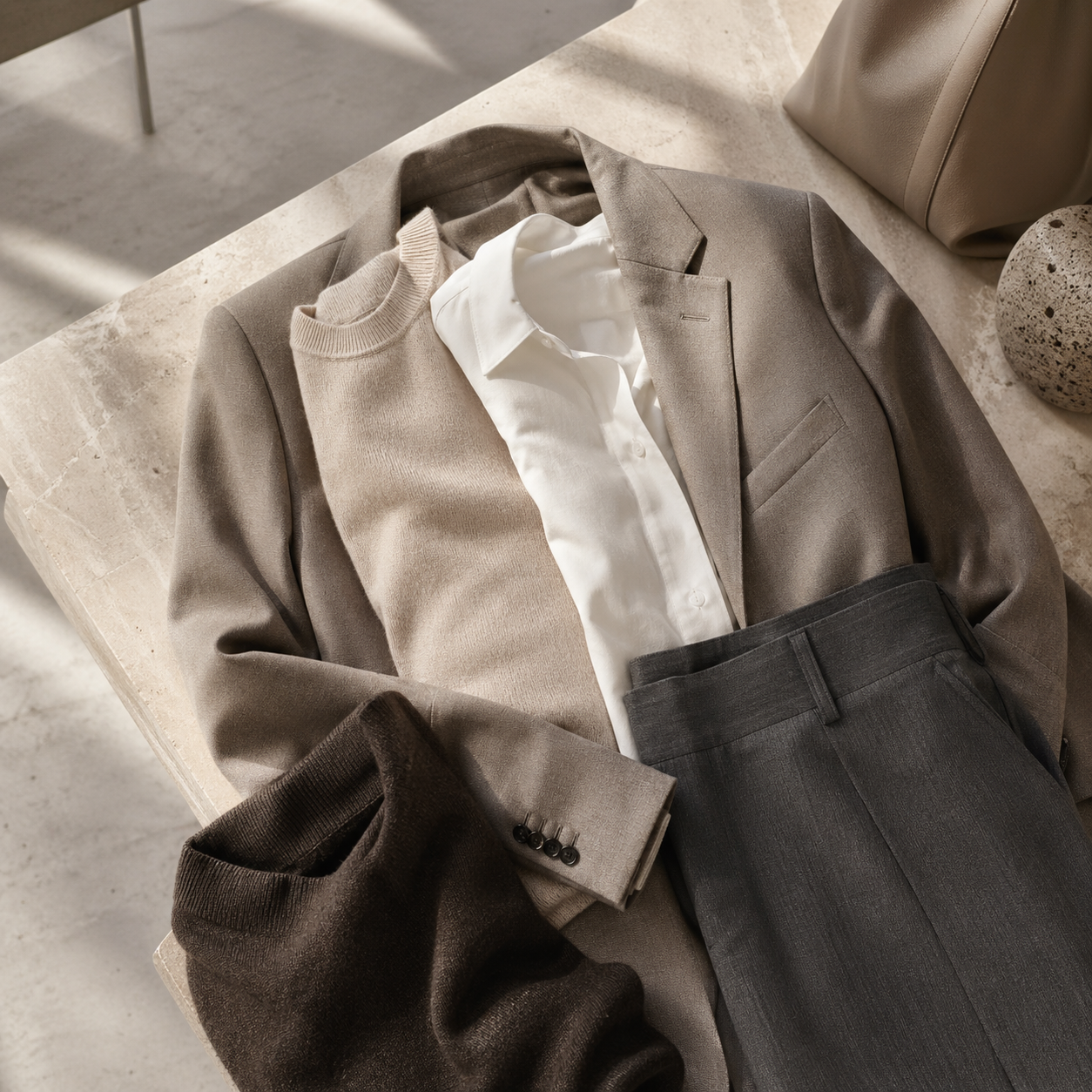
Hybrid dressing becomes easier when you stop planning for a generic office and start dressing for the sequence of temperatures in your day. In London, Toronto, Copenhagen, Melbourne, or Dublin, a workday can move from damp morning air to dry indoor heating, then back to wind or rain by early evening. The useful outfit is the one that can lose a layer without collapsing. A poplin shirt under a merino knit under a soft blazer gives three levels of formality and warmth, but only if each layer is slim enough to sit cleanly and relaxed enough to move.
The common mistake is building bulk at the wrong points. A thick jumper under a narrow blazer will pull at the upper arm and create a tired, overstuffed look by 10 a.m. Instead, choose a fine or mid-gauge merino knit with a smooth hand, especially if it will sit under tailoring. Merino earns its place because it is warm for its weight, usually resists odour better than cotton, and recovers well between wears when aired properly. It is not indestructible, though: friction from bags, rough coat linings, and desk edges can encourage pilling, so a little maintenance matters.
For hybrid workdays, repeat wear is not a style failure; it is the point. A navy, charcoal, oat, or deep brown knit can be worn twice in a week if it has been rested and aired overnight. A crisp poplin shirt changes the read of the same knit, while a different trouser shape can shift the outfit from formal to quietly relaxed. This is where office layering becomes less about owning more and more about understanding the order and purpose of each piece.
The soft blazer should still have discipline
A soft blazer is not simply an unstructured jacket. The best versions keep enough shape through the shoulder and lapel to frame the face, while allowing the body to sit naturally rather than pinning it into place. For workwear, look for cloth that has some density: wool twill, wool blends, textured cotton, or a refined jersey with recovery. Very flimsy fabrics can photograph poorly on video calls and may cling to knitwear underneath. Too much stretch, meanwhile, can make a blazer read more like a cardigan than tailoring.
Fit is the real difference between ease and stiffness. The shoulder seam should land close to the edge of the shoulder without drooping far down the arm, and the sleeve should allow a shirt cuff or fine knit edge to show if that is your preference. When buttoned, the blazer should skim rather than pull across the chest or hips. If you commute with a laptop bag, pay attention to the armhole: a high, clean armhole often moves better than a low, wide one, provided it is not tight. This is the sort of detail you notice only after a few full workdays, not in a changing room mirror.
A soft blazer works hardest when it can be worn open without looking abandoned. Try it over a poplin shirt with the top button undone, or over a fine merino crew neck when the day is more desk-based. For colder mornings in Canada or northern Europe, it can sit under a roomy wool coat; for Australian shoulder seasons, it may be the outer layer until the afternoon warms. Avoid forcing it into every outfit. On very wet days, a proper raincoat over knitwear may be more practical and kinder to the blazer鈥檚 fabric.
Poplin gives the outfit its edge
Poplin shirts are often treated as basics, but in office layering they do a great deal of visual work. Their smooth, tightly woven surface brings brightness and a clean line beneath softer pieces. A white or pale blue poplin shirt under a merino knit makes the knit look more intentional; the collar, cuff, and hem create definition without adding much warmth. For hybrid work, where you may remove your blazer at home or in a hot meeting room, the shirt prevents the outfit from feeling too casual when the outer layer comes off.
The caveat is care. Poplin creases, especially in cotton-rich versions, and that is part of its character, but there is a difference between lived-in and neglected. If you do not iron regularly, choose a slightly heavier poplin or a cotton blend that holds a press for longer. Hang shirts straight after washing, smooth the placket and collar while damp, and avoid overloading the machine, which sets in hard wrinkles. In humid cities, a shirt may need a quick steam before wear; in dry heated homes, it may look crisp with minimal effort.
Proportion matters as much as neatness. A shirt worn under a fine knit should not bunch around the waist or create a ridge at the hip. If you prefer leaving the hem visible beneath a jumper, keep the difference deliberate: a curved hem peeking out by a few centimetres can look relaxed, while a long, untucked tail under a blazer may feel accidental. Wider cuffs can be attractive, but they should fit under the blazer sleeve without folding back on themselves. Comfort is practical, not indulgent; if the collar irritates or the sleeve twists, you will stop reaching for the shirt.
Merino is the quiet regulator
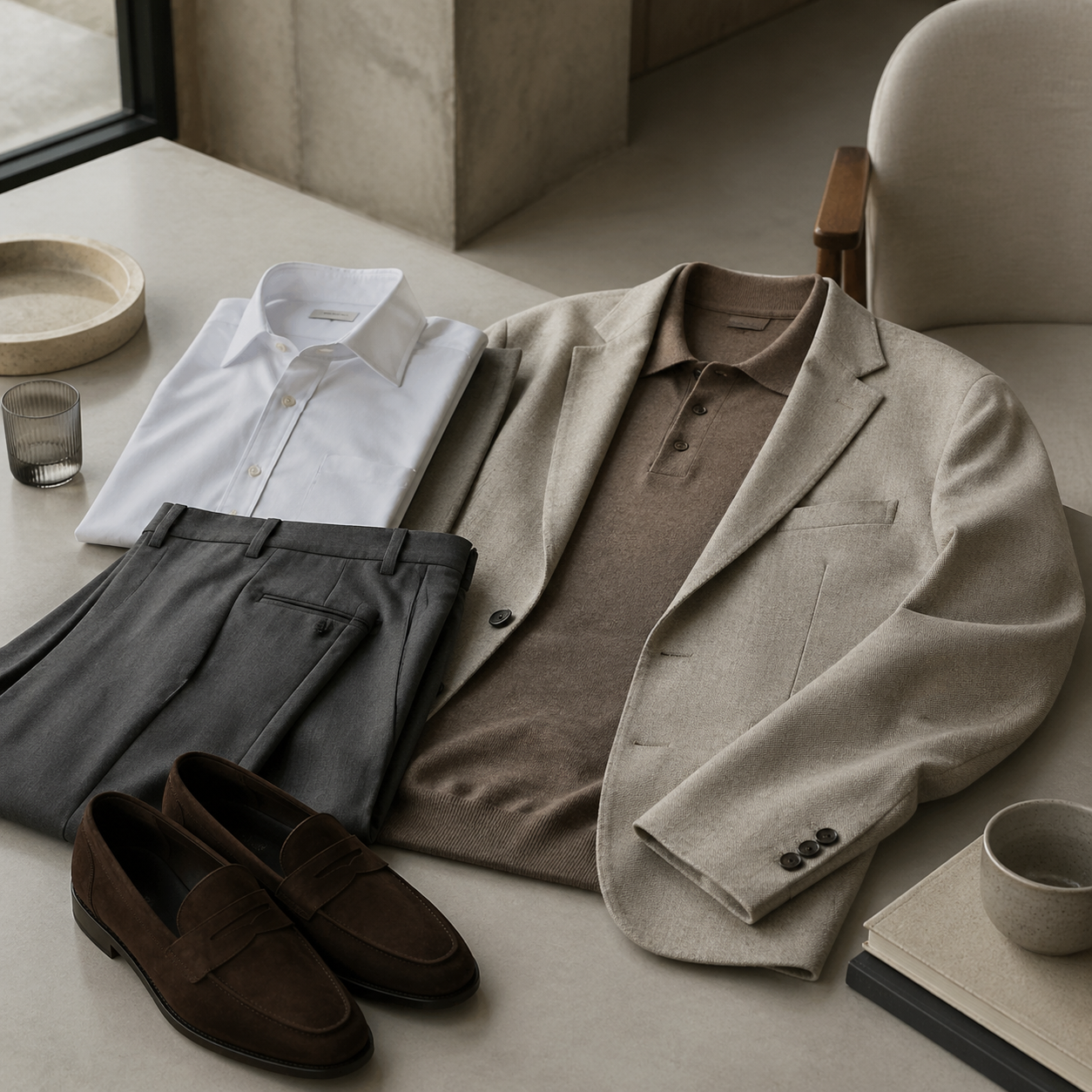
Merino knits are especially useful because they mediate between the crispness of poplin and the structure of tailoring. A fine merino crew neck offers the cleanest line under a blazer, while a V-neck can show more shirt and feel a touch more formal. A polo-collar knit can replace a shirt entirely on less formal office days, though it should still look polished enough for an unexpected meeting. Ribbed knits add texture, but thick ribs can catch under a blazer and create bulk; save them for days when the knit is the top layer.
Temperature control is where merino justifies its reputation. It is comfortable in a cool office, less clammy than many synthetic knits, and useful during stop-start commuting. That said, not all merino is equal. Very fine gauges can be delicate and may reveal the outline of shirt buttons underneath. Heavier gauges are warmer but less cooperative under tailoring. For office layering, a knit that feels smooth, not spongy, is usually the safest choice. Check the neckline after washing too; a stretched neck quickly makes an otherwise sound outfit look weary.
Care should be calm and consistent. Merino does not need washing after every wear unless it is marked or has absorbed strong odours. Air it flat or on a broad hanger, give it a rest day, and use a fabric comb or sweater stone gently when pills appear. Wash according to the care label, often on a wool cycle or by hand in cool water, then dry flat away from direct heat. Tumble drying is rarely kind to fine wool. These habits are not precious; they are what allow one good knit to serve through a season of repeated workdays.
Tailored trousers keep ease in check
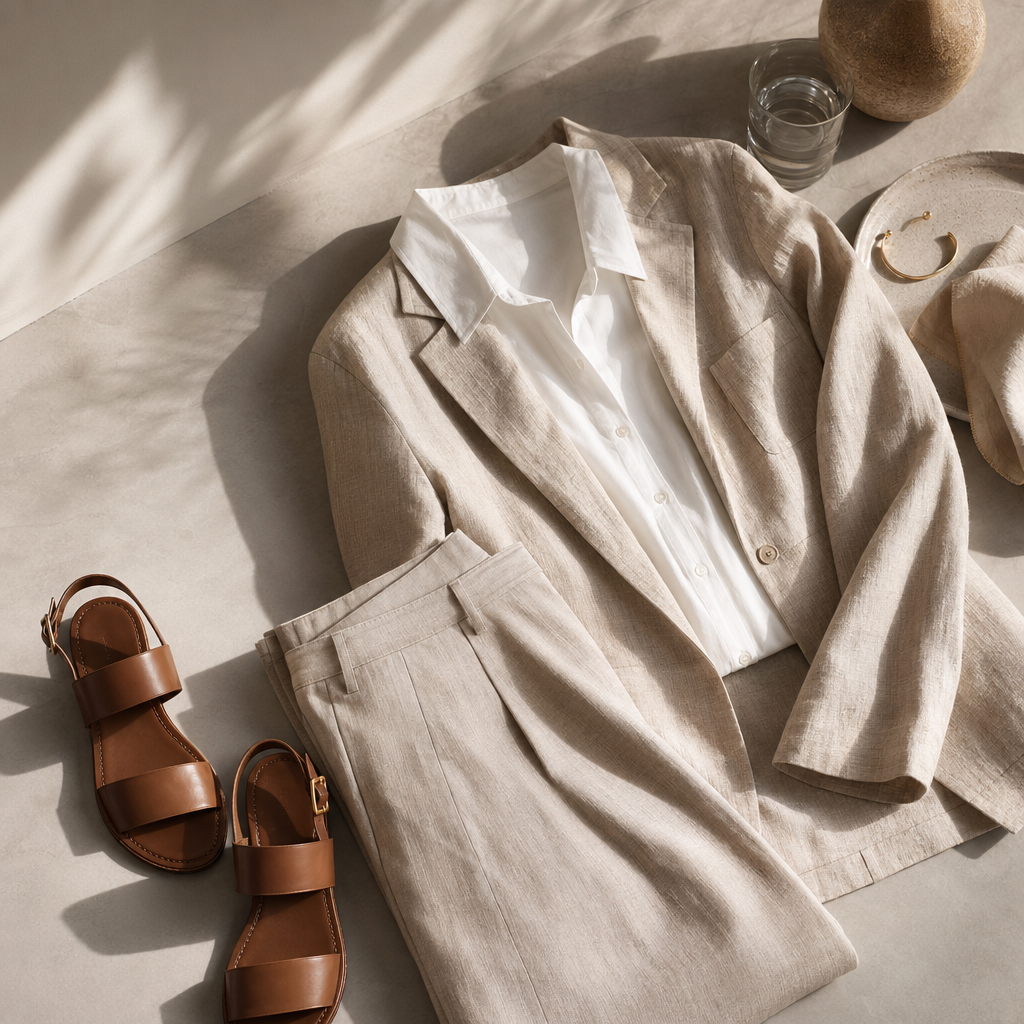
Tailored trousers are the anchor that stops layered workwear from drifting into weekend territory. They do not need to be severe. In fact, for hybrid routines, the most useful pairs often have a little movement: a straight leg, a soft pleat, a clean waistband with some internal give, or a fabric with modest stretch that still looks woven rather than sporty. Wool blends, tropical wool, sturdy cotton twill, and seasonless crepe can all work, depending on climate and dress code. The key is that the trousers hold a line when you sit, stand, commute, and sit again.
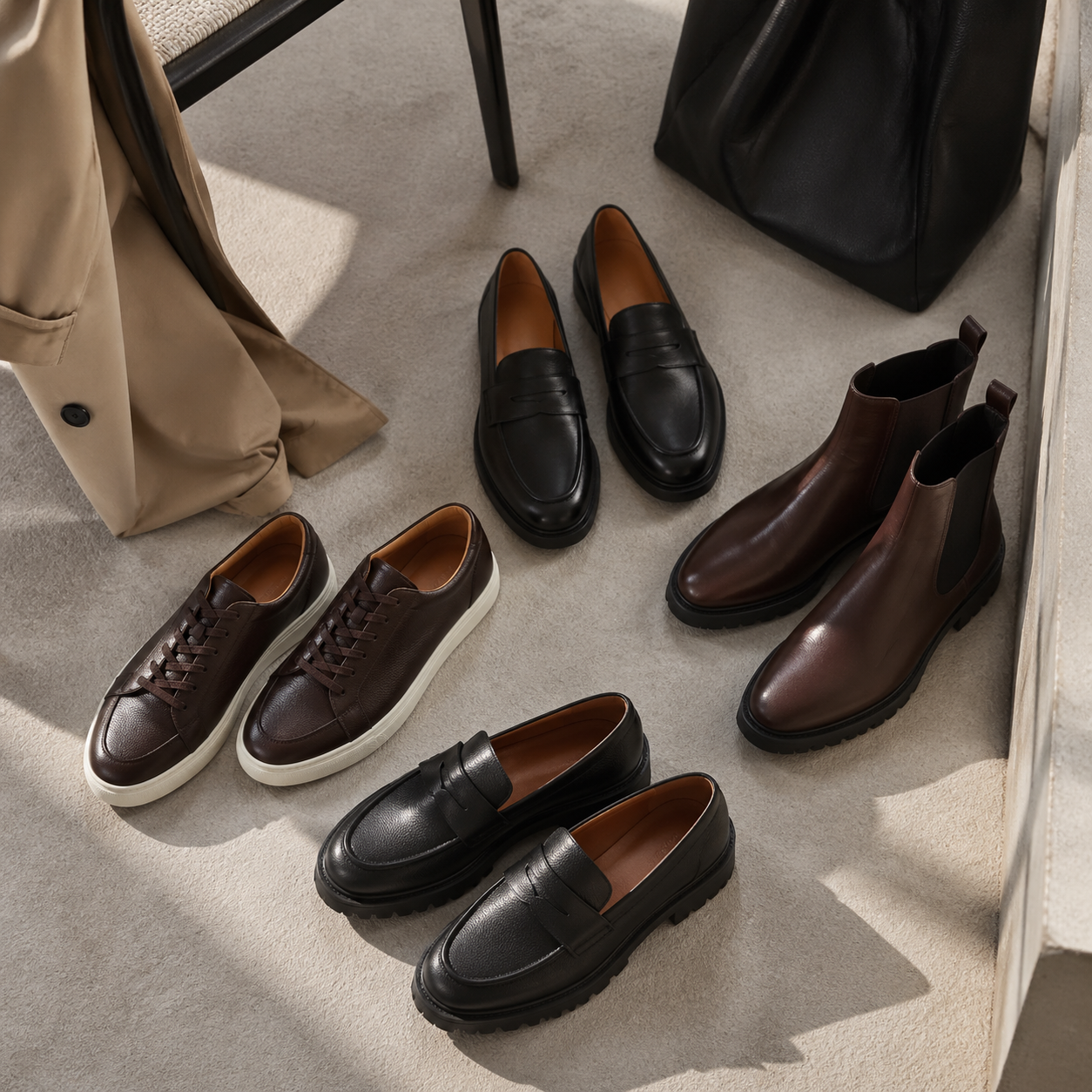
Length changes the mood. A full break over the shoe can feel classic but may look heavy with soft layers. A slight break or clean ankle-length hem often works better with loafers, low boots, and refined trainers where acceptable. In wet weather, especially in the UK and parts of Europe, hems that skim puddles are more trouble than romance. If your mornings include cycling or a long walk to the station, consider a trouser cloth that releases creases and does not bag badly at the knee. Try sitting down before deciding; many trousers that look sharp standing become restrictive at a desk.
The most dependable office layering outfits are built from contrasts held in balance: crisp poplin against soft wool, a relaxed blazer over a precise trouser, a fine knit that warms without swallowing the body. Keep the palette controlled if you want maximum repeat wear. Charcoal trousers, an ivory or blue shirt, a grey or navy merino knit, and a soft dark blazer can be recombined for several days without announcing themselves. Add texture rather than noise when you want variation. The result is workwear that respects the office without surrendering comfort, which is exactly what hybrid dressing now requires.