The new centre of workwear
The most useful office clothes now sit in the middle ground: not boardroom armour, not dressed-up leisurewear. Many workplaces across the UK, Europe, Canada, and Australia have settled into a quieter code, where the suit is no longer required every day but care is still expected. That care shows in the way a jacket sits on the shoulder, how trousers fall over a shoe, and whether a collar keeps its shape after several hours at a desk.
A business casual wardrobe works when it removes doubt. The aim is not to own endless options, but to build a small rhythm of reliable combinations. A navy, charcoal, olive, or brown palette carries well through changing seasons and different office cultures. Cream, pale blue, soft grey, and off-white shirts or polos keep the face lifted without becoming showy. Black can look exacting, but in softer workplaces it is often better used in shoes, belts, or a fine knit rather than head-to-toe.
The caveat is that business casual is never universal. A design studio in Copenhagen, a law-adjacent office in Toronto, a university department in Melbourne, and a finance floor in London may all use the phrase differently. Read the room before relaxing too far. If senior colleagues still wear jackets for client meetings, keep one close. If denim appears often, it still needs clean lines, dark colour, and a deliberate top half.
Start with the soft blazer
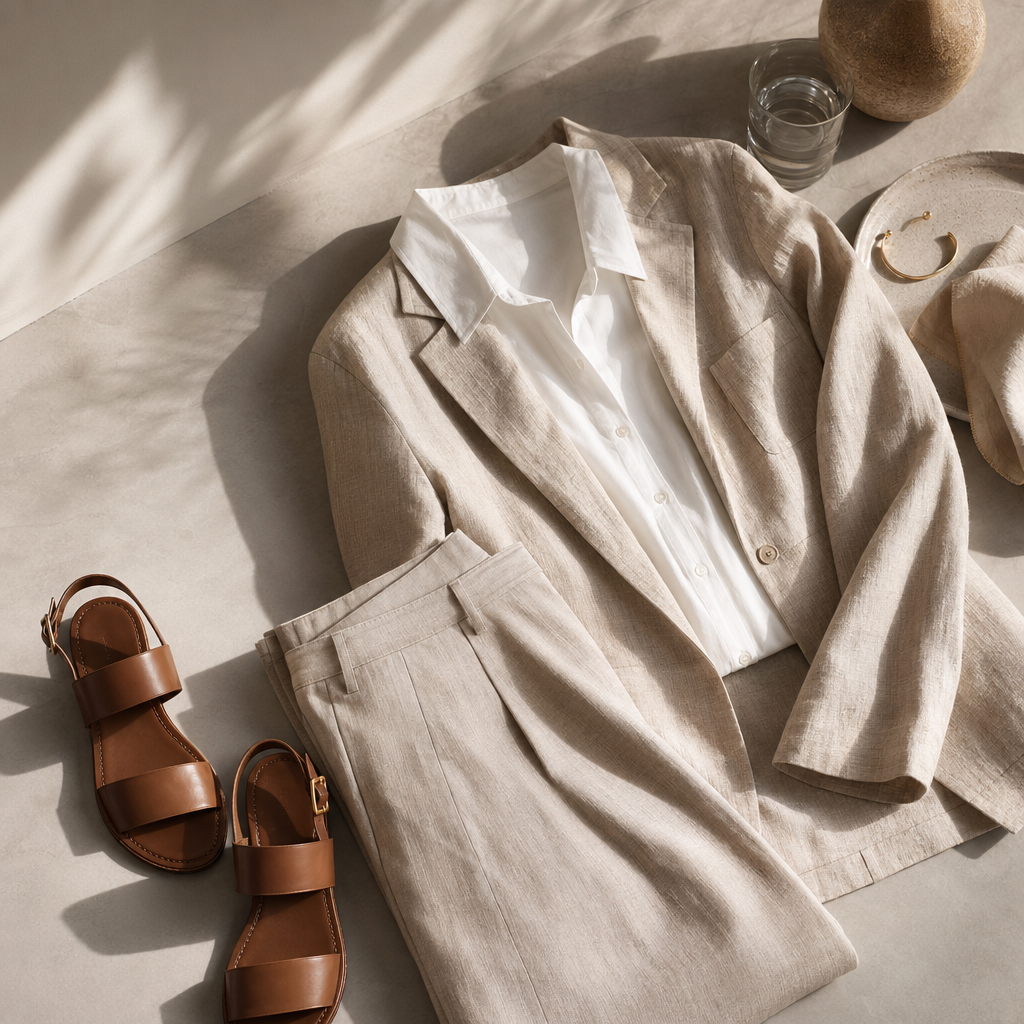
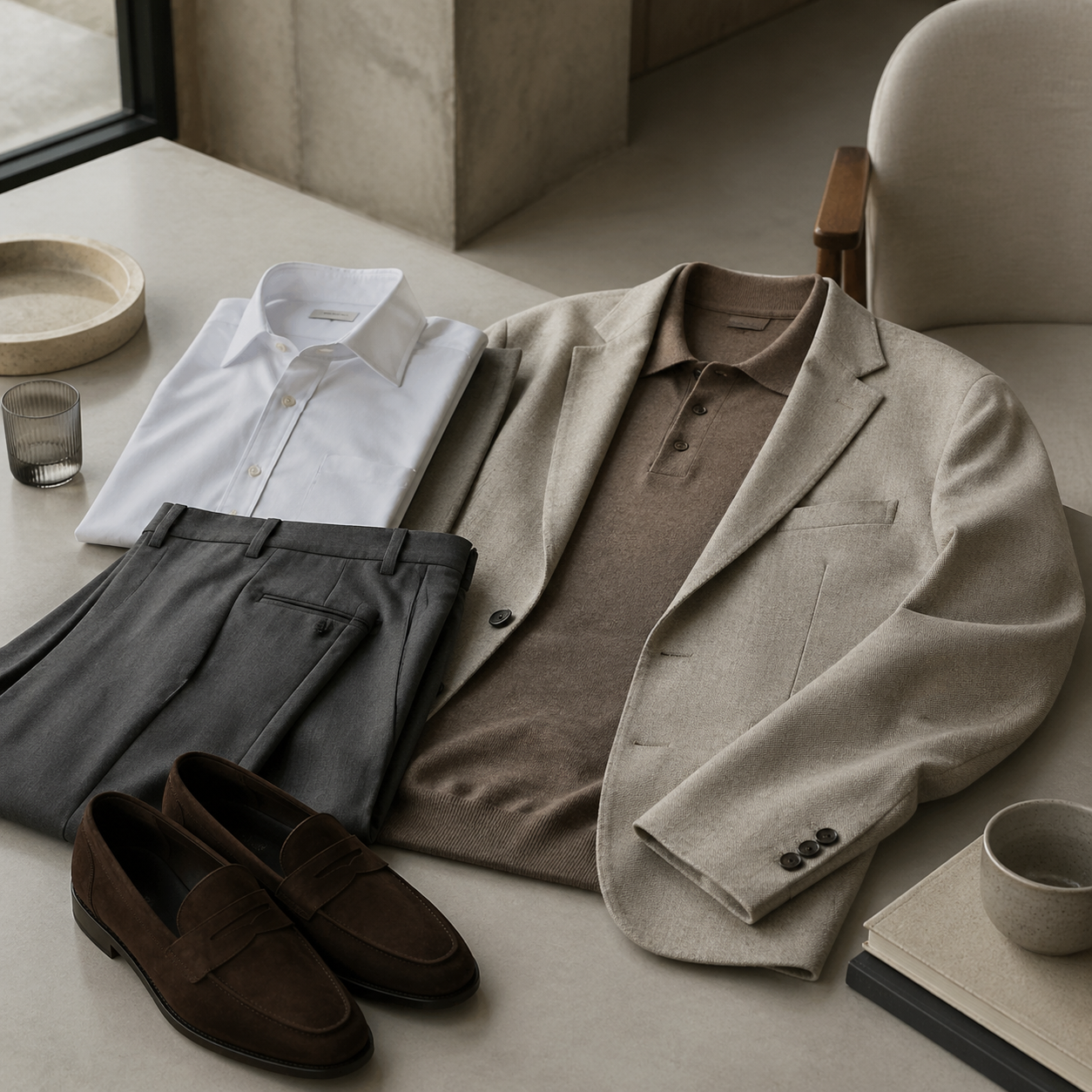
The soft blazer is the anchor because it gives shape without stiffness. Look for a natural shoulder, light canvassing or a clean fused construction, and fabric with enough weight to hang properly. A flimsy jacket creases like a shirt and rarely looks authoritative. A good soft blazer can be made from wool hopsack, wool-linen for warmer months, brushed wool for winter, or a compact knit if the cut is disciplined. The sleeve should show a little shirt cuff when worn with a shirt, but it should also work over a knit polo without bunching.
Fit matters more than formality. The shoulder seam should sit close to the edge of the shoulder, not droop down the arm. The body should skim rather than grip; if the button pulls into an X-shape when fastened, it is too tight for office movement. Length is also important. A jacket that ends around the lower seat looks more composed with wool trousers, while a very short blazer can make business casual look like nightlife clothing.
For repeat wear, choose texture rather than novelty. Hopsack, birdseye, twill, and subtle herringbone disguise minor creases and pair easily with shirts, polos, and fine knits. In wet British or northern European weather, keep a proper coat in rotation rather than asking a blazer to withstand rain. In Australian or southern European heat, unlined or half-lined jackets breathe better, but they still need a firm enough cloth to avoid collapsing after the commute.
Knit polos and shirts with backbone
The knit polo has become one of the clearest answers to the modern office because it sits neatly beneath a jacket and avoids the slackness of a T-shirt. The best versions have a firm collar, a clean placket, and ribbing that does not cling at the waist. Fine merino is useful in cooler climates because it regulates temperature and resists odour better than many cotton knits. Cotton piqu茅 feels familiar and breathable, though it can look more casual if the collar is soft or the fit is boxy.
A polo should not be treated as a shortcut. If the knit is sheer, shiny, or stretched at the buttons, it will undermine the blazer above it. The sleeve should sit around the mid-bicep on short-sleeved styles, with enough room to move. Long-sleeved knit polos can be excellent in autumn and winter, especially under a soft blazer, but avoid cuffs that balloon from the sleeve. Dark green, navy, chocolate, stone, and heather grey are more adaptable than bright colours for most offices.
Shirts still do essential work. A business casual shirt can be oxford cloth, pinpoint cotton, brushed cotton, poplin, or a fine twill, depending on climate and dress code. Oxford cloth is forgiving and looks better slightly rumpled; poplin is crisper but less forgiving after cycling, train travel, or a humid walk from the station. Button-down collars bring ease, spread collars read sharper, and hidden-button collars can be useful under jackets. Whatever the style, iron the collar and placket even if the rest is relaxed; those are the areas people notice first.
Wool trousers earn their place
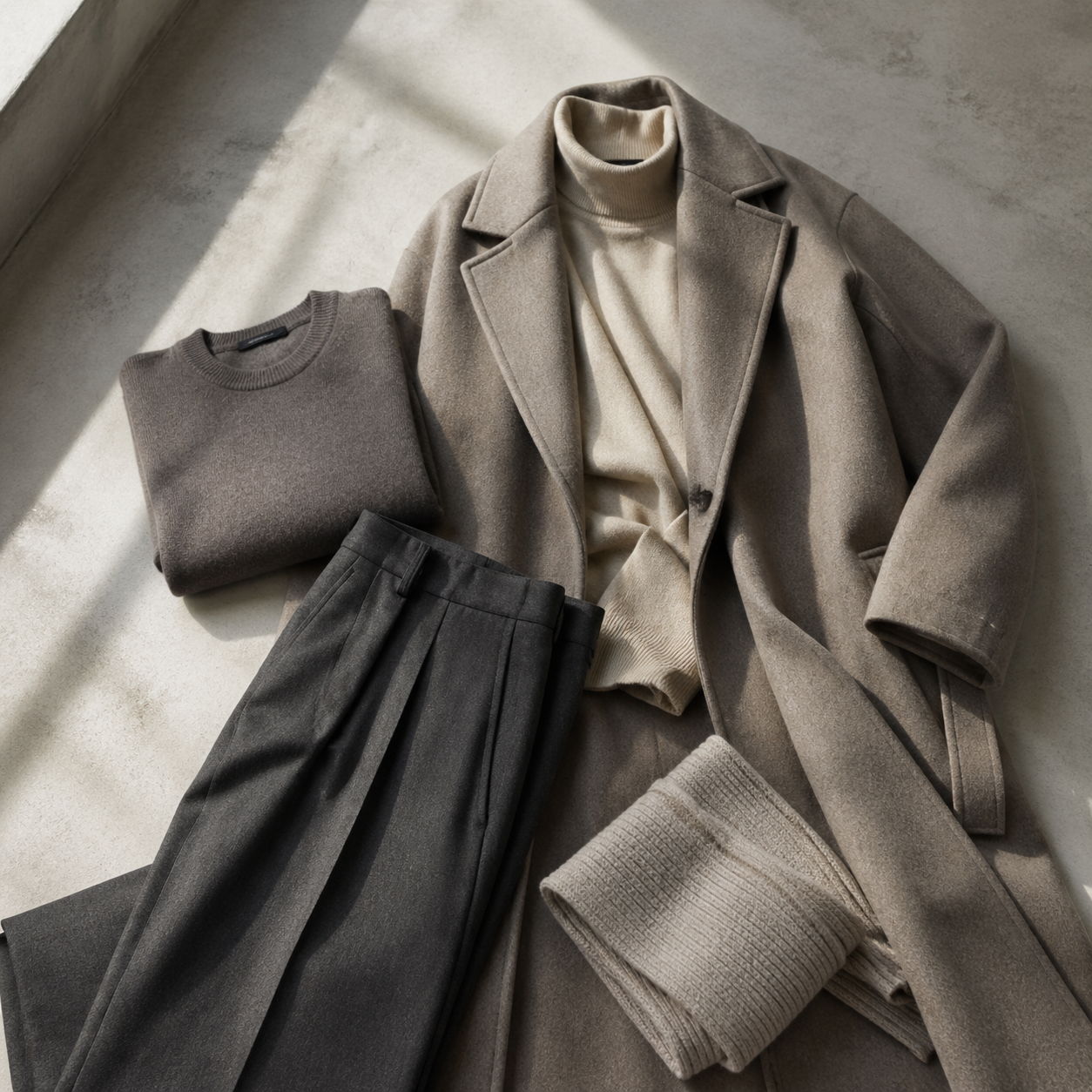
Wool trousers are the quiet upgrade that makes business casual look intentional. Compared with chinos, they drape better, recover from creasing more gracefully, and create a cleaner line with loafers. Tropical wool works through warmer months and heated offices; flannel or brushed wool is better when pavements are cold and coats are heavy. A small amount of elastane can add comfort, but too much stretch often makes trousers bag at the knee. The better test is whether the cut allows movement without relying on stretch at all.
Proportion should be considered with the shoes and jacket. A mid-rise or slightly higher rise usually looks more refined with tucked shirts and knit polos, and it avoids the gap that can appear when sitting. Pleats are not only decorative; a single forward pleat can give room through the thigh while keeping the leg line tidy. Flat-front trousers can look sharper on slimmer builds, but they should not strain across the pocket. A hem with a slight break is safe for most offices, while a clean no-break hem feels more contemporary if the leg is not too narrow.
Care is simple but should be respected. Wool trousers do not need constant dry cleaning; over-cleaning can make cloth shine and shorten its life. Brush them, hang them properly from the hem or on a shaped hanger, and let them rest between wears. After rain, allow them to dry naturally away from direct heat. In salt, slush, or heavy winter weather, darker flannels hide more than pale worsteds, but they still benefit from a trouser brush and occasional steaming.
Loafers and the repeat-wear test
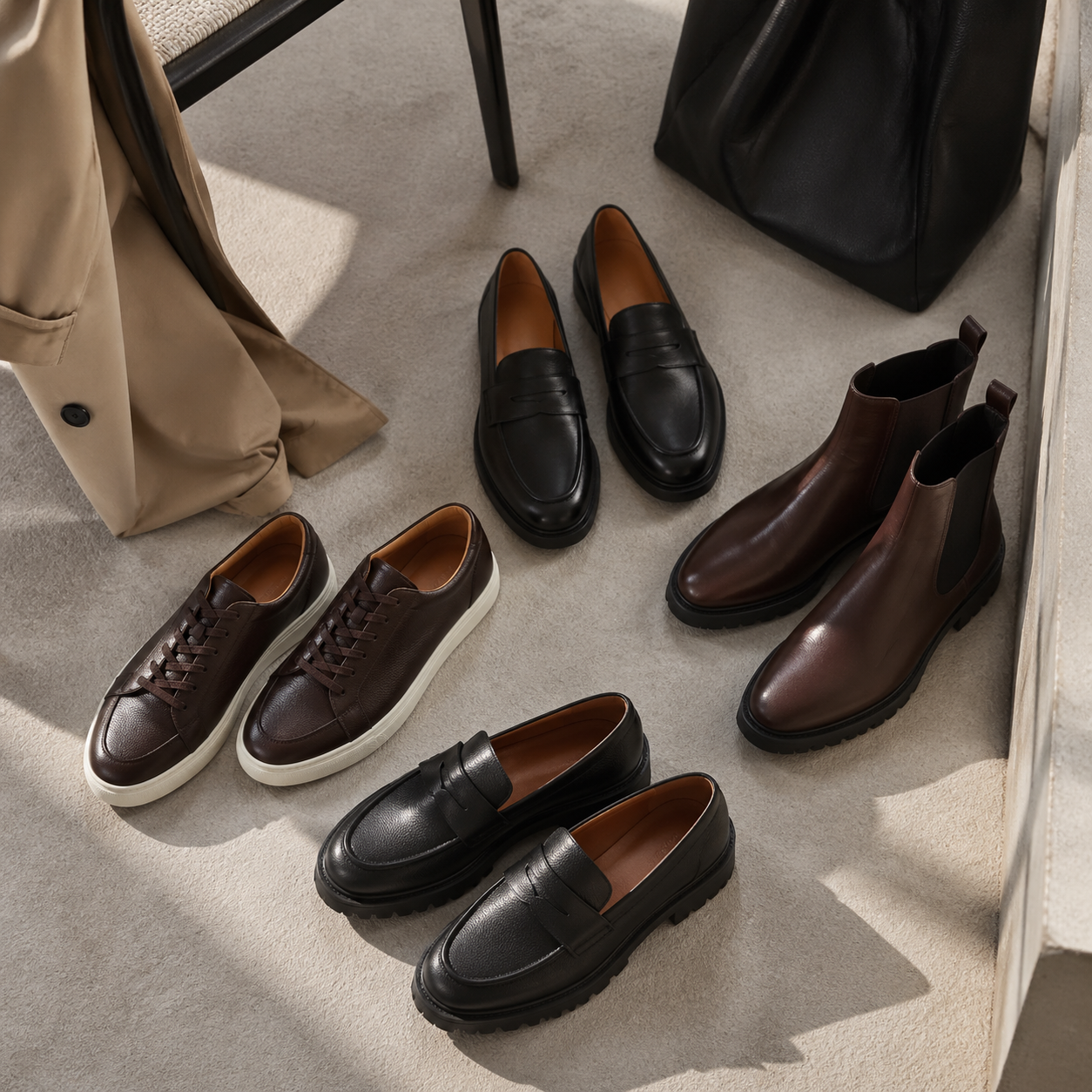
Loafers finish the business casual equation because they are formal enough for a meeting but easier than laced dress shoes. Penny loafers, apron-front loafers, and plain slip-ons can all work, provided the shape is not too elongated or too bulky for the trousers. Calf leather gives polish and handles office dress codes well. Suede is softer and excellent with textured blazers and wool trousers, though it needs more attention in rain. In Canada, northern Europe, and the UK, a rubber or half-rubber sole is often more practical than delicate leather during wet months.
The fit of loafers deserves patience. They should hold the heel without pinching the toes, and they often loosen slightly as the upper softens. If they are loose at first, they will become sloppy. Socks change the look: fine wool or cotton socks in navy, grey, brown, or charcoal keep the line professional, while bare ankles can look underdressed in many offices, particularly in cooler seasons. No-show socks may suit summer, but the trouser length and shoe shape must be exact or the effect can look more holiday than work.
The strongest business casual wardrobe passes the repeat-wear test. A soft blazer should work twice a week without feeling like a uniform. Knit polos and shirts should rotate under the same jacket without clashing. Wool trousers should pair with both loafers and a smarter boot when weather demands it. If an item only works in one outfit, it is probably not doing enough. Fewer compromises do not mean fewer standards; they mean choosing clothes that are comfortable, presentable, and durable enough for the ordinary demands of office life.