Travel Beauty Bag
Travel Beauty Bag is a packing list for readers weighing leak prevention, refill sizes, transparent bags, and routine editing. The beauty routine note explains what to check before buying, who should skip it, and where the purchase can become more work than it first appears.
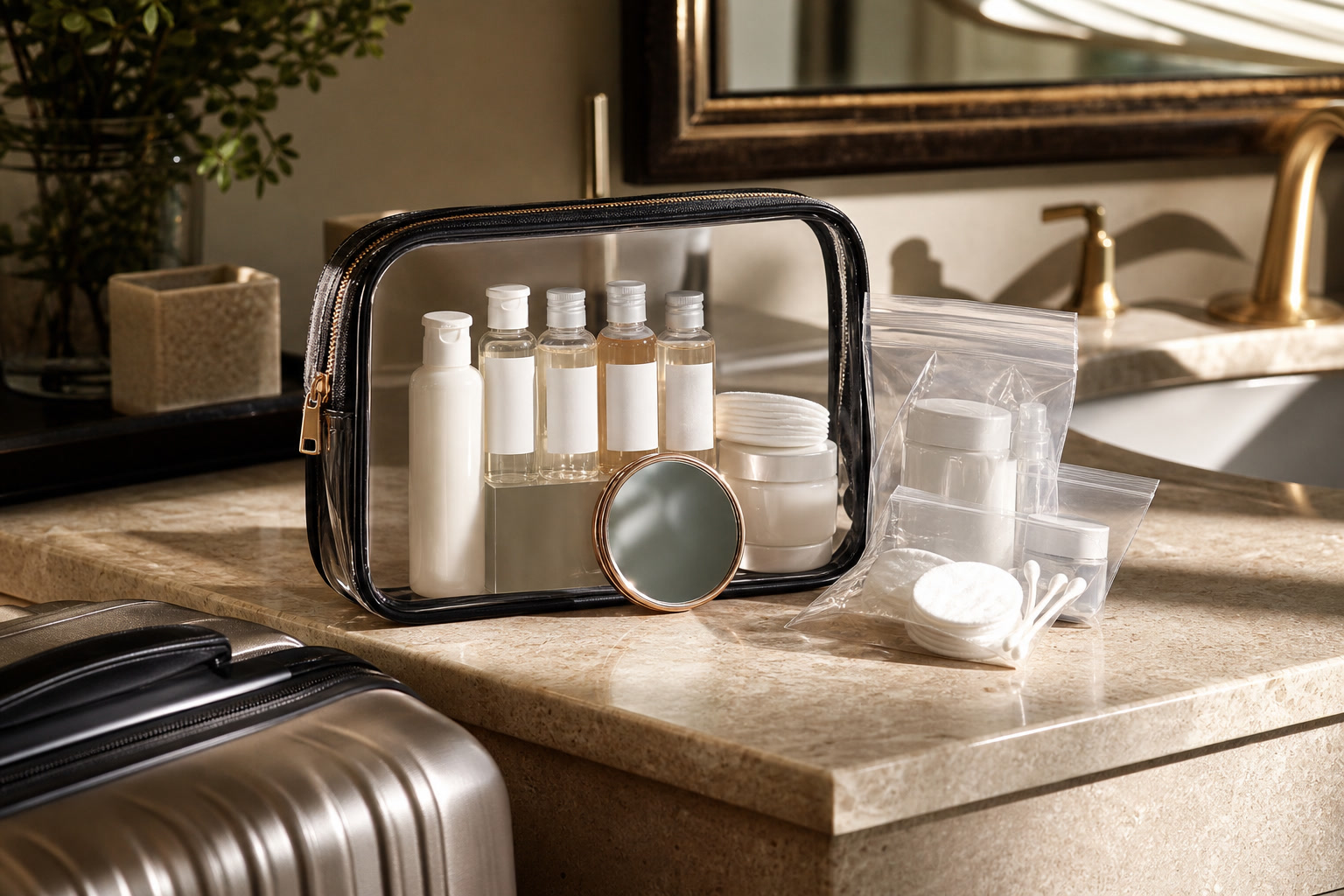
The instinct when packing a travel makeup bag is often driven by anxiety-fear of a sudden breakout, fear of an unexpected formal dinner, or fear of desperately dry cabin air. This reflex results in heavy, overstuffed pouches that consume valuable luggage real estate and risk catastrophic spills at high altitudes. Editing your travel beauty routine is not an exercise in deprivation; it is a calculated practice in understanding capacity limits, the physics of liquid restrictions, and the reality of your actual destination habits. A successful travel vanity requires dismantling your daily regimen, identifying which formulas can withstand decanting, and separating the transit touch-up necessities from the products that will remain stationary on a hotel bathroom counter. By shifting focus from carrying everything to carrying only what performs reliably across different climates and atmospheric pressures, you eliminate both the physical weight and the mental burden of an unmanaged cosmetic case. Slower, more deliberate packing decisions ultimately yield a streamlined system that protects your investments and respects your luggage constraints.
The Geometry of Packing and Material Behavior
The foundation of a lighter routine begins with the vessel itself. Rigid vanity cases, while visually appealing and highly protective of fragile glass bottles, dictate a fixed volume that refuses to compress when half empty. Soft-sided pouches offer necessary flexibility, but the choice of material directly impacts your ongoing maintenance burden. Traditional cotton or canvas bags absorb spills instantly, turning a leaked liquid blush or foundation into a permanent stain that requires aggressive laundering. Neoprene provides excellent shock absorption for pressed powders, but its inherent thickness adds unnecessary, unavoidable bulk to a tightly packed carry-on.
For frequent travel, clear or semi-translucent TPU (Thermoplastic Polyurethane) is vastly superior to standard PVC. TPU remains flexible in freezing cargo holds, resists the yellowing that plagues cheaper plastics over time, and wipes clean with a standard hotel washcloth. If privacy or aesthetics dictate a fabric option, look for tightly woven ripstop nylon featuring a water-repellent interior coating. Pay strict attention to the zipper architecture; a bag with a U-shaped or clamshell opening allows you to see all contents without unpacking, whereas a top-zip tube forces you to dig blindly, significantly increasing the risk of damaging delicate compacts or accidentally opening unsealed tubes.
Consider the physical footprint your bag will occupy at the destination. Pedestal sinks in boutique hotels often offer zero counter space, making a hanging toiletry bag with a built-in hook a practical necessity rather than a luxury. However, hanging bags frequently force products to sit horizontally when zipped, which can lead to slow, persistent leaks from poorly sealed serums. The ideal travel bag maintains a flat, structured base so bottles remain upright during transit, yet opens wide enough to serve as its own staging area, eliminating the need to unpack items onto questionable or cramped hotel surfaces.
Solid Swaps and Formulation Shifts
The most effective method for bypassing liquid restrictions and reducing overall weight is to aggressively swap liquids for solid alternatives. Cleansing balms or solid cleansing sticks eliminate the need for heavy, leak-prone bottles of micellar water or liquid face wash. However, you must anticipate how these formulas will behave in your destination's specific climate. A cleansing balm that remains perfectly solid in a temperate, air-conditioned environment may melt into a messy, unusable liquid if left in a bag during a tropical vacation, requiring immediate refrigeration upon arrival to solidify again.
In the makeup category, stick foundations and cream color pots offer immense utility for the minimalist traveler. A single, well-formulated cream tint can serve as blush, lip color, and subtle eye contour, drastically reducing the number of individual compacts and brushes you need to pack. Yet, introducing new, travel-friendly formulas right before a trip carries a high risk of skin reactivity or poor wear time. A heavy stick foundation might trigger congestion in high humidity, while a matte powder foundation could exacerbate the severe dryness caused by aggressive hotel air conditioning. Always incorporate these solid swaps into your daily routine at least a week before departure to accurately monitor skin behavior.
Purchasing pre-packaged 'travel size' or 'mini' versions of your favorite products seems highly convenient, but it is often economically inefficient and carries a hidden returns risk. Many beauty retailers enforce strict policies that do not accept returns on opened travel sizes, meaning a failed experiment is a total financial loss. Furthermore, the packaging of minis is rarely designed for long-term reuse or refilling, resulting in unnecessary single-trip plastic waste. Investing in high-quality decanting tools and solid formulas you actually enjoy using at home ensures your travel routine remains sustainable, cost-effective, and familiar to your skin.
The Transit Touch-Up vs. Destination Routine
A common packing error is consolidating all beauty and hygiene items into a single, massive bag stored out of reach in the overhead bin or checked luggage. This leaves you without access to critical hydration or touch-up products during a long-haul flight or an unexpected, exhausting layover. The solution is strict bifurcation: creating a micro-pouch specifically for the transit environment, entirely separate from your main destination vanity. This transit pouch should fit easily inside your personal item and contain only the absolute necessities for managing the specific, harsh microclimate of an airplane cabin.
Cabin air is notoriously devoid of humidity, actively pulling moisture directly from the skin barrier. Packing a hydrating water mist might feel refreshing in the moment, but without an occlusive layer to seal it in, the water simply evaporates, leaving the skin tighter and drier than before. Instead, the transit pouch should prioritize a dense lip balm, a small tube of a barrier-repair cream or ointment, and perhaps a hydrating under-eye patch. For makeup, absolutely avoid bringing liquid foundations or loose setting powders into the cabin. A solid concealer stick and a pressed translucent powder are entirely sufficient to neutralize redness and reduce shine before landing, without risking a disastrous spill during unexpected turbulence.
Upon arrival, the destination routine takes over. This is where your carefully decanted serums and multi-use color cosmetics come into play. By keeping the transit pouch strictly limited to barrier protection and minor aesthetic corrections, you prevent the main makeup bag from becoming disorganized during travel. This separation of concerns also significantly speeds up the airport security screening process. Your primary liquids can remain neatly packed in their TSA-approved clear bag, while your transit solids require no special presentation or removal from your personal item.
Long-Term Storage and Post-Trip Maintenance
The lifecycle of a travel makeup bag does not end the moment you unpack your suitcase. The maintenance burden of travel containers directly dictates their longevity and safety. Leaving leftover skincare in decanted bottles until your next trip is a dangerous practice that compromises skin health. Preservative systems in commercial skincare are formulated specifically for the original packaging, not for secondary plastic containers exposed to fluctuating transit temperatures. Leftover product should be used up immediately upon returning home, and the containers must be thoroughly dismantled, washed with hot soapy water, and sterilized.
Drying decant bottles completely is the most critical and most frequently overlooked step in post-trip maintenance. Even a microscopic drop of tap water left inside the nozzle of an airless pump can harbor bacteria or mold, which will rapidly contaminate the next batch of expensive product you decant. Store empty travel bottles disassembled in a breathable mesh bag until you are absolutely certain no moisture remains. Similarly, the travel makeup bag itself requires attention. Wipe down the interior of TPU bags with a gentle antibacterial wipe, or machine wash nylon bags according to their care labels, ensuring they air dry completely to prevent a permanent musty odor.
Resist the temptation to keep a 'grab-and-go' bag permanently packed with active skincare or liquid makeup. While it saves a few minutes during the packing process, the products will inevitably degrade, separate, or expire during the months between trips. Instead, keep your empty, clean travel containers and your designated travel bag stored together in a dry, dark place. The only items that can safely remain in a pre-packed state are solid tools: travel-sized makeup brushes, a dedicated eyelash curler, tweezers, and a sturdy compact mirror.
Pre-purchase checklist
- Verify that your primary travel bag has a flat base and a wide clamshell or U-shaped opening to prevent blind digging and accidental spills on hotel counters.
- Transfer liquid foundations and serums into rigid airless pump bottles rather than porous silicone tubes to prevent oxidation, chemical reactions, and leakage.
- Separate your routine into a minimal transit pouch for your personal item and a main destination bag for the carry-on or checked luggage.
- Test all solid alternative formulas, such as stick foundations or cleansing balms, for at least a week prior to departure to ensure they do not trigger breakouts or wear poorly.
- Empty, wash, and completely air-dry all decant containers immediately upon returning home to prevent bacterial growth and mold contamination.
Who should skip this
Individuals managing severe dermatological conditions-such as active cystic acne, severe rosacea, or compromised skin barriers requiring prescription topicals-should bypass the decanting process entirely. The risk of cross-contamination, formula degradation, or triggering a painful flare-up by switching to untested solid alternatives far outweighs the convenience of saving a few ounces in a carry-on. If your skin requires a highly specific, medically directed regimen, prioritize luggage space for your full-size, original-packaging products, and compromise on clothing or shoe volume instead to accommodate your health needs.
Affiliate transparency
FikaLooks maintains strict editorial independence. If you purchase travel containers, bags, or cosmetic products through the links provided in this guide, we may earn a small commission. We only recommend storage solutions and formulations that have demonstrated consistent reliability regarding leak prevention, material durability, and performance across various travel climates.
FAQ
Why do my silicone travel bottles sweat or leak certain products?
Silicone is a porous material that can interact chemically with silicone-based hair serums, primers, and certain cleansing oils. This interaction causes the bottle material to swell, warp, or allow the product to slowly seep through the walls. Reserve silicone tubes exclusively for water-based, thick formulas like shampoo, conditioner, or body wash.
Are aerosol dry shampoos or setting sprays allowed in carry-on bags?
Yes, aviation authorities generally permit aerosol cosmetics in carry-on luggage, provided the container itself is 3.4 ounces (100ml) or smaller and fits comfortably within your single quart-sized clear liquids bag. However, the cap must be securely attached to prevent accidental discharge during transit.
How can I prevent powder compacts from shattering in my luggage?
To protect pressed powders, blushes, or eyeshadows from impact, place a flat, round cotton pad directly inside the compact over the powder before snapping it shut. This fills the empty airspace and absorbs the shock of turbulence or aggressive baggage handling, keeping the pressed pigment intact.
Is it safe to decant sunscreen into smaller travel bottles?
Decanting sunscreen is highly discouraged. Sunscreen formulations rely on precise, stable emulsions and specific packaging (often opaque) to protect the UV filters from degrading. Transferring them to a secondary container compromises the formula's efficacy, potentially leaving you without adequate sun protection. Always travel with sunscreen in its original packaging.