Makeup Brush Cleaning
Makeup Brush Cleaning is a maintenance note for readers weighing wash frequency, drying shape, hygiene, and brush lifespan. The beauty routine note explains what to check before buying, who should skip it, and where the purchase can become more work than it first appears.
The guilt associated with unwashed makeup brushes is a universal fixture of the modern vanity. We are routinely told by dermatologists and makeup artists that tools must be sanitized after every single use, a standard that is entirely divorced from the reality of getting ready for work at seven in the morning. However, ignoring tool maintenance until bristles become stiff with oxidized foundation is a fast track to contact dermatitis, compromised skin barriers, and ruined investments. The friction between convenience and hygiene does not require a compromise in skin health; rather, it demands a pragmatic approach based on material science and product formulation. Understanding how natural animal hair interacts with pressed powder versus how synthetic taklon holds onto liquid concealer allows you to build a maintenance schedule that protects both your face and your expensive tools, without turning your Sunday evening into a tedious chore of standing over the bathroom sink.
The Material Divide: Natural Hair Versus Synthetic Fibers
The architecture of a makeup brush dictates its hygiene requirements far more than arbitrary timelines. Natural bristles, typically sourced from goat, squirrel, or sable, possess a cuticle structure identical to human hair. These microscopic overlapping scales are exceptionally adept at picking up and diffusing dry powders, creating a clean blend on the skin. However, this same cuticle structure makes them highly vulnerable to harsh detergents and frequent washing. Stripping natural hair of its inherent oils with weekly deep cleans will cause the bristles to become brittle, snap, and shed. For these tools, hygiene is maintained not through constant washing, but through friction management. Wiping a squirrel hair brush gently across a dry microfiber towel after use removes surface pigment without introducing water, allowing you to stretch the deep-cleaning interval to months rather than weeks, preserving the structural integrity of a high-end Japanese fude brush.
Synthetic fibers operate under entirely different physical rules. Extruded from nylon or taklon, these bristles lack cuticles, presenting a completely smooth surface. Because they do not absorb liquid, they are the default choice for applying cream blushes, liquid foundations, and emollient concealers. The drawback of this non-porous nature is that the liquid product, mixed with your skin's natural sebum and dead skin cells, sits entirely on the surface of the bristles. This creates a dense, damp environment where bacteria and yeast proliferate rapidly. Unlike natural hair, synthetic bristles do not degrade from frequent contact with water and mild surfactants. Their durability means they can-and must-withstand a rigorous washing schedule to prevent the transfer of microbial loads back onto the face.
Failing to respect this material divide results in a dual failure: compromised skin and destroyed tools. Over-washing a delicate blue squirrel powder brush with a harsh clarifying shampoo will permanently ruin its texture, turning a costly investment into a scratchy liability. Conversely, treating a synthetic foundation brush with the same hands-off approach will result in bristles glued together by dried silicones and waxes. This stiffness not only causes streaky, uneven makeup application but acts as an abrasive physical exfoliant, dragging sharp, hardened fibers across the delicate facial epidermis, micro-tearing the skin barrier and inviting localized inflammation.
Product Formulation and Bacterial Carrying Capacity
The formulation of your makeup dictates the bacterial carrying capacity of your tools. Liquids and creams are inherently unstable environments once exposed to air and skin contact. Foundations, cream bronzers, and liquid highlighters contain water, humectants, and botanical oils-a nutrient-dense buffet for microbes. When a brush is dipped into a cream compact or used to buff out liquid foundation, it picks up not just the product, but the native flora of your face. Left to sit in the ambient temperature of a bathroom, this mixture ferments. Using that same brush three days later introduces a highly concentrated bacterial load directly into your pores. For liquid products, the hygiene window is narrow; these tools require washing at least once a week, if not more frequently, to mitigate the risk of bacterial transfer.
Dry powders present a significantly lower risk profile. Pressed setting powders, powder blushes, and mineral foundations lack the moisture necessary to sustain rapid bacterial colonies. The primary concern with powder brushes is not necessarily microbial infection, but the transfer of facial sebum back into the powder compact. When a brush touches your face, it absorbs oils; when it is dipped back into the pan, those oils are deposited onto the powder surface, creating a hard, glazed layer known as hard pan. This ruins the makeup product long before the brush itself becomes a biological hazard. Therefore, the cleaning frequency for powder brushes is dictated more by performance degradation and color muddiness than by strict sanitization needs.
The intersection of dirty brushes and skin health is most visible in cases of acne mechanica and contact dermatitis. Acne mechanica is triggered by friction, heat, and pressure-precisely what occurs when you aggressively buff a stiff, dirty foundation brush into the skin. The trapped debris and oxidized oils act as irritants, prompting the skin's immune response and resulting in closed comedones or inflammatory pustules. Furthermore, the preservatives in makeup formulations break down over time when exposed to air and organic matter on the brush bristles. Applying these degraded compounds to the face increases the likelihood of allergic contact dermatitis, characterized by redness, itching, and flaking, particularly around the sensitive eye area and cheeks.
Developing a Pragmatic Maintenance Routine
Establishing a pragmatic maintenance routine requires abandoning the all-or-nothing mindset. Spot cleaning is the bridge between deep washes, serving as a low-friction method to maintain hygiene without the burden of drying times. For synthetic brushes used with liquids, quick-drying, alcohol-based brush sprays are highly effective. A light mist onto a paper towel followed by a gentle swirling of the bristles breaks down surface oils and sanitizes the tool in seconds, leaving it dry and ready for immediate use. For natural hair brushes, alcohol is too dehydrating; instead, a dry sponge color switch or a dedicated microfiber cloth removes excess powder, keeping the bristles clean enough for daily use without compromising their delicate structure.
The deep clean schedule should be staggered based on tool function. Foundation, concealer, and cream blush brushes-exclusively synthetic-demand a weekly deep wash. Eye makeup brushes, particularly those used for liquid liners or cream shadows, should also be washed weekly due to their proximity to the mucous membranes of the eye, which are highly susceptible to infection. Powder brushes, bronzer brushes, and natural hair blending brushes can safely be pushed to a monthly or even bi-monthly deep clean, provided they are spot-cleaned dry after each use. This staggered approach reduces the overwhelming chore of washing twenty brushes at once, breaking the maintenance burden into manageable, ten-minute weekly sessions.
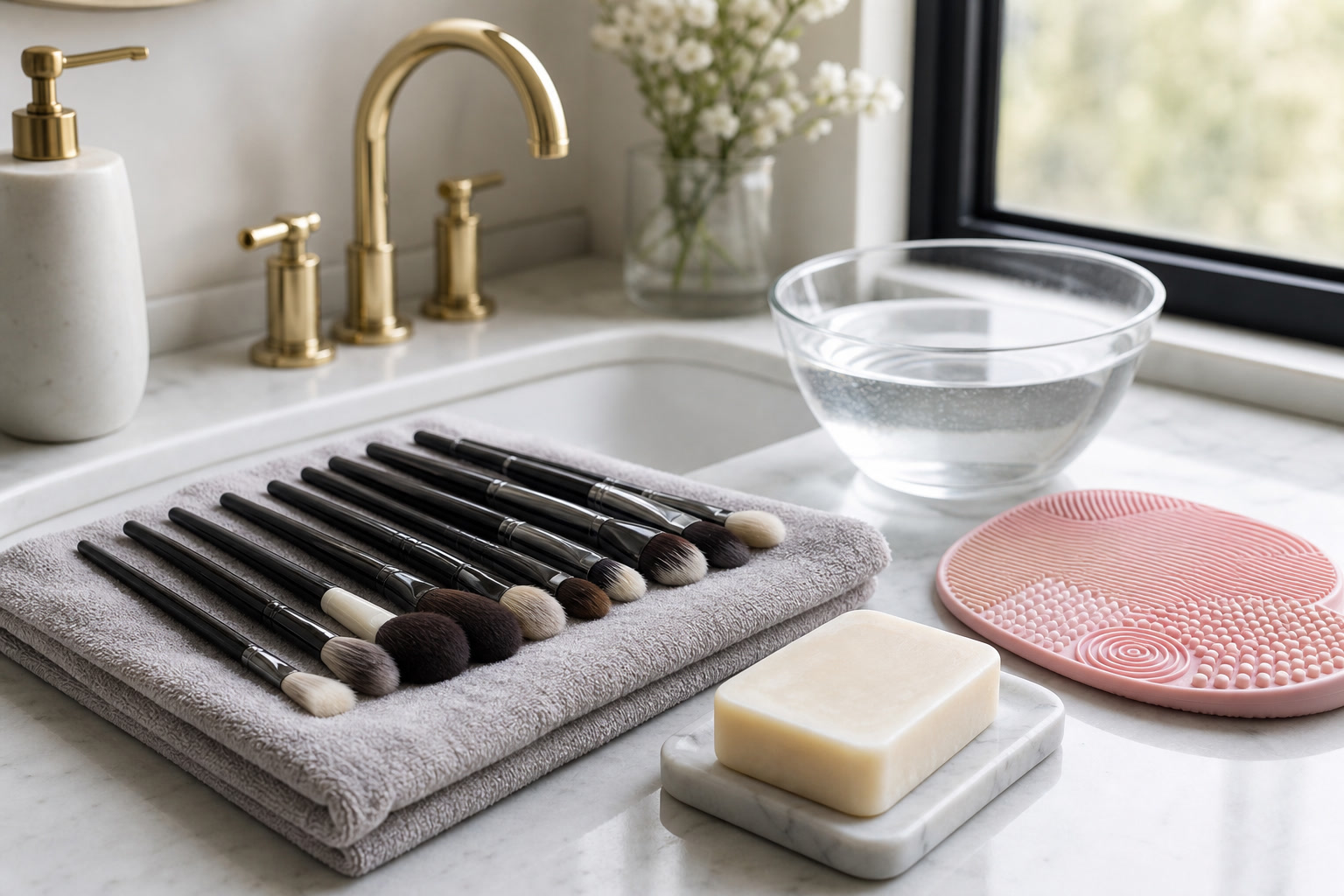
The mechanics of the wash itself determine the longevity of the tool. Solid brush soaps formulated with conditioning oils, such as olive or palm oil, are superior to liquid dish detergents, which aggressively strip glues and bristles. The critical rule of deep cleaning is moisture control: water must never breach the ferrule-the metal band connecting the bristles to the handle. If water seeps into this cavity, it degrades the adhesive, leading to massive shedding, and causes wooden handles to swell, crack, and eventually rot. Brushes should be washed pointing downwards, swirled gently in the palm of the hand or on a textured silicone mat, and rinsed until the water runs entirely clear of both pigment and suds.
Drying, Storage, and Long-Term Tool Health
The drying phase is where most brushes are inadvertently ruined. Drying brushes upright in a cup allows gravity to pull residual water directly into the ferrule, guaranteeing the destruction of the glue and handle. Brushes must be dried flat on a towel, preferably with the bristle heads hanging over the edge of a counter to allow complete air circulation. For larger, dense brushes, using mesh brush guards during the drying process ensures the bristles retain their intended shape and prevents them from splaying outward. The environment matters immensely; drying brushes in a damp, unventilated bathroom invites mildew growth deep within the bristle core, a problem that is impossible to reverse once the musty odor sets in.
Daily storage habits further influence the cleaning frequency. The aesthetic appeal of displaying brushes in open acrylic jars leaves them entirely exposed to airborne dust, aerosolized bathroom products, and environmental debris that settles on the bristles and is subsequently buffed into the face. Closed storage-such as dedicated vanity drawers, roll-up canvas pouches, or lidded acrylic organizers-is non-negotiable for maintaining tool hygiene between washes. Additionally, natural hair brushes left in direct sunlight on a windowsill will suffer from ultraviolet degradation, causing the hair to bleach, dry out, and become brittle over time.
Recognizing the end of a tool's lifespan is part of the maintenance cycle. A well-cared-for natural hair brush from a reputable manufacturer can perform flawlessly for over a decade, making the initial high purchase price a sound investment. Synthetic brushes, however, have a finite lifespan; the plastic fibers eventually crimp, lose their elasticity, and refuse to return to their original shape regardless of how carefully they are washed and dried. When a brush begins to shed consistently, when the ferrule wobbles against the handle, or when the bristles feel permanently rough and scratchy against the skin, it is time to retire the tool. Clinging to a degraded brush out of a sense of sunk cost only guarantees subpar makeup application and potential skin irritation.
Alternatives to the Brush Burden
For those who find the prospect of weekly brush washing entirely unmanageable, alternative application methods offer different hygiene profiles. Makeup sponges are often viewed as a convenient substitute. However, their maintenance burden is actually significantly higher. Because sponges must be dampened before use, they remain wet for hours, creating an ideal incubator for mold and bacteria. A sponge requires aggressive washing with solid soap before every single use, and even with diligent care, it must be discarded and replaced every three months. While they offer a flawless finish, sponges are the antithesis of a low-maintenance tool and present a recurring financial cost.
The most hygienic and lowest-maintenance tools available are your own hands. Fingers are exceptionally effective for applying and blending liquid foundations, cream blushes, and concealers. The natural body heat from your fingertips warms the product, allowing it to melt cleanly into the skin in a way that synthetic bristles cannot replicate. The hygiene protocol is foolproof: a thorough handwashing with standard antibacterial soap before and after application. This method entirely eliminates the drying time, storage concerns, and degradation risks associated with traditional brushes, making it the superior choice for minimalists.
For a more clinical approach to hygiene without the tactile mess of finger application, stainless steel makeup spatulas and silicone blenders are excellent alternatives. Popularized by professional makeup artists, the stainless steel spatula is used to spread a micro-thin layer of foundation across the skin before pressing it in. The primary advantage of steel and silicone is their absolute non-porosity. They absorb zero product, require zero drying time, and can be completely sanitized in three seconds with a quick wipe of isopropyl alcohol. For individuals who prioritize immaculate hygiene but despise the chore of washing and drying bristles, transitioning to non-porous metal and silicone tools resolves the friction between convenience and cleanliness.
Pre-purchase checklist
- Check ferrule integrity before washing: Gently wiggle the metal band; if it feels loose, avoid submerging the brush entirely to prevent further glue degradation.
- Assess product texture in compacts: Look for a hard, shiny film on your powder products, which indicates your brush is transferring facial sebum and requires immediate cleaning.
- Verify cleanser compatibility: Ensure you are using a conditioning solid soap or dedicated brush cleanser, avoiding dish detergents that will permanently strip natural animal hair bristles.
- Test bristle flexibility on synthetics: If your foundation brush feels stiff or leaves visible streaks on the back of your hand, the polymer fibers are coated in dried product and need a deep wash.
- Optimize the drying environment: Confirm brushes are drying flat with the heads suspended over a counter edge in a well-ventilated room, far away from the humidity of a shower.
Who should skip this
Individuals dealing with active, severe acne, compromised skin barriers, or inflammatory conditions like rosacea or perioral dermatitis should bypass traditional bristle brushes entirely for liquid products. When the skin barrier is broken, the microscopic friction of even the softest synthetic brush can exacerbate inflammation, while the risk of reinfecting open blemishes with trapped bacteria is too high to manage with standard weekly washing at home. In these specific clinical scenarios, the safest approach is to rely exclusively on freshly washed fingertips, single-use disposable applicators, or stainless steel spatulas that can be sterilized with medical-grade alcohol daily, removing the variable of tool hygiene from the healing process entirely.
Affiliate transparency
FikaLooks operates on a reader-supported model. When you purchase brush cleansers, solid soaps, or storage solutions through the links embedded in our maintenance guides, we may earn a transparent affiliate commission. This structure funds our editorial independence, allowing us to thoroughly evaluate the long-term durability of these tools and formulations without relying on brand sponsorships or compromised testing methodologies.
FAQ
Can I use standard dish soap to deep clean my makeup brushes?
Dish soap is formulated to aggressively cut through heavy cooking grease, making it far too harsh for natural animal hair brushes; it will strip their natural oils and cause immediate breakage. While it can be used in a pinch for heavily soiled synthetic foundation brushes, repeated use will degrade the adhesive inside the ferrule, leading to premature shedding.
How do I remove stubborn, waterproof foundation or gel eyeliner from dense synthetic brushes?
Do not resort to aggressive scrubbing, which bends the bristles out of shape. Instead, massage a standard facial cleansing oil or a rich cleansing balm directly into the dry bristles to break down the waterproof polymers and waxes. Once the makeup is dissolved, follow up with a standard solid brush soap and warm water to rinse away the oil residue.
Why do my makeup brushes smell like mildew or damp towels after I wash them?
A musty odor indicates that moisture was trapped in the dense core of the bristles for too long, allowing mildew to form. This typically happens when brushes are dried in a humid, unventilated bathroom or laid flat on a thick towel that absorbs and holds the water against the brush. Always dry brushes in a dry room with the bristle heads hanging over an edge for maximum airflow.
Do UV sanitizing boxes effectively clean makeup brushes between uses?
Ultraviolet light is highly effective at neutralizing bacteria and viruses on exposed surfaces, but it cannot penetrate the dense physical buildup of foundation, sebum, and dead skin cells trapped deep within a brush head. A UV box can be a secondary sanitization step, but it does not replace the physical removal of organic matter achieved through washing with surfactants and water.