Beauty Tools Worth the Space
Beauty Tools Worth the Space is a tool verdict for readers weighing storage space, cleaning effort, replacement cost, and actual frequency. The beauty routine note explains what to check before buying, who should skip it, and where the purchase can become more work than it first appears.
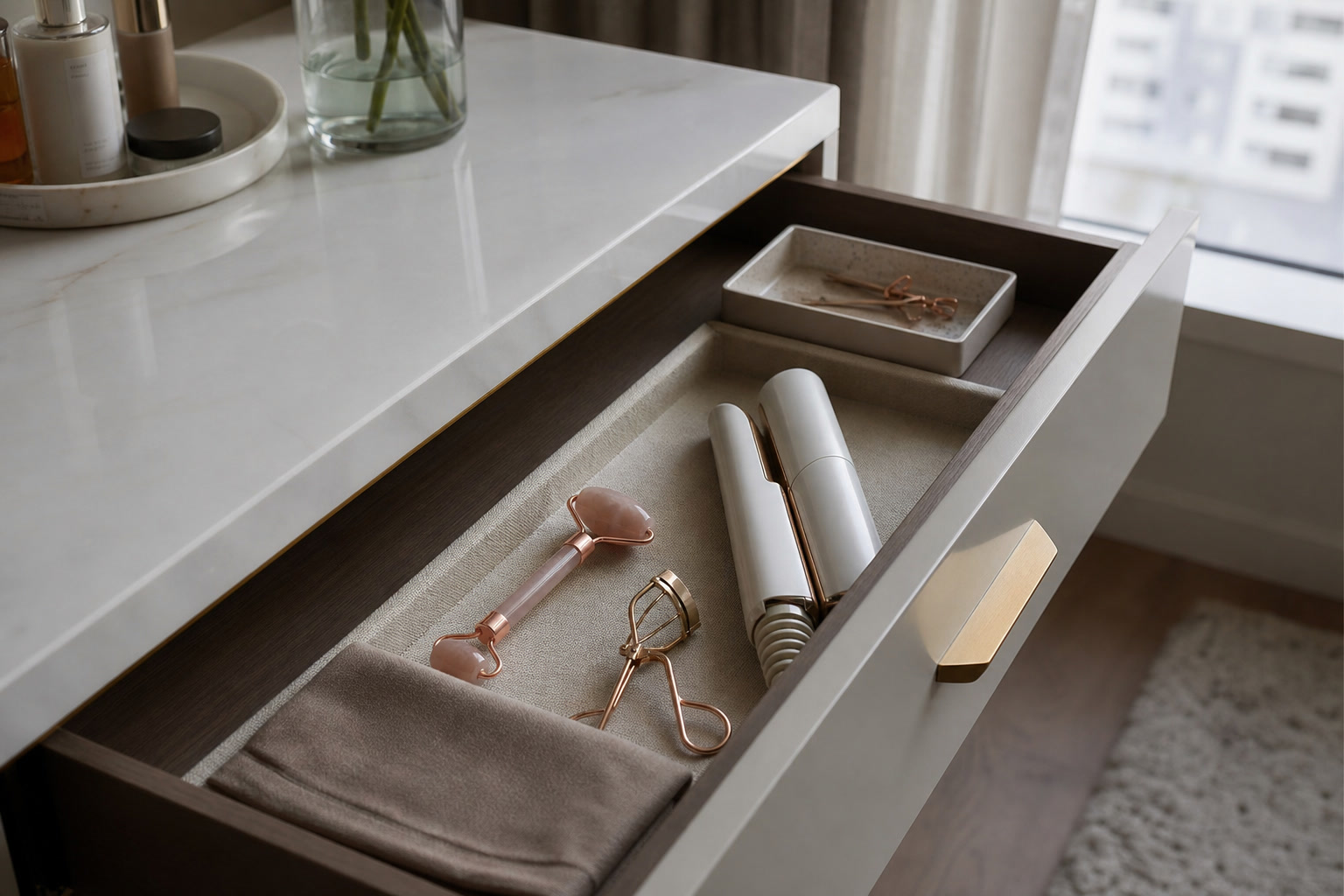
The vanity drawer is the final resting place for good intentions. Open it, and you will likely find a tangled graveyard of cords, degrading foam, and expensive lithium-ion devices that have not seen a charger since their first week of ownership. We purchase beauty tools under the assumption that they will automate our routines, bypassing the need for manual skill or patience. Yet, the reality of physical tools is that they demand space, maintenance, and a high degree of daily compliance. A device is not merely a financial investment; it charges rent in the form of countertop real estate and mental bandwidth. Evaluating whether a tool deserves to occupy physical space in your home requires looking past the clinical claims and marketing aesthetics. Instead, we must examine the friction it introduces into your morning timeline, the material realities of its upkeep, and whether its function can be replicated by a simpler, analog alternative-or simply your own hands. The goal is not a minimalist vanity for the sake of austerity, but a highly curated workspace where every object justifies its footprint through reliable, low-friction performance.
The Physics of Application: Sponges, Bristles, and the Finger Alternative
The mechanics of applying liquid cosmetics dictate the tools we choose, yet we rarely consider the material behavior of these applicators. Polyurethane foam sponges operate on the principle of capillary action. When dampened, the water occupies the cellular structure of the foam, theoretically preventing the sponge from absorbing your expensive foundation. However, this creates a highly problematic micro-environment. The combination of moisture, lipid-based cosmetics, and ambient bathroom temperatures turns the center of a dense sponge into an ideal breeding ground for bacterial and fungal growth. The friction of daily use and aggressive washing breaks down the foam matrix rapidly, meaning these tools require constant replacement. The maintenance burden-standing at the sink squeezing soap through a sponge until the water runs clear-is a high-friction task that frequently leads to user fatigue and unhygienic practices.
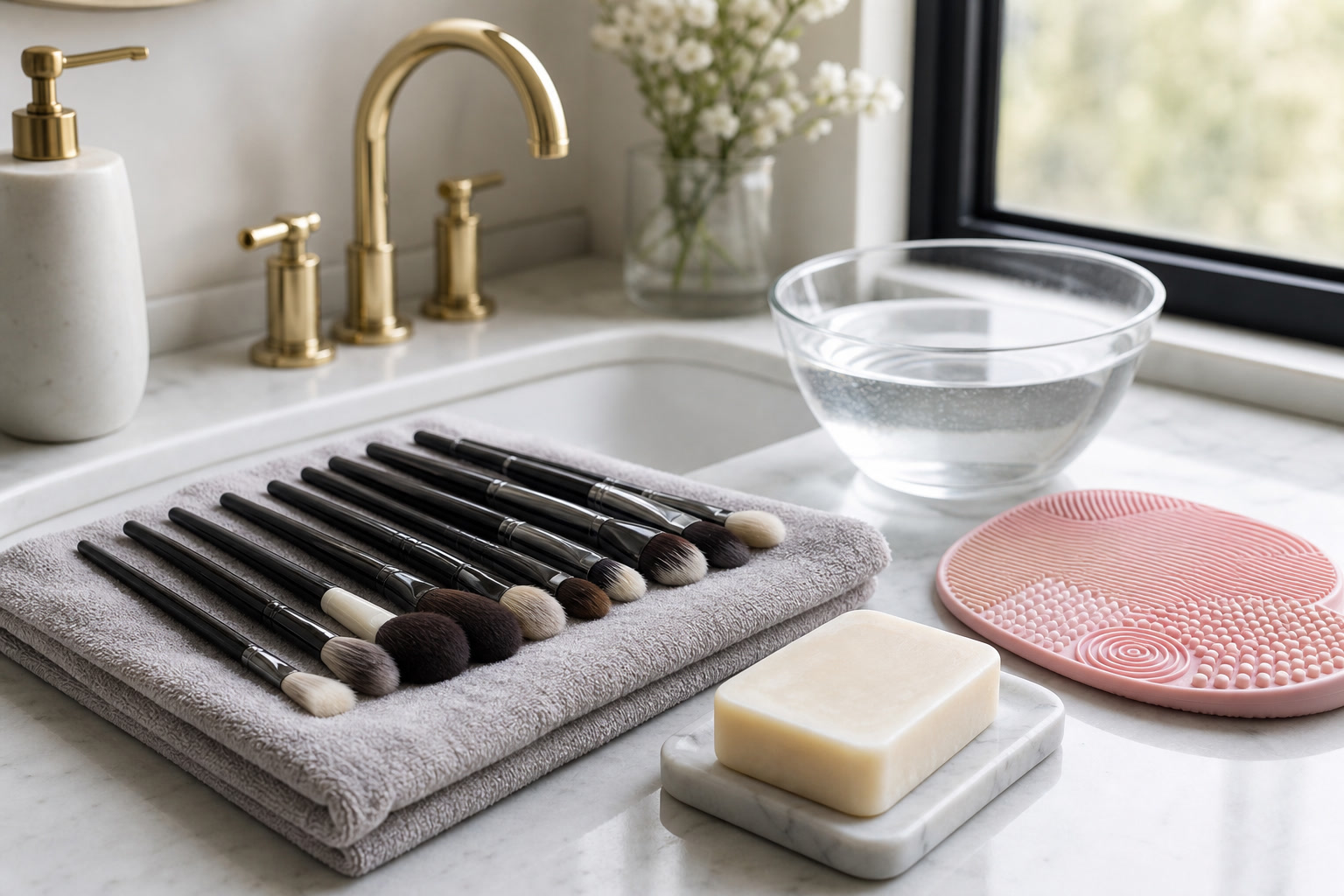
Synthetic brushes offer a different set of physical constraints. Modern synthetic filaments, such as Taklon or specialized extruded polyesters, are designed to mimic the cuticle structure of natural animal hair without the fragility. Because they lack the porous core of natural hair, synthetics do not absorb liquid products, making them highly efficient for depositing pigment. However, their longevity is entirely dependent on the construction of the ferrule-the metal band connecting the bristles to the handle. If water seeps into the ferrule during washing, it degrades the adhesive, leading to shedding and structural failure. A high-quality brush requires careful washing and flat drying, demanding both time and dedicated physical space on your counter. While they outlast sponges by years, they still require a strict sanitation schedule to prevent the transfer of oxidized sebum back onto the skin.
Before dedicating drawer space to an arsenal of applicators, consider the thermal dynamics of the human hand. Fingertips provide a localized heat source that warms cream and liquid formulations, altering their viscosity and allowing them to melt cleanly into the skin's lipid barrier. This tactile approach offers immediate feedback regarding skin texture, dry patches, and product absorption-data that a foam sponge entirely obscures. Manual application requires zero storage space, generates no recurring costs, and eliminates the risk of bacterial colonization associated with damp tools. For most daily routines, a highly curated setup consisting of one dense synthetic buffing brush for complexions and your ring finger for localized blending is vastly superior to a drawer overflowing with specialized, neglected applicators.
High-Tech Devices: The Compliance Tax of Microcurrent and LED
The proliferation of at-home aesthetic devices has transformed the bathroom into a clinical annex, but these tools carry a hidden cost: the compliance tax. Microcurrent devices, designed to stimulate facial musculature and encourage ATP production, operate on a strict requirement of daily, cumulative use. The physical friction of this routine is substantial. Microcurrent requires a conductive gel to bypass the skin's natural electrical resistance. This introduces a cold, sticky step into your evening routine. If the gel is not thoroughly washed off, it frequently pills under subsequent skincare layers, ruining the application of expensive serums. The device itself must be kept charged, and the user must memorize specific upward vectors to achieve results. If your baseline routine is already rushed, injecting a five-minute conductive gel protocol will inevitably result in the device being relegated to the back of a cabinet.
Light Emitting Diode (LED) masks present a different set of ergonomic and storage challenges. To be effective, an LED device must deliver specific, verified wavelengths-typically 633nm red and 830nm near-infrared-at a precise proximity to the skin. Rigid plastic masks are notoriously uncomfortable, often placing heavy pressure on the bridge of the nose and failing to conform to the contours of the jawline. Flexible silicone masks solve the comfort issue but introduce structural vulnerabilities; the internal copper wire traces that connect the diodes are prone to micro-fractures from repeated bending. Furthermore, these masks require a significant storage footprint. They cannot be casually shoved into a drawer without risking damage to the wiring or the diodes. You are essentially dedicating a permanent, flat shelf space to a single-function item.
The long-term viability of these high-tech tools is heavily dictated by their power sources. Most consumer-grade beauty devices utilize sealed lithium-ion batteries. After approximately three hundred to five hundred charge cycles, the chemical integrity of the cell degrades, resulting in diminished battery life and eventual failure. Because these units are sealed for water resistance, the battery cannot be replaced by the user. This transforms a two-hundred-dollar investment into guaranteed e-waste within three to five years. When evaluating a high-tech tool, you must calculate the cost per use based on a strict three-year lifespan, factoring in the daily mental load of charging, cleaning, and storing a bulky piece of plastic.
Thermal Hair Styling: Ergonomics, Heat Dynamics, and Footprint
Hair styling tools are the most physically imposing items in any beauty routine, often demanding their own dedicated storage infrastructure. The recent dominance of multi-styling air tools has exacerbated this issue. These devices rely on the Coanda effect, using high-velocity airflow to wrap hair around a barrel. While they significantly reduce the risk of extreme heat damage compared to traditional irons, they introduce a massive physical footprint. The presentation cases they arrive in are vanity killers, requiring the user to either sacrifice a massive drawer or leave a bulky box permanently on display. Furthermore, the routine friction is high: air styling requires the hair to be at a specific level of dampness, forcing the user to synchronize their styling sessions precisely with their wash schedule. It is a highly choreographed routine that does not tolerate rushing.
Traditional thermal tools-flat irons and curling wands-present a different set of material behaviors. Titanium plates transfer heat almost instantaneously, making them highly effective for coarse hair but incredibly dangerous for fine or compromised cuticles, as moving too slowly will result in structural damage to the keratin bonds. Ceramic plates offer slower, more even heat distribution, reducing the risk of hot spots. Regardless of the plate material, the true failure point of most thermal tools is the cord. Devices without a robust, 360-degree swivel cord will inevitably suffer from internal wire fraying due to the repetitive twisting motions of styling. This is not merely an inconvenience; it is a severe fire and electrical hazard. Proper storage requires allowing the tool to cool completely and loosely coiling the cord without placing tension on the base connection.
The return risk associated with hair tools is exceptionally high because performance is entirely dependent on individual hair porosity, density, and texture. A tool that delivers a flawless blowout on fine, straight hair may cause frizzy, expanded volume on coarse, curly hair. Additionally, the physical weight of the tool is a critical, often overlooked factor. Holding a heavy motor above your head for thirty minutes requires significant wrist and shoulder stamina. If a tool is ergonomically unbalanced, with a center of gravity that pulls the wrist downward, the user will naturally rush the styling process, leading to subpar results and eventual abandonment of the tool.
Manual Sculpting: The Material Realities of Gua Sha and Rollers
Manual facial massage tools, such as Gua Sha boards and facial rollers, are frequently marketed as ancient, mystical solutions to lymphatic stagnation. However, their efficacy is rooted entirely in mechanical friction and fluid dynamics, and their material composition dictates their safety. Traditional stones like jade and rose quartz are naturally porous and highly susceptible to micro-fissures if accidentally dropped in a porcelain sink. These invisible cracks harbor bacteria and dead skin cells, transforming a soothing tool into a vector for acne. Stainless steel is the objectively superior material for manual tools. It is non-porous, sanitizes instantly with a wipe of alcohol, and possesses a higher thermal mass, meaning it retains a cold temperature significantly longer than quartz when used to constrict superficial blood vessels and reduce morning edema.
The mechanics of lymphatic drainage require a precise understanding of skin behavior and friction. A tool cannot simply be dragged across dry skin; it requires a slip agent, typically a facial oil, to prevent micro-tears in the stratum corneum. This introduces a mandatory extra step into your routine. If your skin profile is prone to congestion or you live in a highly humid climate, layering a heavy oil purely to facilitate a massage tool may disrupt your barrier and trigger breakouts. Furthermore, aggressive scraping or rolling does not yield faster results; it merely ruptures delicate capillaries, particularly around the thin skin of the orbital bone. The pressure required for lymphatic drainage is incredibly light-roughly the weight of a coin-as the lymphatic vessels sit just below the surface of the skin.
Before purchasing a dedicated sculpting tool, consider the anatomical alternative: your own hands. The knuckles and the heels of the hands are perfectly designed to contour the jawline and the sternocleidomastoid muscle of the neck. Manual massage provides critical tactile feedback; your fingers can feel areas of muscular tension and adjust pressure accordingly, preventing the bruising that often accompanies heavy-handed Gua Sha use. A manual routine requires zero storage space, poses no risk of shattering on your bathroom tiles, and forces you to actually engage with the texture and condition of your skin rather than mindlessly dragging a cold stone across your face.
The Lifecycle Cost: Maintenance, Degradation, and Curation
The true cost of a beauty tool is not its retail price, but the cumulative minutes required to maintain its operational integrity. A tool is only as effective as your willingness to sanitize it. Intricate crevices in sonic cleansing brushes, the tiny exhaust vents on hair dryers, and the textured grips on microcurrent devices are magnets for sebum, styling products, and environmental dust. If a device cannot be thoroughly cleaned with household isopropyl alcohol or mild dish soap in under thirty seconds, its usage rate will plummet. The friction of maintenance is the primary reason drawers become tool graveyards. We buy the fantasy of the result, but we abandon the reality of the upkeep.
Storage is the final, unyielding constraint. Bathroom real estate is finite. Every bulky charging base, every set of interchangeable attachments, and every proprietary power cord demands a permanent home. When tools are stored out of sight, in the deep recesses of a bottom drawer, they fall victim to out-of-sight, out-of-mind syndrome. Conversely, leaving them on the counter creates visual clutter that raises baseline stress. The solution is modular, vertical storage and aggressive curation. Ditch the manufacturer's presentation boxes immediately. Utilize heat-resistant silicone mats for thermal tools and clear, modular acrylic dividers to separate cords from devices. If a tool does not fit comfortably within your existing organizational architecture, it will become a permanent nuisance.
To prevent the accumulation of abandoned devices, implement a strict simulation protocol before any purchase. If you are tempted by a high-tech cleansing device, commit to washing your face manually for a full sixty seconds every night for two weeks. If you are eyeing a microcurrent tool, perform a five-minute manual facial massage daily. If you cannot maintain the baseline habit with your own hands, a three-hundred-dollar piece of plastic will not magically instill discipline; it will only add guilt to your routine. Curating a functional vanity requires ruthlessness. Apply the 'one in, one out' rule to physical tools, ensuring that every object that occupies space in your home actively earns its keep through reliable, low-friction utility.
Pre-purchase checklist
- Does this tool require a proprietary consumable, such as a specific conductive gel or specialized replacement head, to function?
- Can the device be fully sanitized in under thirty seconds using standard household isopropyl alcohol or mild soap?
- Will the physical dimensions of the tool and its necessary charging base fit upright in your current vanity storage without forcing a reorganization?
- Does the battery unit allow for user replacement, or is the entire device destined for the e-waste bin when the internal lithium-ion cell inevitably degrades?
- Does using this tool add more than three minutes of preparation or cleanup friction to your already established daily routine?
Who should skip this
Consumers with highly reactive skin, those navigating active acne breakouts, or individuals who already struggle to maintain a basic three-step skincare routine should entirely bypass the beauty tool category. Introducing mechanical friction, thermal manipulation, or complex sanitation requirements will only exacerbate barrier damage and increase routine fatigue. Furthermore, frequent travelers should avoid any device that requires a dedicated charging base, relies on heavy glass or stone components, or demands a specific slip agent to function. If your baseline compliance for daily habits is low, purchasing a high-friction, space-consuming tool will not fix your routine; it will merely become an expensive monument to unfulfilled intentions sitting at the bottom of your drawer.
Affiliate transparency
FikaLooks operates on a strict editorial framework focused on material science, routine integration, and pragmatic consumer behavior. We do not accept payment for favorable coverage, nor do we participate in superficial product testing. Our assessments are based on the physical realities of maintenance, storage, and long-term utility. If you choose to purchase a tool through our outgoing links, we may earn a commission. This revenue directly funds our independent editorial research, allowing us to maintain a workspace free from brand interference and dedicated entirely to slower, more deliberate buying decisions.
FAQ
Why do my makeup sponges degrade, tear, and smell so quickly despite regular washing?
Polyurethane foam is structurally vulnerable to the lipid-based ingredients found in modern liquid foundations. When combined with the physical friction of aggressive scrubbing and the constant dampness of a bathroom environment, the foam matrix breaks down rapidly. The odor is a direct result of bacterial and fungal colonization deep within the porous center, which rarely dries completely between uses.
Are silicone cleansing brushes actually more hygienic than traditional nylon bristle brushes?
Yes. Medical-grade silicone is entirely non-porous, meaning it cannot absorb water or harbor bacteria within the material itself. It dries rapidly and can be easily sanitized. Nylon bristles, conversely, trap moisture and dead skin cells at the densely packed base of the brush head, creating an environment that is nearly impossible to fully sterilize at home.
How should I store bulky hair multi-stylers without relying on the massive presentation case they come in?
Discard or store the manufacturer's display box, as it is designed for retail aesthetics, not practical daily use. Utilize a heat-resistant silicone mat for the main motorized handle and employ modular acrylic drawer dividers to store only the specific attachments you use weekly. Store the remaining, rarely used attachments in a separate closet to free up premium bathroom real estate.
Is it worth investing in a dedicated skincare mini-fridge to prolong the life of my tools and serums?
No. The compressor motors in inexpensive cosmetic fridges are prone to early mechanical failure and generate unnecessary ambient heat in your living space. Furthermore, cosmetic chemists formulate commercial skincare to remain highly stable at standard room temperatures. The temporary cooling effect on a facial roller is not worth the electrical footprint or the counter space.