Storage Baskets That Work
Storage Baskets That Work is a storage audit for readers weighing handles, material stiffness, shelf fit, and visible clutter control. The home detail note explains what to check before buying, who should skip it, and where the purchase can become more work than it first appears.
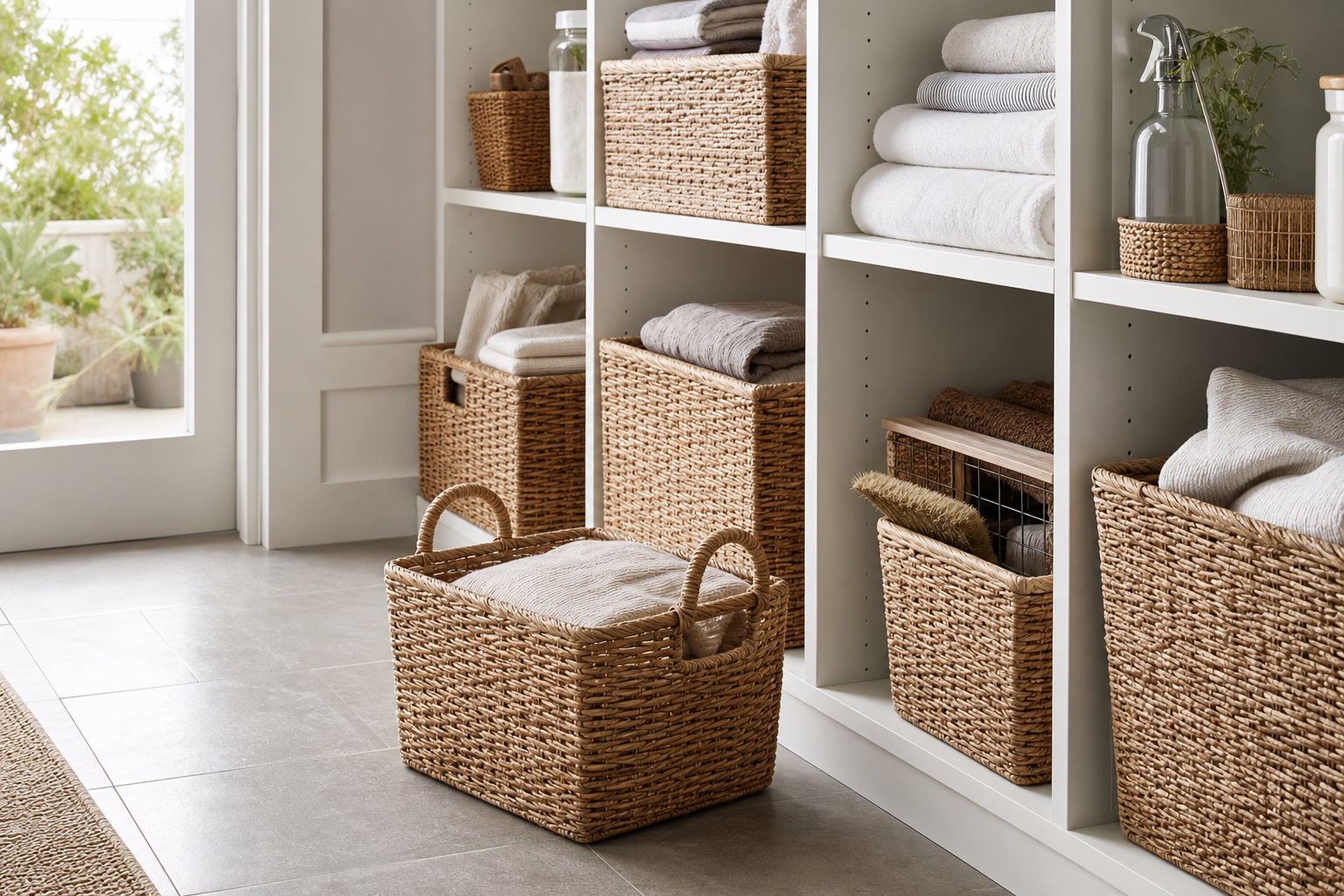
The impulse to organize often manifests as the sudden, optimistic purchase of identical storage baskets. We envision a row of matching woven textures transforming a chaotic linen closet into an editorial spread. Yet, the physical reality of storage is rarely solved by aesthetics alone. A basket is a functional boundary, and when we buy them without analyzing the physics of our daily routines, we simply create more expensive, harder-to-access clutter. The friction of an improperly sized container-one that requires two hands to pull from a tight shelf, or a lid that must be removed just to drop in a pair of socks-virtually guarantees the organizational system will collapse within weeks. At FikaLooks, evaluating storage means looking past the visual warmth of rattan or the minimalist appeal of PET felt. We must examine the dimensional reality of shelf depth, the shedding behavior of natural fibers, the ergonomic cost of retrieval frequency, and the long-term maintenance burden of keeping the containers themselves clean. Slower buying in the context of home organization requires measuring the exact volume of the items you own, understanding how often you need to touch them, and selecting a material engineered to withstand that specific level of interaction.
The Physics of Retrieval Frequency and Ergonomic Friction
The success of any storage vessel depends entirely on the frequency of its retrieval. High-traffic zones-entryway drop stations, daily underwear drawers, and bathroom vanity shelves-demand zero-friction access. In these environments, lids are an immediate point of failure. If a basket requires you to use one hand to hold a lid and another to place an item inside, human nature dictates that the item will simply be left on top of the lid. Furthermore, high-frequency baskets require rigid structural integrity. Soft-sided cotton rope or unreinforced canvas will slump and collapse when empty, requiring you to pry the mouth of the basket open to deposit items. For daily use, rigid sides, open tops, and a low profile are non-negotiable requirements.
Conversely, low-frequency storage zones operate under entirely different physical constraints. Seasonal clothing, guest linens, and holiday decorations sit undisturbed for months, making dust accumulation the primary enemy. In these scenarios, breathable but tightly lidded containers take precedence. A heavy, structured lid prevents dust from settling into the textiles while allowing trapped moisture to escape, provided the basket material itself is permeable. Here, the friction of removing a lid is an acceptable trade-off for the protection it offers. However, the placement of these low-frequency baskets often involves high shelves or deep closet recesses, introducing the ergonomic challenge of weight and leverage.
The ergonomic cost of a loaded basket is frequently underestimated at the point of purchase. A densely coiled cotton basket is heavy even when empty; filled with magazines or heavy winter knits, it becomes a dead weight that strains the wrists when pulled from an overhead shelf. Handle construction becomes critical here. Integrated handle cutouts-where the negative space is built into the rigid frame of the basket-offer superior structural stability compared to attached leather or fabric straps. Straps stitched or riveted to the exterior bear the entire shear force of the load and are highly prone to snapping or tearing the basket material over time. While integrated cutouts slightly reduce the maximum fill volume of the basket, they guarantee that the vessel can be safely maneuvered regardless of its internal weight.
Material Behavior, Shedding, and Long-Term Degradation
Natural woven materials-rattan, seagrass, water hyacinth, and willow-dominate the storage market due to their visual warmth and organic texture. However, their physical behavior in a domestic environment is highly volatile. These materials are inherently brittle and prone to continuous shedding. Dragging a water hyacinth basket across a painted wooden shelf will inevitably leave a trail of micro-fibers and fine dust. More critically, the interior surfaces of these baskets are heavily textured and abrasive. Storing delicate knits, silk garments, or fine linens directly inside an unlined rattan basket guarantees snags and pulled threads. Furthermore, natural fibers are highly reactive to ambient humidity. In damp climates, unsealed seagrass acts as a sponge, harboring mold spores that are impossible to eradicate. In excessively dry, heated homes, the fibers become brittle and snap under minimal pressure.
Soft synthetics and felt offer a modern alternative, frequently marketed for their sound-dampening properties and sleek, uniform appearance. Recycled PET felt is particularly popular in minimalist interiors. Yet, felt is highly susceptible to pilling. If a felt basket is repeatedly pulled in and out of a tight cubby, the friction against the shelving will cause the exterior to develop unsightly fuzz and pills within a few months. Additionally, felt is highly porous and absorbs ambient odors, making it a poor choice for kitchen pantries or bathrooms. Canvas baskets, often reinforced with a single wire rim at the top, present a different degradation path. They rely on the tension of their contents to maintain their shape. Once emptied, they look rumpled, and if the canvas becomes soiled, washing it usually results in a 5% shrinkage rate, permanently warping the fabric away from its wire frame.
Wire grids and powder-coated metal baskets excel in environments requiring visual inventory, such as pantries and utility closets. They do not harbor dust in the same manner as woven materials and offer immense structural strength. However, their hard, unyielding nature makes them hostile to the surfaces they rest upon. A loaded steel wire basket will quickly gouge wooden shelving if dragged rather than lifted. They also fail entirely at containing smaller items, necessitating fabric or plastic liners, which defeats the visual transparency that made the wire appealing in the first place. When selecting metal storage, powder-coated steel is vastly superior to painted iron, as it resists chipping and rust in humid environments, though the base contact points will eventually show wear if subjected to heavy daily friction.
Dimensional Reality and the Trap of Tapered Sizing
The most common failure in storage planning is a misunderstanding of dimensional reality, specifically the trap of tapered sizing. To save on shipping costs, manufacturers design baskets to nest inside one another, which requires a tapered shape-the top opening is significantly wider than the base. While this benefits the supply chain, it is disastrous for domestic shelf space. A basket that measures 14 inches wide at the top but only 11 inches at the base wastes three inches of linear shelf space. When you place three tapered baskets side-by-side, you lose nearly a foot of usable storage volume to the empty V-shaped gaps between them. For maximum efficiency, particularly in small closets, straight-sided baskets with true 90-degree angles are functionally superior, even though they are harder to find and more expensive to ship.
The relationship between basket depth and shelf depth dictates the usability of the system. A basket that is too deep becomes a dark void where items settle at the bottom and are forgotten. If you have a standard 15-inch deep closet shelf, purchasing a 14-inch deep basket maximizes the footprint but introduces an access problem: you must pull the basket out almost entirely to see or reach the items in the back. For deep shelves, installing sliding drawer hardware or using shallower, wider baskets that allow for immediate visual access is often a better strategy. Storage should never require excavation. If you have to remove three items to reach the one you need, the basket is too deep for its designated category.
Vertical clearance is another frequently ignored metric. Consumers often measure the height of their shelf and buy a basket that fits exactly into that space, leaving only half an inch of clearance at the top. This creates a functional blockade. Without adequate vertical clearance, you cannot see inside the basket, nor can you drop items into it without sliding the entire unit out. For open-top baskets meant for daily use, a minimum of three to four inches of vertical clearance above the rim is required to allow the hand to comfortably reach in and retrieve items without moving the vessel itself. Failing to account for this drop-in zone turns a quick motion into a two-handed chore.
The Maintenance Burden and Cleaning Protocols
Open storage is a magnet for airborne particulate matter, and the maintenance burden of keeping baskets clean is rarely factored into the purchasing decision. Intricately woven baskets-such as those made from split rattan or twisted seagrass-are architectural dust traps. Wiping them with a damp cloth is ineffective, as the cloth simply pushes the dust deeper into the crevices of the weave. Feather dusters catch and tear on the rough fibers. The only effective way to clean a heavily textured natural basket is with a high-powered vacuum equipped with a bristle brush attachment, a tedious chore that most households will simply ignore until the basket looks visibly grimy. If you are unwilling to vacuum your storage containers, you should avoid deep-textured weaves entirely.
Moisture and spills introduce a different category of maintenance failure. Baskets deployed in bathrooms, kitchens, or laundry rooms are subjected to steam, product leaks, and damp environments. Unsealed wood, natural grasses, and untreated leather handles will absorb this moisture, leading to structural softening and eventually mildew. Once mold spores penetrate the porous fibers of a water hyacinth basket, the item cannot be salvaged and must be discarded. For wet zones, the material must be impervious. Perforated high-grade PET plastics, powder-coated aluminum, or thick, machine-washable silicone are the only materials that can withstand the chemical and moisture exposure of a bathroom vanity or under-sink cabinet without degrading.
Structural fatigue over time is a silent maintenance issue that plagues soft storage. Cotton rope baskets, while aesthetically pleasing and gentle on delicate fabrics, suffer from gravity. In humid environments, or when holding unevenly distributed weight, the soft walls eventually buckle and slump. Reshaping a deformed cotton basket requires emptying it completely, stuffing it tightly with rigid towels, and heavily steaming the exterior to relax and reset the fibers. This is a highly involved maintenance task. If a storage vessel requires periodic steaming just to stand upright, it has failed its primary directive of containing items with minimal user intervention. Recognizing your own tolerance for container maintenance is crucial before committing to soft-sided solutions.
Logistics of Purchasing, Batch Consistency, and Return Risks
The logistics of shipping large, empty volumes mean that storage baskets frequently arrive deformed. Soft baskets, felt bins, and even wire frames are often nested so tightly in transit that they warp under pressure. While a crushed cotton basket can theoretically be steamed back into shape, a bent wire frame or cracked rattan weave represents permanent structural damage. The risk of receiving damaged goods is high when ordering baskets online, necessitating immediate inspection upon arrival. Check the base for stability-a basket that rocks on a flat surface will be endlessly frustrating to use. Inspect woven joints for snapped fibers, and ensure that wire welds are intact before breaking down the shipping boxes for recycling.
Color variance is a significant hurdle when purchasing natural materials. Seagrass, water hyacinth, and bamboo vary wildly in color depending on the harvest season, the soil conditions, and the drying time. A basket purchased in May might have a distinct greenish hue, while the exact same SKU ordered in November could be a deep, toasted brown. If visual uniformity is important to your organizational system, you must purchase the exact quantity needed-plus one spare-in a single batch. Attempting to add a matching natural basket to your collection six months later will almost certainly result in a mismatched set. Synthetics and dyed fabrics offer better batch consistency, though UV fading over time will still cause older baskets to look different from newer replacements.
Before executing a purchase, slower buying principles dictate an audit of existing household containers. Often, the urge to buy new baskets is driven by a desire for visual uniformity rather than a lack of actual storage volume. Heavy-duty cardboard shipping boxes wrapped in remnant linen, vintage wooden crates, or repurposed ceramic bowls often serve specific micro-storage needs far better than a generic store-bought basket. By delaying the purchase, you allow the exact dimensional and material requirements of the clutter to reveal themselves. You should only buy a storage basket when you know exactly what category of items will live inside it, exactly which shelf it will sit upon, and exactly how the material will behave under the friction of your daily routine.
Pre-purchase checklist
- Measure the exact depth, width, and height of your shelf, intentionally subtracting three to four inches vertically to ensure adequate drop-in clearance for your hands.
- Perform a friction test by rubbing a dark cotton cloth against any woven natural material to assess the risk of shedding, snagging, and micro-fiber dust.
- Verify the geometry of the basket walls; prioritize straight vertical sides over tapered designs to prevent losing 10-15% of your linear shelf space to empty gaps.
- Examine the handle construction under load, prioritizing integrated cutouts built into the frame over stitched or riveted straps that bear shear force and snap over time.
- Assess the realistic cleaning protocol for the material: determine if it can be quickly wiped with a damp cloth or if its texture requires tedious vacuuming with a bristle attachment.
Who should skip this
Skip purchasing any storage basket if you are using it merely to hide undefined clutter without establishing a categorization system first. Buying a beautiful, opaque vessel to throw random, unrelated items into does not solve disorganization; it merely creates a 'hidden doom box' that makes finding your belongings more difficult. Furthermore, entirely skip natural woven materials like rattan or water hyacinth if you live in a highly humid climate without central air conditioning, or if you plan to use the basket in a bathroom. The porous nature of these dried grasses guarantees they will absorb ambient moisture, leading to irreversible mold growth and structural rot within a single season. If you cannot articulate exactly what will go inside the basket and how often you will need to retrieve it, leave the item on the shelf.
Affiliate transparency
FikaLooks funds its independent editorial research and dimensional testing through reader support. If you purchase through links in our storage and organization guides, we may earn a commission. We do not accept payment for editorial placement, and our critiques regarding material degradation, shelf-space efficiency, and long-term maintenance burdens remain strictly objective.
FAQ
How do I fix a cotton rope basket that arrived folded and severely misshapen?
To restore a crushed cotton rope basket, you must force it back into its intended geometry using heat and tension. Stuff the basket as tightly as possible with heavy blankets or dense towels, pushing them firmly into the corners and base until the walls are taut. Then, use a handheld garment steamer on the exterior, moving slowly to allow the hot steam to penetrate and relax the cotton fibers. Leave the basket fully stuffed for at least 48 hours in a dry room until the fibers completely cool and set into their new shape.
Why do my newly purchased seagrass baskets smell strongly of hay or chemicals?
Natural fibers are frequently treated with anti-fungal chemical sprays before being packed into shipping containers to prevent mold during overseas transit. Additionally, the dried grasses themselves retain a strong, earthy odor. To mitigate this, empty the baskets and leave them outdoors in direct sunlight and a cross-breeze for three to five days. The UV light and air circulation will help off-gas the treatments. If a sour, damp smell persists after a week, moisture may be trapped in the core of the weave, which is a defect that warrants a return.
Are PET felt baskets safe for storing delicate wool and cashmere sweaters?
While felt baskets are soft and lack the sharp edges of wire or rattan, they are not entirely friction-free. High-density PET felt can be abrasive on a microscopic level. Repeatedly pulling a delicate cashmere sweater in and out of a felt basket can cause the sweater's fibers to catch on the felt, leading to premature pilling on the garment itself. For high-end knits, a basket lined with smooth, tightly woven cotton canvas or a dedicated archival storage box is a much safer, lower-friction alternative.
How much weight can a standard decorative wire basket hold before the base begins to warp?
The load-bearing capacity of a wire basket depends entirely on the gauge of the steel and the presence of cross-bracing. Thick-gauge, industrial steel baskets can easily support 20 to 30 pounds of canned pantry goods without bowing. However, thin-gauge decorative wire baskets-often sold in homeware boutiques-will begin to bow at the base with anything heavier than five pounds of magazines or root vegetables. If you intend to store heavy items, look specifically for wire baskets that feature reinforced, welded cross-bars running diagonally across the bottom panel.