Candles Without the Headache
Candles Without the Headache is a fragrance note for readers weighing scent strength, wax quality, ventilation, and sensitive noses. The home detail note explains what to check before buying, who should skip it, and where the purchase can become more work than it first appears.
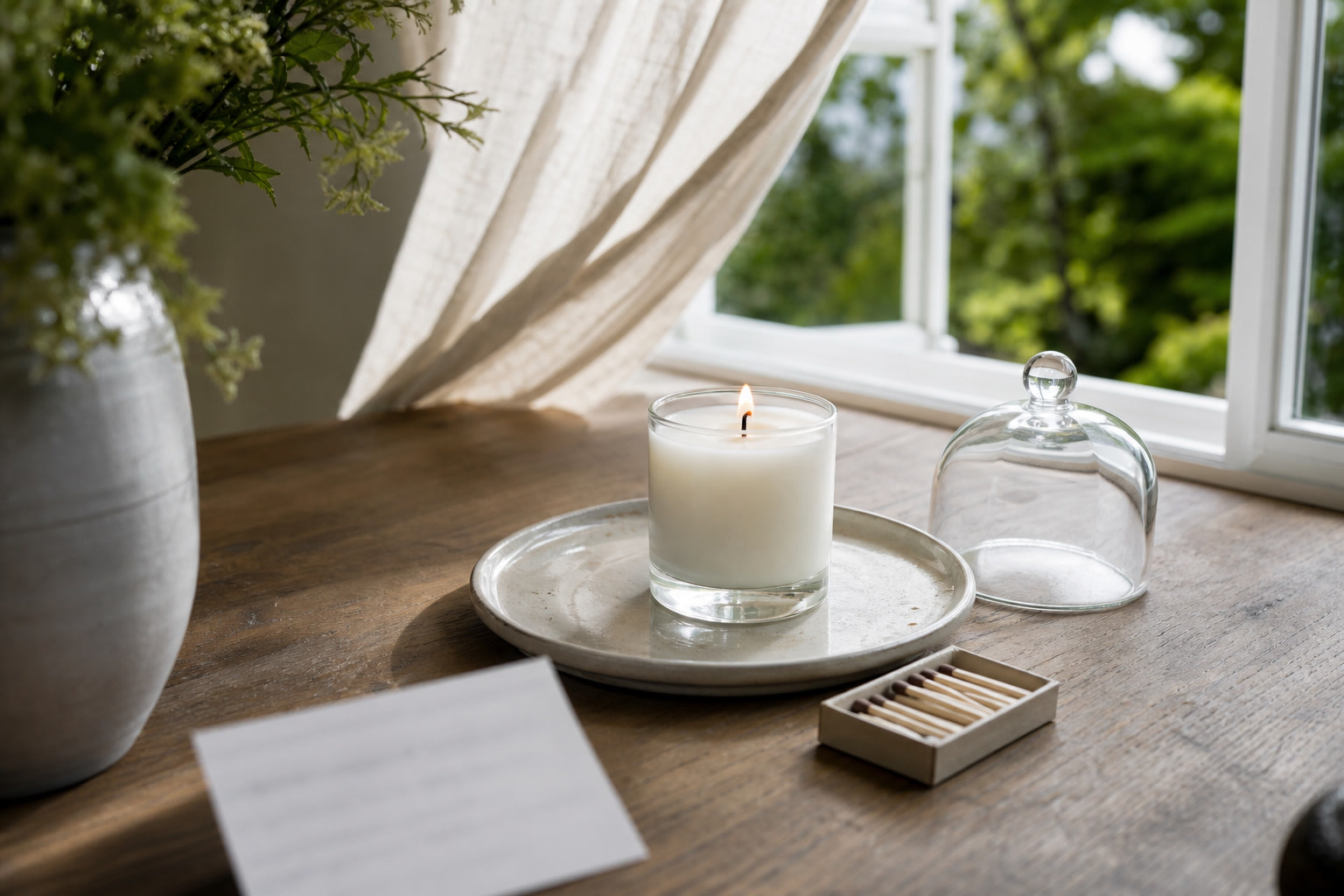
Scented candles represent a deliberate pause, a tactile addition to the domestic environment that promises to alter the atmosphere of a room through scent and low-level light. Yet, the gap between the idealized marketing of home fragrance and the physical reality of a burning candle is vast. Consumers frequently encounter uneven melt pools, black soot staining expensive glass vessels, and aggressive synthetic throws that induce migraines rather than relaxation. Navigating the home fragrance market requires moving past the superficial appeal of minimalist typography and poetic scent descriptions. It demands a working understanding of wax chemistry, wick mechanics, and the physiological limits of our olfactory system. A candle is essentially a small, controlled chemical fire; how it behaves depends entirely on the structural integrity of its components and the strictness of your maintenance routine. This guide deconstructs the mechanics of a proper burn, the reality of fragrance loads, and the specific maintenance required to prevent a premium purchase from becoming a tunneled, smoke-emitting regret.
Decoding Fragrance Loads and the Headache Threshold
The primary metric consumers look for in a candle is the strength of its scent, often assuming that a higher concentration of fragrance oil equates to a superior product. In reality, wax has a strict saturation point. The industry standard fragrance load sits between six and ten percent. Pushing a wax blend past twelve percent usually results in the oil separating from the wax matrix, a phenomenon known as sweating. When a candle sweats, highly concentrated pools of flammable fragrance oil gather on the surface. Upon lighting, these pools ignite rapidly, causing the wick to flare, producing heavy black soot and an acrid, burnt chemical smell that entirely masks the intended fragrance profile. A well-engineered candle relies on the quality and volatility of the oil, not merely the volume poured into the vat.
The headache risk associated with scented candles stems largely from the specific chemical compounds used to stabilize and project the fragrance. Phthalates, historically used as solvents to extend the life of a scent, are notorious migraine triggers and volatile organic compounds (VOCs). Heavy synthetic musks and certain aldehydes, designed to force a strong 'hot throw' (the scent emitted when burning), can overwhelm the olfactory receptors. When exposed to these dense, synthetic compounds in an enclosed space, the human nervous system often reacts with a tension headache or nausea. Brands operating within the stringent guidelines of the International Fragrance Association (IFRA) formulate their oils to minimize respiratory irritation, but the presence of cheap, unregulated solvents in lower-tier candles remains a primary cause of physical discomfort.
Furthermore, the marketing binary of 'synthetic equals bad' and 'natural equals safe' is fundamentally flawed in the context of combustion. Essential oils are highly volatile, complex chemical structures. Burning a candle heavily loaded with pure essential oils does not guarantee a headache-free experience; in fact, many natural extracts, such as heavy florals or concentrated citrus rinds, are potent allergens that become highly reactive when subjected to an open flame. Natural oils also burn off much faster and more unevenly than lab-engineered synthetics, often resulting in a weak hot throw and a scent profile that degrades into a generic, waxy smell halfway through the vessel's lifespan. The most stable, comfortable burns usually come from hybrid formulations where safe synthetics are used to anchor natural botanical extracts.
Wax Chemistry and the Elusive Even Burn
The foundation of any candle is its wax, and the choice of material dictates the burn rate, the scent throw, and the visual aging of the product. Paraffin wax, a byproduct of petroleum refining, carries a negative reputation in modern marketing, yet it remains the undisputed champion of scent throw. Paraffin's molecular structure allows it to hold complex fragrance oils securely and release them efficiently upon heating. However, it burns quickly and produces significantly more soot than other waxes if the wick is not meticulously maintained. Soy wax emerged as the eco-friendly alternative, offering a slower, cooler burn and minimal soot. The trade-off is a notoriously weaker hot throw and a tendency toward polymorphism-a physical reaction where the wax crystallizes, creating a white, chalky appearance known as frosting. While frosting does not affect the burn, it ruins the aesthetic of clear glass vessels.
Currently, premium fragrance houses lean heavily toward coconut and apricot wax blends. Coconut wax holds a high volume of fragrance oil without sweating, burns exceptionally clean, and throws scent beautifully. Its primary flaw is its low melting point. A pure coconut wax candle can begin to soften and warp simply from sitting in a warm delivery truck during summer transit, forcing manufacturers to blend it with harder waxes like soy or beeswax to maintain structural integrity. Beeswax itself is dense, burns incredibly slowly, and emits negative ions, but its natural honey-like scent interferes with delicate fragrance formulations, restricting its use to heavier, warmer scent profiles.
Regardless of the wax type, the physical behavior of the candle is governed by the 'memory burn.' Wax retains a physical memory of its first lighting. If a candle is extinguished before the melted wax reaches the edges of the vessel-a process that typically takes one hour per inch of the candle's diameter-it creates a permanent physical boundary. Subsequent burns will refuse to melt past this initial ring, resulting in tunneling. The flame will burrow straight down the center, leaving a thick wall of wasted wax on the glass and eventually suffocating the wick in a deep, narrow hole. Achieving a full melt pool on the first burn is the single non-negotiable rule of candle maintenance.
Wick Mechanics and the Maintenance Burden
The wick is the engine of the candle, acting as a capillary pump that draws liquid wax up into the flame to be vaporized. Cotton wicks are the industry standard, often braided with paper or zinc cores to keep them standing upright in deep melt pools. A well-calibrated cotton wick provides a steady, tear-drop-shaped flame. Conversely, wooden wicks have gained popularity for their wide, horizontal flames and acoustic crackling sound. However, wooden wicks are notoriously temperamental. They draw wax less efficiently than braided cotton, meaning they frequently self-extinguish if the wax pool becomes slightly too deep or if the fragrance load is too heavy. They also require the user to snap off the charred wood before every burn, a messy process that often drops black debris into the pristine wax.
The maintenance burden of a scented candle is absolute. A wick must be trimmed to exactly one-quarter of an inch before every single ignition. Leaving a wick too long causes it to draw liquid wax faster than the flame can cleanly burn it off. This incomplete combustion results in 'mushrooming'-a brittle, carbon buildup at the tip of the wick that emits thick black smoke and dangerous flare-ups. Trimming removes this carbon cap, ensuring a controlled, low-temperature flame that heats the wax gently rather than scorching the fragrance oils.
Extinguishing the candle requires equal precision. Blowing out a candle introduces a cloud of acrid smoke into the room, instantly ruining the delicate hot throw you just spent two hours cultivating. The proper method involves using a wick dipper-a curved metal tool used to push the lit wick directly into the melt pool and immediately pull it back up. This extinguishes the flame without a single wisp of smoke and pre-coats the wick in wax, making it easier to light the next time. Alternatively, a bell snuffer starves the flame of oxygen, though it still produces a minor amount of smoke compared to the dipping method.
Storage Degradation and the Blind-Buy Return Risk
Candles are not static objects; they are active chemical mixtures that degrade over time. The average shelf life of a scented candle is twelve to eighteen months, after which the top notes-particularly volatile citrus, bergamot, and light florals-evaporate, leaving behind a flat, base-heavy scent. Ultraviolet light is a primary catalyst for this degradation. Displaying a clear glass candle on a sunlit windowsill will cause the fragrance oils to break down and the wax to discolor, often turning a pristine white soy blend into a sickly yellow. Temperature fluctuations are equally damaging. Storing candles in a hot room causes the wax to expand and contract, leading to sweating, cracking, and a loss of adhesion where the wax pulls away from the glass vessel.
Proper storage requires treating premium candles like fine wine or perfume. They must be kept in a cool, consistently temperature-controlled environment, away from direct sunlight. Lids are not merely decorative; they serve a functional purpose by trapping the volatile fragrance compounds inside the vessel and preventing dust from settling on the wax surface. Dust acts as secondary fuel when the candle is lit, creating micro-flames across the surface that burn off the scent and produce soot. If a candle does not come with a lid, storing it in its original cardboard box or under a glass cloche is necessary to preserve its chemical integrity.
The financial risk of purchasing candles online is exceptionally high due to the nature of blind buying. Scent is highly subjective, and the cold throw (how it smells unlit) often differs drastically from the hot throw. Most retailers and fragrance houses have strict return policies regarding combustible products: once a wick is lit, the item is non-refundable. To mitigate this risk, consumers should seek out brands that offer discovery sets of tealights or those that ship a small, unburned scent sample alongside the full-sized product. This allows the buyer to test the fragrance profile in their own space before breaking the seal on the primary vessel, securing the option for a full return if the scent induces a headache or fails to meet expectations.
Spatial Scaling and Non-Combustible Alternatives
A common point of failure in home fragrance is a mismatch between the candle's physical output and the volume of the room. A standard single-wick candle, typically weighing around 190 to 220 grams, is engineered to scent a closed bedroom or a standard bathroom. Placing a single-wick candle in an open-plan living room or a space with vaulted ceilings will result in zero perceptible scent throw. In an attempt to force the scent to fill the room, users often leave the small candle burning for five or six hours. This extended burn overheats the glass, degrades the remaining fragrance oil, and causes the wick to mushroom aggressively. Large, drafty spaces require multi-wick candles with a massive surface area to generate a melt pool wide enough to project scent across the square footage.
When the maintenance of wicks, the risk of soot, or the limitations of spatial scaling become too burdensome, abandoning combustion entirely is the most logical step. Reed diffusers offer a passive, constant scent throw ideal for entryways and bathrooms, though they require regular flipping of the reeds and perform poorly in large rooms. For active, high-fidelity scenting without heat degradation, cold-air nebulizers are the superior alternative. These devices use pressurized air to break pure fragrance oil into a micro-fine mist, preserving the exact chemical profile of the scent without introducing VOCs from burning wax or smoke into the environment. Nebulizers allow for precise control over scent intensity and duration, completely eliminating the headache risks associated with poor wax combustion.
Developing a sustainable long-term home fragrance strategy involves treating candles as localized, temporary tools rather than continuous air fresheners. Relying on a nebulizer or high-quality diffusers establishes a baseline scent in the home, reducing the reliance on open flames. Candles can then be reserved for specific, time-bound rituals-such as dining, bathing, or reading-where the visual ambiance of the flame is just as important as the scent. This layered approach prevents olfactory fatigue, drastically extends the lifespan of expensive candles, and ensures that the act of lighting a wick remains a deliberate, enjoyable process rather than a frustrating battle against tunneling and soot.
Pre-purchase checklist
- Verify the wick is perfectly centered; an off-center wick will heat the glass unevenly and guarantee a tunneled burn.
- Inspect the wax surface under bright light for tiny beads of moisture, which indicates fragrance oil sweating and poor formulation.
- Calculate the volume-to-burn-time ratio; a well-made 200g candle should offer approximately 40 to 50 hours of burn time.
- Check the vessel for a high-quality, airtight lid or dust cover to ensure the top notes haven't evaporated during warehouse storage.
- Confirm the brand explicitly states IFRA compliance to minimize the risk of unregulated solvents and phthalate-induced headaches.
Who should skip this
Consumers with severe asthma, chronic migraines, or highly sensitive respiratory systems should bypass combustible home fragrance entirely, as even the cleanest burning wax introduces particulate matter into the air. Households with pet birds must strictly avoid scented candles, as avian respiratory systems are acutely vulnerable to airborne toxins, VOCs, and essential oils, often with fatal consequences. Furthermore, if you are unwilling to commit to the strict maintenance routine of trimming the wick to a quarter-inch before every single use and monitoring the initial memory burn for up to three hours, a premium candle will quickly degrade into a smoking, tunneled mess, making a passive reed diffuser or a cold-air nebulizer a far better investment.
Affiliate transparency
FikaLooks funds its independent editorial operations through affiliate partnerships. When you purchase home fragrance products or candle maintenance tools through our curated links, we may earn a commission. This structure never influences our technical evaluations, our stance on material chemistry, or our warnings regarding poor burn performance.
FAQ
How can I fix a candle that has already started tunneling?
If the tunneling is minor, you can use the aluminum foil method. Wrap a layer of foil around the top edge of the glass vessel, leaving a small hole in the center over the flame. This acts as a kiln, reflecting heat back down onto the hard wax ring on the edges, forcing it to melt and rejoin the center pool. Once the surface is entirely liquid, carefully remove the foil. If the tunnel is deeper than an inch, the wick will likely drown in the melting wax, and the candle must be repurposed on a wax warmer.
Why do I stop smelling my candle after it has been burning for an hour?
This is a physiological response known as olfactory fatigue or noseblindness. Your brain constantly scans for new environmental stimuli; once it determines a scent is not a threat, it stops processing the signal to prevent sensory overload. The candle is still throwing scent, which becomes immediately obvious if you step outside for ten minutes and re-enter the room. To minimize this, avoid burning highly aggressive, linear scents for more than three hours at a time.
Is the black soot on the rim of my candle glass dangerous?
Black soot indicates incomplete combustion, meaning the wick is drawing up more wax and oil than the flame can cleanly burn. While occasional, minor soot from a drafty room is mostly an aesthetic nuisance, chronic heavy soot introduces fine particulate matter into your indoor air, which can irritate the lungs and stain walls. It is a clear signal that you need to trim your wick shorter or move the candle away from HVAC vents and open windows.
Can I store my candles in the refrigerator or freezer to make them last longer?
No. Exposing wax to extreme cold causes it to contract violently. This will cause the wax to pull away from the glass vessel, ruining the aesthetic, and can cause deep micro-cracks throughout the candle body. When lit, the melted wax will seep into these cracks, drowning the wick and ruining the burn mechanics. Candles should be stored in a cool, dry cabinet at standard room temperature.