Neutral Rug Buying Notes
Neutral Rug Buying Notes is a soft furnishing guide for readers weighing pile height, cleaning, undertone, shedding, and room scale. The home detail note explains what to check before buying, who should skip it, and where the purchase can become more work than it first appears.
The editorial appeal of a pristine, neutral rug is undeniable. It acts as a visual quiet zone, anchoring disparate pieces of furniture while reflecting natural light to make a room feel expansive and intentional. Yet, beneath the aesthetic allure lies a demanding reality of material science and daily maintenance. A cream, beige, or taupe textile placed on the floor is inherently vulnerable to the friction of daily life, capturing everything from tracked-in particulate matter to the subtle oxidation of foot traffic. Choosing a neutral rug requires moving beyond the hex code of the color and evaluating the structural integrity of the fibers, the density of the weave, and your own tolerance for maintenance. This guide examines the behavior of light-colored textiles under stress, the deception of certain luxury fibers, the logistical risks of sizing, and the precise protocols required to keep a neutral foundation from becoming a visual liability.
Visual Weight and the Nuance of Neutral Undertones
In the context of floor coverings, visual weight is dictated as much by texture as it is by color. A flatweave cream rug feels entirely different from a thick Moroccan-style high-pile rug dyed the exact same shade. The flatweave recedes, reading as a crisp, architectural layer that keeps the room feeling sharp and lightweight. Conversely, a deep pile absorbs light rather than reflecting it, casting micro-shadows across its surface that give the textile a heavier, more grounded presence. When selecting a neutral, you must decide whether the room requires a quiet backdrop or a highly tactile anchor.
The concept of a 'true neutral' is largely a myth. Every beige, cream, greige, or taupe carries an underlying bias that will either harmonize or clash with your existing environment. A beige rug might lean yellow, green, or pink, while grays often harbor blue or violet undertones. These subtleties remain dormant in a brightly lit showroom or on a backlit monitor, only to become glaringly obvious when unrolled in your living room. Natural light manipulates these undertones throughout the day; a cool north-facing room will amplify gray and blue notes, while a south-facing room will pull out the warmth in creams and taupes.
The interaction between the rug's undertone and your hard flooring is the most critical visual relationship in the space. Placing a cool-toned, stark white rug over warm, red-oak hardwood creates a jarring architectural disconnect. The floor and the textile fight for dominance rather than blending. To bridge this gap, look for transitional neutrals like greige or a warm mushroom taupe, which possess enough complexity to speak to both cool walls and warm floors without looking disjointed.
To mitigate the starkness of a solid light color, consider neutrals that incorporate subtle structural patterns. Tone-on-tone carving, varied pile heights, or striated weaves introduce visual interest without disrupting the quiet palette. These textural variations serve a highly practical purpose: they scatter light and actively camouflage minor imperfections, lint, and the inevitable slight shifts in color caused by daily foot traffic. A completely flat, solid cream rug offers no hiding place for daily wear, whereas a subtly heathered yarn provides a margin of error.
Material Behavior and the Fiber Reality
Wool remains the gold standard for neutral floor coverings, offering a rare combination of softness, durability, and natural soil resistance. High-quality wool fibers are coated in lanolin, a natural waxy substance that causes liquid spills to bead on the surface temporarily, granting you a brief window to blot the moisture before it penetrates the core. However, new wool rugs undergo a 'sprouting' phase. Loose, short fibers trapped deep within the pile during the shearing process will work their way to the surface, resulting in significant shedding for the first few months. This is a structural reality of staple-spun yarn, not a manufacturing defect.
Viscose, often marketed under the deceptive names of 'art silk' or 'bamboo silk,' is the absolute liability of the rug industry. It possesses a beautiful, luminous sheen and an incredibly soft hand-feel, making it highly photogenic. Yet, viscose is structurally weak and highly reactive to moisture. Even a spill of plain water will permanently alter the cellulose fiber, leaving a stiff, yellowed watermark and causing the pile to flatten irreversibly. A neutral viscose rug is strictly suited for low-traffic, no-spill environments like formal, adult-only bedrooms.
Natural plant fibers such as jute, sisal, and seagrass offer excellent textural contrast and a relaxed, organic aesthetic. They are inherently neutral, bringing warmth and a casual architectural element to a room. However, they are highly absorbent and cannot be wet-cleaned; moisture causes them to shrink, warp, and harbor mildew. Furthermore, jute has a tendency to break down under heavy friction, leaving a fine, sandy dust on the floor beneath the rug. They are resilient against dry dirt but unforgiving when introduced to liquid.
For high-risk environments like dining rooms or heavy-traffic living areas, high-performance synthetics have become a viable alternative. Modern PET yarns, extruded from recycled plastic bottles, have evolved drastically, successfully mimicking the matte finish and varied texture of wool flatweaves. Polypropylene is another option, though it tends to flatten under heavy furniture. The primary advantage of these synthetics is their hydrophobic nature; they do not absorb liquid, and many can be aggressively spot-cleaned or even bleached, making them the only pragmatic choice for a light-colored rug in a chaotic household.
The Maintenance Burden and Cleaning Protocols
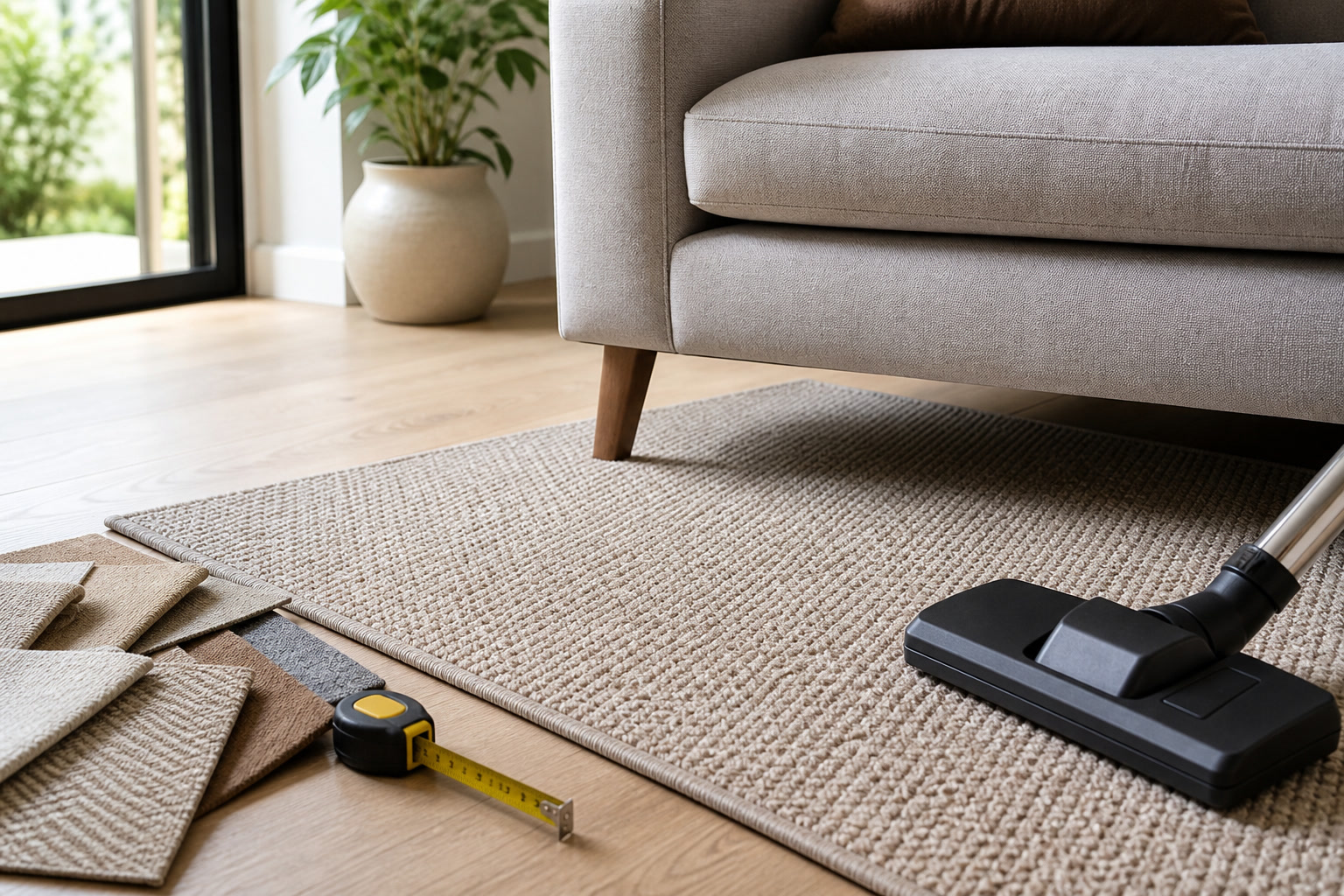
Living with a light-colored rug shifts vacuuming from a weekly chore to a near-daily necessity. Dark pet hair, lint from clothing, and tracked-in dust are immediately visible against a cream background. However, the method of vacuuming is critical. Using a motorized beater bar on a looped wool or natural fiber rug will aggressively pull the yarns, causing permanent fuzzing, sprouting, and structural damage. You must use a high-quality vacuum with the beater bar disengaged, relying entirely on the suction-only or hard-floor setting to lift debris without abrading the textile.
Spot cleaning a neutral rug requires precision and speed. Time is the only variable that matters when coffee, wine, or pet accidents hit the fibers. The protocol is strict: blot heavily with a clean, undyed white cotton cloth to absorb the liquid. Never rub or scrub the stain, as this forces the pigment deeper into the yarn and permanently distorts the pile direction. While enzymatic cleaners are highly effective for biological stains, they must be rinsed thoroughly; leaving them in wool can cause the enzymes to degrade the natural protein fibers over time.
The phenomenon of 'traffic lanes' is unavoidable with light textiles. Over time, the specific path walked most frequently will compress and oxidize, appearing darker and duller than the perimeter of the rug, even if it is technically clean. The friction of footsteps microscopically scratches the fibers, changing how they reflect light. To combat this uneven aging, you must rotate the rug 180 degrees every six months. This distributes the wear patterns, ensuring the textile ages uniformly rather than developing a permanent, visible trench through the center of the room.
Professional maintenance is not optional for a high-quality neutral rug. Surface-level consumer steam cleaners often do more harm than good; they inject hot water and detergent into the pile but lack the extraction power to pull it all back out. This leaves a sticky, soapy residue deep in the foundation that rapidly attracts new dirt, causing the rug to look grimy shortly after cleaning. A neutral wool or hand-knotted rug requires professional immersion cleaning at a dedicated facility every two to three years to flush out embedded particulate matter and restore the loft of the pile.
Sizing, Placement, and the Returns Risk
Purchasing a large rug online introduces a significant logistical risk. A 9x12 or 10x14 rug arrives tightly machine-rolled, bound, and shrink-wrapped in heavy-duty plastic. Once you cut that packaging open and unroll the rug, repacking it to meet the strict dimensional requirements of a courier for a return is nearly impossible for an individual. This one-way trip reality makes getting the size, color, and texture right on the first attempt absolutely critical. Ordering a small swatch prior to the full-size purchase is the only reliable way to mitigate this risk.
Proper sizing dictates the spatial harmony of the room. A rug that is too small makes the furniture look disconnected and the room feel fragmented. To visualize the footprint before buying, map out the exact dimensions on your floor using painter's tape. In a living room, the rug must act as an anchor; at a minimum, the front legs of the sofa and all accent chairs should rest comfortably on the pile. If the budget allows, a rug large enough to hold all four legs of the furniture creates the most cohesive, luxurious aesthetic.
Dining room placement carries its own strict dimensional rules. The rug must extend at least 24 to 36 inches beyond all edges of the dining table. This ensures that when chairs are pulled out, the back legs remain on the rug. If the rug is too small, the chair legs will constantly catch on the binding, causing frustration and rapidly degrading the edge of the textile. Given the high spill risk in a dining area, committing to a massive neutral rug here requires selecting a low-pile or flatweave synthetic that can withstand heavy chair friction and frequent cleaning.
A rug pad is a non-negotiable component of the installation. It does far more than prevent the rug from slipping; it absorbs the downward impact of footsteps, preventing the coarse foundation of the rug from grinding against your hard floors and simultaneously protecting the rug fibers from crushing. However, cheap PVC or synthetic rubber pads contain plasticizers that can off-gas and permanently discolor polyurethane floor finishes. Invest in a high-quality pad made from 100% natural rubber, recycled felt, or a combination of both, cut exactly two inches smaller than the rug's perimeter so the edges taper cleanly to the floor.
Long-Term Aging, Storage, and Layering Alternatives
Accepting the patina of a light-colored textile is part of the ownership experience. A neutral rug will not remain perfectly pristine. Wool will soften and slightly pill, natural plant fibers will darken or shift in hue with prolonged UV exposure, and the overall color will settle into a lived-in state. This evolution is a characteristic of natural materials reacting to their environment, not a structural failure. Attempting to keep a neutral rug looking like it just left the showroom requires an exhausting level of vigilance that often detracts from the comfort of the home.
If you need to store a large rug temporarily or seasonally, proper protocols prevent irreversible damage. The rug must be thoroughly vacuumed on both sides to remove sharp particulate matter. It should then be rolled tightly around a rigid cardboard tube to maintain its structure. Never fold a rug, as this breaks the foundation and creates permanent creases that will not fall out. Wrap the rolled rug in a breathable material like Tyvek or unbleached muslin. Wrapping a rug in plastic traps ambient moisture, inevitably leading to mildew and dry rot.
For those who appreciate the aesthetic of a neutral floor but cannot tolerate the maintenance of a massive cream wool piece, layering offers a strategic alternative. You can use a large, inexpensive, and highly durable natural sisal or jute rug as the room's base layer. Over this, place a smaller, more forgiving vintage or heavily patterned rug exactly in the seating area. This technique provides the expansive neutral border that lightens the room while concentrating the high-stress, high-traffic zone on a textile that actively camouflages daily life.
Finally, account for architectural friction before committing to a thick, plush neutral rug. While a high-pile flokati or heavy Moroccan weave looks incredibly luxurious, it becomes a daily frustration if it blocks a closet door or prevents the main entry door from swinging open smoothly. Always measure the gap between your hard floor and the bottom edge of your doors. If clearance is tight, you are restricted to flatweaves or low-pile options, regardless of your aesthetic preferences.
Pre-purchase checklist
- Order a physical swatch to test the undertones against your specific flooring and observe how the color shifts in your home's natural light.
- Measure the clearance beneath all swinging doors in the room to ensure the pile height will not cause architectural friction or block movement.
- Verify that your current vacuum has a dedicated suction-only or hard-floor setting to avoid destroying looped fibers with a motorized beater bar.
- Assess the immediate environment for high-risk spill zones, evaluating whether a synthetic performance yarn is necessary over natural wool.
- Source a high-quality felt-and-natural-rubber rug pad sized exactly two inches smaller than the rug perimeter to protect both the textile and the floor.
Who should skip this
Households with aging pets prone to biological accidents, homes with direct outdoor access where muddy shoes are routinely tracked inside, or anyone who views vacuuming as a monthly rather than weekly endeavor should bypass light neutral rugs entirely. A cream or beige floor covering demands constant vigilance and immediate action when spills occur. If you prefer a low-maintenance, forgiving interior where you do not have to police foot traffic or panic over a dropped glass of wine, opt for heavily patterned, medium-to-dark vintage styles that actively camouflage the realities of daily life.
Affiliate transparency
FikaLooks operates as an independent editorial publication. If you purchase through our outbound links, we may earn a commission. We do not accept payment for editorial placement, and our material assessments are based strictly on fiber science, manufacturing techniques, and long-term maintenance realities rather than brand press releases or marketing claims.
FAQ
How do I fix a water spill on a viscose rug?
Viscose is highly reactive to water, which weakens the cellulose fiber and alters its texture, leaving a stiff, yellowed watermark. If a spill occurs, blot immediately with a dry, undyed white cloth-never rub or apply friction. Dry the area as quickly as possible using a fan or a hairdryer on the cool setting. In most cases, professional cleaning is required to attempt to restore the pile direction and softness, though permanent alteration of the fiber is common.
Why is my new wool rug shedding so much, and when will it stop?
Shedding is a natural characteristic of staple-spun wool rugs, particularly hand-tufted ones. The loose, short fibers trapped deep within the pile during the shearing process are simply working their way to the surface. This 'sprouting' phase can last anywhere from three to six months depending on foot traffic. Vacuum gently with suction only; do not use a motorized beater bar, which will aggressively pull more fibers loose and prolong the shedding.
Are all rug pads safe for engineered hardwood floors?
No. Cheap PVC or synthetic rubber pads contain chemical plasticizers that can off-gas and permanently discolor or stick to polyurethane floor finishes over time. Always look for high-quality pads made from 100% natural rubber, recycled felt, or a combination of the two. These materials provide necessary grip and density without chemically reacting with your hardwood flooring.
The corners of my new rug are curling up. How do I flatten them?
Because rugs are tightly machine-rolled for shipping, the foundation retains that physical memory. Gently back-roll the curled corners in the opposite direction and hold for a few minutes to break the tension. If the curling persists, place a heavy book or a piece of furniture on the corner for 48 hours. Avoid using double-sided carpet tape, which leaves a sticky, degrading residue that ruins both the rug binding and the floor underneath.