Lip Balms That Last
Lip Balms That Last is a small product audit for readers weighing occlusion, texture, scent, pocket carry, and repeat application. The beauty routine note explains what to check before buying, who should skip it, and where the purchase can become more work than it first appears.
The pursuit of lip hydration is often derailed by a fundamental misunderstanding of what a lip balm is actually supposed to do. Consumers frequently prioritize the immediate, slippery sensation of moisture, overlooking the structural mechanics that dictate a product's long-term viability. Lips lack the sebaceous glands that naturally lubricate the rest of the face, meaning they do not require traditional hydration as much as they require a robust, engineered seal against transepidermal water loss. Evaluating a lip care product demands looking past the marketing claims of exotic butters and focusing entirely on three critical pillars: the integrity of the film it forms, the sensory burden of its scent given its proximity to the olfactory bulb, and the physical friction involved in the daily habit of reapplication. A poorly formulated balm does not just fail to moisturize; it actively accelerates dryness, degrades in your pocket, and creates a psychological dependency loop that guarantees you will finish the tube entirely out of frustration rather than satisfaction.
The Architecture of the Seal: Film-Forming Mechanics
The primary function of any lip balm is to act as a synthetic stratum corneum, providing an occlusive barrier that traps underlying moisture. This is achieved through film-forming agents, which generally fall into three categories: heavy petrochemicals like petrolatum, natural animal byproducts like beeswax, and plant-derived waxes such as carnauba or candelilla. The specific ratio of these ingredients determines the tactile finish of the balm-whether it provides a high-slip, glossy coating or a rigid, matte grip. Petrolatum remains the gold standard for absolute moisture retention, creating an impermeable layer ideal for overnight recovery. However, its high slip makes it a poor candidate for daytime use, particularly if you intend to layer lipstick or lip liner over it, as the cosmetic pigments will inevitably migrate.
Conversely, wax-heavy formulations prioritize structural grip over immediate softness. A balm with a high concentration of beeswax will feel significantly stiffer upon application, requiring the ambient heat of your lips to melt the product enough to transfer. This creates a tenacious, long-lasting film that resists degradation from talking and drinking. The trade-off is a distinct sensation of weight; you are always aware that the product is sitting on the vermilion border. If a balm feels entirely absorbed within ten minutes, leaving the skin bare, it has failed its primary structural purpose. It has likely relied too heavily on lightweight emollients like squalane or jojoba oil, which condition the surface temporarily but lack the molecular density to prevent sustained water loss.
The behavior of this film over a four-hour period is the true test of a formula's elegance. A superior film-former will slowly thin out without gathering into unseemly white lines at the inner corners of the mouth-a common failure in formulas that emulsify poorly with saliva. Furthermore, the film must maintain its elasticity. As the lips stretch and contract, a brittle wax barrier can crack, exposing compromised skin to dry air. The ideal daytime formulation strikes a precise equilibrium: enough wax to anchor the product to the skin, combined with enough dense, slow-absorbing lipids like lanolin or shea butter to maintain flexibility without sliding past the lip line.
Olfactory Proximity and Scent Fatigue
Anatomical reality dictates that lip balm is applied directly beneath the nose, making the olfactory experience inescapable. What registers as a pleasant, fleeting aroma when swatched on the back of a hand in a retail environment can become a suffocating presence over the course of a day. Scent fatigue is one of the primary, yet least discussed, reasons why consumers abandon lip products halfway through the tube. Synthetic fragrances, particularly those mimicking baked goods or tropical fruits, tend to possess a cloying linearity that does not fade, creating a constant sensory burden that can easily trigger mild nausea or headaches during prolonged wear.
Beyond the psychological fatigue, the inclusion of flavor oils and specific volatile compounds introduces a significant risk of contact dermatitis. Ingredients frequently marketed as 'refreshing' or 'plumping'-most notably menthol, camphor, eucalyptus, and peppermint essential oil-are notorious sensitizers. They create a localized cooling sensation by triggering the TRPM8 receptors in the skin, which mimics the feeling of efficacy. In reality, these compounds act as mild irritants, disrupting the delicate skin barrier and exacerbating the very chapping the balm was purchased to heal. This creates a vicious cycle: the lips feel dry and irritated, prompting the user to apply more of the irritant-laden balm for temporary cooling relief.
Furthermore, the degradation of scent over time must be factored into the purchase decision. Natural botanical oils and unrefined butters are highly susceptible to oxidation. A sweet almond or vanilla bean scent might smell inviting upon initial opening, but after three months of exposure to pocket heat, oxygen, and trace amounts of saliva from the applicator, the lipid base can turn faintly rancid. This olfactory shift is a clear indicator that the product's shelf life has been compromised. For long-term reliability and minimal sensory intrusion, entirely unscented formulations-or those relying solely on the natural, faint aroma of purified lanolin or beeswax-are the most strategic investments.
The Reapplication Loop and Friction Mechanics
The physical act of applying lip balm involves friction, and the mechanics of the applicator significantly influence the health of the underlying skin. Stick formulations require a precise melting point to glide smoothly across the lips without crumbling. A stick that is too hard will pull and drag at compromised, flaking skin, causing micro-tears that delay healing. Conversely, a stick that is overly soft will deposit a thick, uneven layer of product, leading to rapid consumption, a messy aesthetic, and a greasy residue that easily transfers to clothing and coffee cups. The physical resistance of the balm against the skin should be minimal, requiring only a gentle swipe to deposit an adequate barrier.
The frequency of reapplication is a critical metric for evaluating a product's efficacy. The psychological habit of constantly swiping on lip balm is often born from a physiological failure of the product itself. If a balm demands reapplication every hour to maintain comfort, it is fundamentally flawed-likely formulated with an excess of humectants (which draw moisture to the surface where it quickly evaporates) and an insufficient volume of occlusives. Alternatively, the user may be unconsciously licking their lips to taste a sweetened flavor profile, mechanically removing the barrier and introducing digestive enzymes from saliva that further break down the skin.
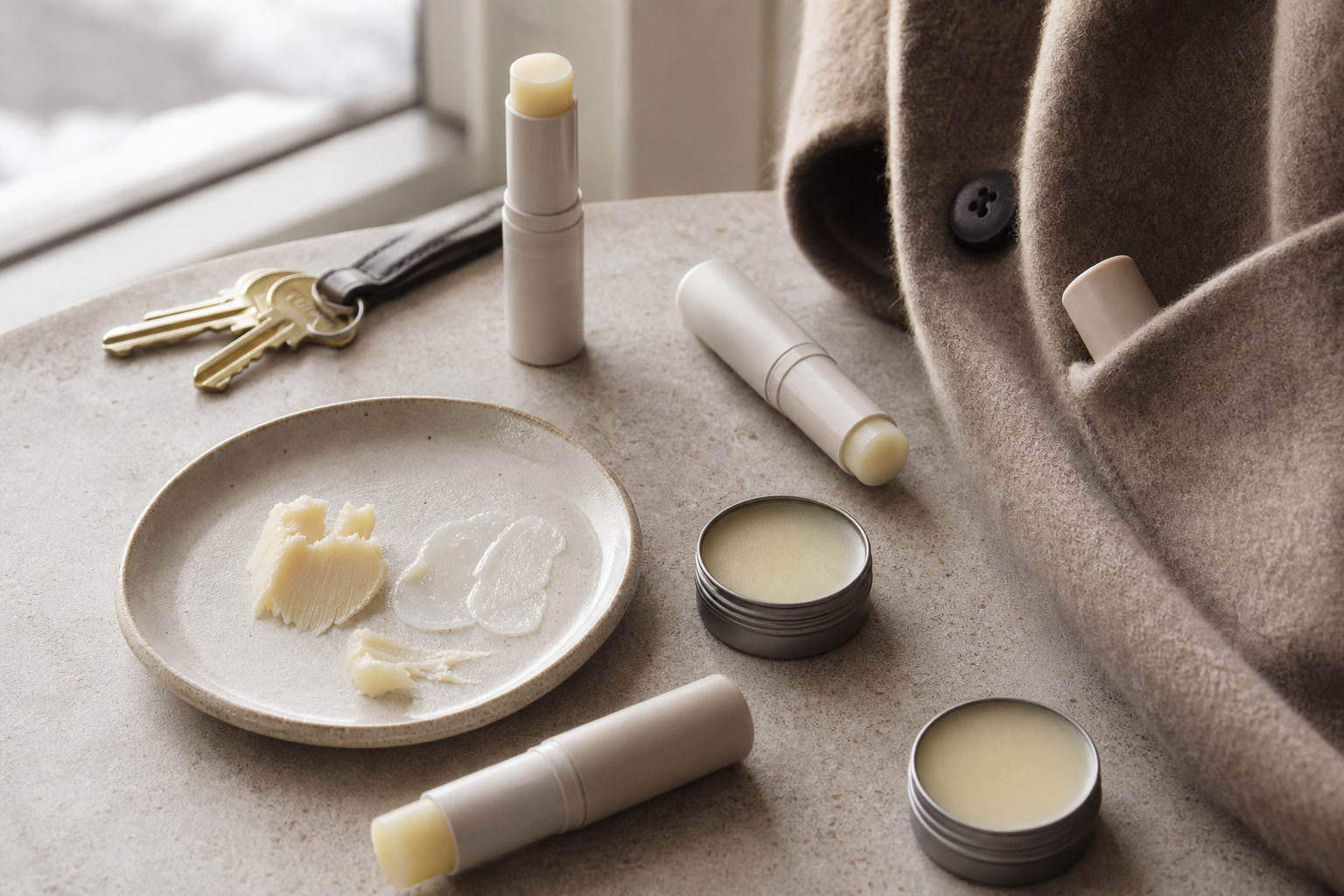
The format of the product dictates the maintenance burden of the habit. Potted lip balms require clean fingers for application, relegating them to bedside tables or bathroom cabinets; using them on a subway or at an office desk introduces unacceptable hygiene risks. Standard twist-tubes are designed for portability, but their convenience is offset by the potential for mechanical failure. Squeeze tubes with slanted plastic or silicone applicators offer the best ratio of hygiene to convenience, allowing for one-handed application without introducing bacteria into the primary product reservoir, though they typically house thinner, glossier formulas that require slightly more frequent touch-ups than solid waxes.
Thermal Stability, Storage, and Packaging Failures
Lip balms are uniquely vulnerable to thermal shock, a reality often ignored until a tube liquefies in a hot car or a tight denim pocket. Wax-based solid sticks are engineered to remain stable at room temperature, but prolonged exposure to body heat or direct sunlight breaks down their structural matrix. Once a stick melts and subsequently resolidifies in a cooler environment, the crystalline structure of the waxes and butters permanently alters. This phase change frequently results in a grainy, gritty texture-often caused by shea butter crystallizing unevenly-that renders the tactile experience deeply unpleasant, even if the chemical efficacy remains technically intact. Oil-in-water emulsion balms face a similar fate, permanently separating into a watery fluid and a dense sludge when subjected to extreme temperature fluctuations.
The physical vessel housing the balm must be robust enough to outlast the six-month lifespan of the product inside, yet packaging degradation is a widespread issue even in luxury tiers. Snap caps are particularly prone to failure; the internal plastic ridges lose their tension after a few dozen uses, allowing the cap to detach in handbags and coating the exposed balm in lint and debris. Twist dials frequently strip their internal threads, leaving the user unable to retract the stick. Squeeze tubes, while generally more resilient, can split at the crimped tail seam if subjected to pressure. Evaluating the tactile feedback of the packaging-the audible click of a secure cap, the smooth resistance of a twist mechanism-is as crucial as evaluating the ingredient list.
Because of strict hygiene regulations, opened lip products are almost universally non-returnable across all major retailers. This policy shifts the purchasing risk entirely onto the consumer. Unlike a faulty sweater or a mismatched foundation shade, a lip balm that triggers an allergic reaction, smells overwhelming, or features a broken twist mechanism represents a total loss of investment. This lack of a safety net necessitates a highly critical approach to purchasing. Consumers must meticulously read ingredient labels to identify known personal irritants, physically test the integrity of the packaging on display models, and realistically assess their own storage habits before committing to a purchase.
Long-Term Use and Strategic Alternatives
The concept of lip balm dependency is a subject of ongoing dermatological debate. While lips do not physically 'forget' how to produce moisture-as they never produced their own sebum to begin with-the chronic over-application of heavy occlusives can theoretically interfere with the skin's natural desquamation process. A constant, thick layer of petrolatum or wax can cause dead skin cells to build up rather than slough off naturally. When the balm wears off, this buildup feels rough and dry, prompting the user to apply more product to smooth the texture. Breaking this cycle requires gentle, physical exfoliation with a damp washcloth and a temporary reduction in the thickness of the applied barrier, allowing the skin to normalize.
For many routines, dedicated lip balms can be entirely replaced by strategic alternatives that reduce overall consumption. The heavily marketed 'lip mask' is, in almost all instances, simply a thicker, petrolatum- or lanolin-heavy ointment packaged in a premium jar and sold at a significant markup. Pure, USP-grade white petrolatum or a standard tube of medical-grade lanolin performs the exact same overnight recovery function at a fraction of the cost, without the addition of irritating synthetic fragrances. Conversely, trendy lip oils offer high visual shine and immediate emollience but suffer from exceptionally poor longevity; they function far more effectively as cosmetic glosses than as serious skincare interventions.
A minimalist, highly effective approach to lip care involves leveraging the products already present in a standard facial routine. Applying a high-quality facial moisturizer-specifically one rich in ceramides, glycerin, and hyaluronic acid-directly to damp lips provides the actual hydration that wax balms lack. Following this immediately with a thin, sealing layer of a basic, multi-purpose healing ointment locks the humectants into the skin. This two-step method addresses both hydration and occlusion far more effectively than a single stick of wax, eliminating the need to carry specialized, single-use plastic tubes and drastically reducing the long-term maintenance burden of lip care.
Pre-purchase checklist
- Identify the primary occlusive agent (petrolatum, beeswax, or plant wax) on the ingredient list to determine if the finish will offer high slip or matte grip.
- Verify the absolute absence of menthol, camphor, eucalyptus, and peppermint oil, especially if your lips are actively flaking or prone to contact dermatitis.
- Assess the mechanical resistance of the packaging: ensure the cap produces a firm, audible click and the twist dial requires intentional force to prevent pocket-dialing.
- Evaluate the scent profile by imagining the aroma lingering directly beneath your olfactory bulb for four continuous hours; prioritize unscented formulas for daily wear.
- Test the melting point by swatching the tester on the back of your hand; the product should transfer with minimal friction but without instantly liquefying into a greasy pool.
Who should skip this
You should entirely skip purchasing specialized, high-end lip balms if your daily routine already includes a rich, ceramide-based facial moisturizer and a basic healing ointment like Aquaphor or plain Vaseline. Layering those two existing products provides superior hydration and occlusion compared to a solid wax stick. Furthermore, individuals who have a nervous habit of chewing or licking their lips should avoid any balm containing flavor oils or sweeteners; these additives only serve to encourage the mechanical destruction of the skin barrier. Finally, skip expensive botanical formulations housed in delicate packaging if your lifestyle involves leaving products in hot cars, carrying them in tight pockets, or subjecting them to extreme temperature fluctuations, as the emulsion will inevitably separate and crystallize.
Affiliate transparency
FikaLooks funds its independent editorial desk through reader support and transparent affiliate partnerships. If you purchase a product through our outbound links, we may earn a commission. We do not accept seeded products for review from beauty conglomerates. All lip care items evaluated in our columns are purchased at standard retail prices to ensure we experience the exact same packaging integrity, formula stability, and long-term wear as our readers.
FAQ
Why does my lip balm develop a grainy, gritty texture after a few weeks of use?
Graininess is typically the result of temperature fluctuations. When a balm containing plant butters (especially shea or mango butter) melts in a warm environment like a pocket and then resolidifies in a cooler room, the fatty acids crystallize at different rates. This alters the smooth structural matrix into uneven, gritty spheres. While safe to use, the tactile experience is permanently degraded.
Is there a functional difference between daytime lip balms and overnight lip masks?
Yes, primarily in the ratio of waxes to heavy occlusives. Daytime balms require a higher concentration of wax to provide a matte grip that stays in place during talking and serves as a stable base for lipstick. Overnight masks rely heavily on dense, high-slip occlusives like petrolatum or lanolin to create a thick, impermeable barrier that prevents water loss over an eight-hour period, a texture that would be too messy for daytime wear.
Why do my lips feel drier and more irritated the more frequently I apply a specific balm?
This is a classic symptom of contact dermatitis caused by sensitizing ingredients. Balms marketed as 'cooling' or 'plumping' often contain menthol, camphor, or peppermint oil, which disrupt the skin barrier and cause micro-inflammation. Alternatively, the formula may contain too many humectants (like hyaluronic acid) without enough occlusives to seal them in, causing moisture to be drawn from the deeper layers of your lips and evaporated into the air.
What is the expected lifespan of a standard tube of lip balm under normal daily use?
A standard 0.15 oz (4.25g) tube should last approximately two to three months with regular, daily application. If you are depleting a tube in under three weeks, it indicates one of two failures: either the formula is excessively soft and deposits far too much product per swipe, or the formula lacks sufficient occlusive properties, forcing you into a psychological loop of constant reapplication.