Is Heat Protectant Worth It?
Is Heat Protectant Worth It? is a ingredient note for readers weighing styling frequency, ingredient function, hair texture, and heat habits. The beauty routine note explains what to check before buying, who should skip it, and where the purchase can become more work than it first appears.
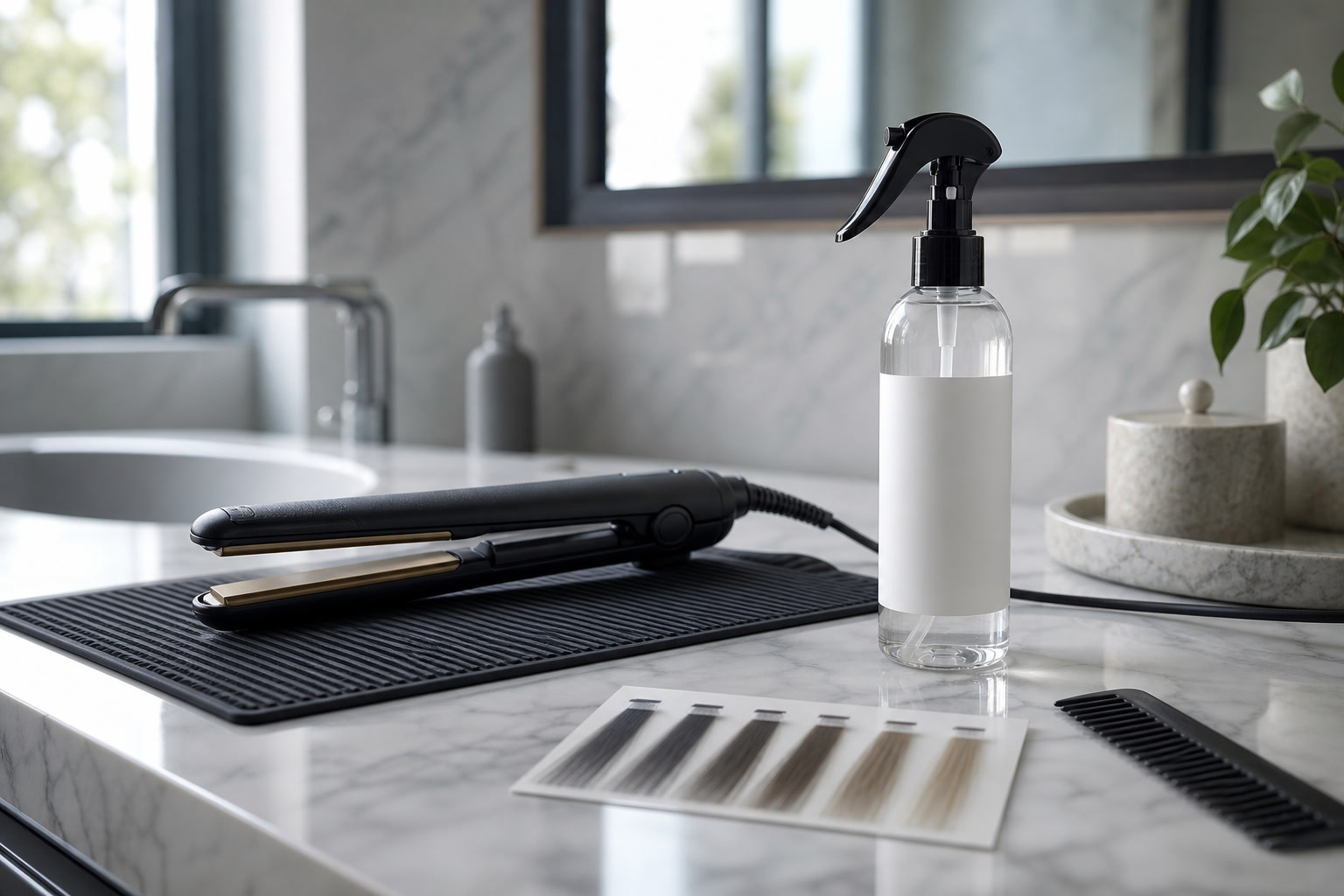
Among the crowded landscape of haircare, heat protectant sprays often face the highest degree of consumer skepticism, frequently dismissed as heavily fragranced water masquerading as a functional necessity. This skepticism is not entirely unfounded; the immediate visual results of a heat protectant are negligible compared to a volumizing mousse or a smoothing serum. However, the value of thermal protection lies entirely in the invisible, long-term preservation of the hair's structural integrity. When hair is exposed to temperatures exceeding 300 degrees Fahrenheit, the keratin proteins begin to denature, and the natural moisture trapped within the hair cortex flash-boils. This rapid expansion of water creates microscopic blisters along the hair shaft-a permanent structural failure known in trichology as 'bubble hair.' A well-formulated heat protectant does not render hair immune to this extreme heat, but rather acts as a sacrificial barrier. By utilizing specific polymers and silicones that possess low thermal conductivity, these sprays slow the rate of heat transfer from the tool to the hair fiber, distributing the temperature more evenly and buying the cuticle crucial seconds of defense. Deciding whether to integrate one into your routine requires an honest audit of your styling habits, the specific temperatures of your tools, and your tolerance for product layering.
The Chemistry of Thermal Shielding and Material Behavior
To understand the utility of a heat protectant, one must examine its chemical behavior under extreme stress. The active ingredients in these formulations are rarely botanical extracts or natural oils, despite what front-of-bottle marketing might suggest. Instead, the heavy lifting is performed by synthetic film-formers, primarily silicones like amodimethicone and cyclomethicone, alongside specialized copolymers such as polyquaternium and acrylate derivatives. When misted onto the hair, these compounds form a microscopic, weightless film over the cuticle layer. Because these materials have exceptionally low thermal conductivity, they absorb and dissipate the brunt of the heat from a flat iron or curling wand, slowing the rate at which the core of the hair reaches damaging temperatures.
Crucially, this chemical barrier is preventative, not restorative. A common misunderstanding in consumer haircare is the expectation that a thermal spray will repair existing split ends or reverse chemical damage. Once the disulfide bonds within the hair are broken by repeated heat exposure, no amount of protective spray will fuse them back together. The purpose of the protectant is to maintain the current baseline of your hair's health. Furthermore, the behavior of these ingredients changes depending on the moisture level of the hair. Water-based polymer sprays are highly effective at sealing the cuticle during a blowout, while heavier, silicone-dominant serums are better suited to providing the necessary slip for a high-friction pass with a titanium flat iron.
The inclusion of denatured alcohol in many aerosol heat protectants is another factor that dictates material behavior. Alcohol is utilized as a volatile carrier; it allows the protective polymers to be dispersed in an ultra-fine mist and then evaporates rapidly, leaving the hair dry enough to be styled immediately. While short-term exposure to this alcohol is generally harmless, daily application on already compromised, highly porous hair can lead to cumulative dehydration. Formulators attempt to balance this by suspending hydrating agents within the alcohol base, but those with exceptionally dry or coarse hair often find that alcohol-free, cream-based thermal protectors behave far better on their specific hair texture.
Routine Integration: The Blow-Dry Versus Iron Divide
The frequency and method of your heat styling dictate not only whether you need a protectant, but precisely what format that protectant should take. The thermal dynamics of a blow dryer are fundamentally different from those of a curling wand. Blow drying relies on convection heat, usually peaking around 150 to 200 degrees Fahrenheit, accompanied by high-velocity airflow. In this scenario, a heat protectant is applied to damp hair. The water in the hair acts as a buffer, and the protectant serves primarily to smooth the cuticle down as the water evaporates, preventing the rough, raised texture associated with frizz. For this routine, lightweight sprays or multi-tasking blowout creams integrate cleanly without extending the styling time.
Conversely, flat irons and curling wands utilize conduction heat, pressing directly against the hair shaft at temperatures frequently exceeding 375 degrees Fahrenheit. Integrating a protectant into this routine introduces a specific logistical hurdle: the hair must be completely dry before the hot tool makes contact. Misting a water-based protectant onto dry hair immediately before clamping it with a hot iron causes the water in the product to flash-boil, resulting in a terrifying hiss and a localized burst of steam. This effectively cooks the hair, achieving the exact opposite of the product's intended purpose. To integrate a spray properly before ironing, one must apply it, wait several minutes for the moisture to evaporate entirely, and only then proceed with the hot tool.
This waiting period is where the aspirational routine often clashes with reality. If your morning schedule does not accommodate the extra minutes required for a wet spray to dry down before curling, an aerosol protectant becomes the only viable option. Aerosols deliver the protective polymers with minimal water content, allowing for almost immediate styling. However, if your actual usage frequency of hot tools is limited to a rushed blowout twice a week, investing in a specialized, high-temperature aerosol spray is likely an unnecessary expenditure. A realistic assessment of your daily timeline and tool preference is essential to avoid purchasing a product that will ultimately sit unused on the bathroom shelf.
Formulation Traps and The Maintenance Burden
Committing to a dedicated heat protectant inherently increases the maintenance burden of your overall haircare routine. The very ingredients that make these sprays effective-robust, heat-resistant silicones and tenacious film-forming polymers-are notoriously difficult to wash out with gentle, sulfate-free cleansers. Over a period of several weeks, continuous application of a heavy thermal spray will result in product buildup. This accumulation coats the hair shaft, rendering it dull, heavy, and resistant to moisture absorption. Consequently, the integration of a heat protectant necessitates the periodic use of a clarifying shampoo to strip away the stubborn polymer residue, adding another step and another product to your shower rotation.
The risk of immediate product return is particularly high for individuals with fine or low-density hair. Many popular heat protectants on the market are formulated with a blend of heavy oils and silicones designed to tame thick, coarse textures. When applied to fine hair, these formulas immediately collapse the volume at the root, leaving the lengths looking stringy and unwashed within hours of styling. The friction point here is the delivery mechanism; a standard pump bottle often dispenses droplets that are too large and concentrated for fine hair to support. Consumers with this hair type frequently abandon thermal sprays entirely after one or two disastrous attempts, mistakenly believing that all protectants will yield the same greasy result.
To mitigate this return risk, one must carefully match the product's viscosity to the hair's porosity and diameter. Fine hair demands an ultra-lightweight aerosol or a highly diluted water-based mist, focusing application strictly on the mid-lengths and ends while avoiding the scalp entirely. Thick, highly porous, or chemically bleached hair, on the other hand, absorbs lightweight mists too rapidly, requiring the substantial coating provided by a cream or heavy serum to ensure the hot tool glides smoothly without snagging. Understanding this formulation trap prevents the frustration of buying a highly rated product that is fundamentally incompatible with your physical hair type.
Storage, Shelf Life, and Environmental Degradation
The physical packaging of a heat protectant plays a surprisingly critical role in its longevity and daily usability. Aerosol canisters, while vastly superior for fine, even distribution, are highly sensitive to their storage environment. Left in a bathroom that experiences extreme fluctuations in humidity and temperature from daily hot showers, the propellant within the canister can degrade, or the micro-valve can become compromised. This results in a sputtering nozzle that spits concentrated patches of product rather than a continuous mist, effectively ruining the application experience and rendering the remaining product useless long before the formula itself has expired.
Standard plastic pump bottles face their own set of mechanical failures, primarily nozzle clogging. Because effective heat protectants rely on sticky resins and film-formers to adhere to the hair, these same ingredients inevitably dry and harden inside the narrow plastic tubing of the pump. A clogged nozzle requires the user to unscrew the top and run the mechanism under hot water to dissolve the blockage-a minor but persistent annoyance that adds friction to a morning routine. Storing pump bottles in a cool, dry cabinet rather than on a humid shower ledge can slow this hardening process, but it remains an inherent flaw in the packaging of polymer-heavy liquids.
Furthermore, the chemical stability of the formula dictates a strict adherence to the Period After Opening (PAO) guideline, typically ranging from 12 to 24 months. While using an expired shampoo might simply result in a less robust lather, using an expired heat protectant carries functional consequences. As the stabilizing emulsifiers break down over time, the protective polymers separate from the carrier liquids. Spraying this degraded mixture onto the hair often leaves a tacky, glue-like residue that causes hot tools to drag and snag against the cuticle, actively causing mechanical breakage. If your styling frequency is low, purchasing a travel-sized bottle is a more pragmatic approach to ensure the product is finished before it chemically degrades.
Streamlining the Cabinet: Viable Alternatives and Long-Term Reality
For the consumer focused on slower, more deliberate buying decisions, the most pressing question is whether a standalone heat protectant is genuinely necessary, or merely a redundant step created by cosmetic marketing. The modern haircare market is saturated with multitasking formulations. A significant percentage of high-quality leave-in conditioners, detangling sprays, and blowout creams already incorporate the exact same thermal-protecting polymers found in dedicated heat sprays. If your current post-shower routine includes a smoothing cream that explicitly states it provides thermal protection up to 450 degrees, layering a separate heat protectant spray over it is not only a waste of money but actively contributes to unnecessary product buildup.
Natural hair oils are frequently touted as alternatives to synthetic heat protectants, but their efficacy is highly conditional and often misunderstood. Pure botanical oils, such as argan, coconut, or jojoba, possess specific smoke points. Exposing these raw oils to a 400-degree flat iron can cause them to scorch directly onto the hair shaft, baking the oil into the cuticle and causing severe discoloration and brittleness. However, commercially formulated hair serums that blend small amounts of natural oils with high-grade, heat-resistant silicones serve as excellent thermal barriers for thick, coarse hair. They provide the necessary slip for styling tools while sealing in moisture, effectively replacing the need for a separate, lighter spray.
Ultimately, the long-term reality of heat styling cannot be entirely circumvented by a topical product. A heat protectant is a mitigation strategy, an insurance policy that lessens the severity of the damage, but it is not an impenetrable shield. The most effective method for preserving hair health is mechanical: lowering the temperature dial on your hot tools, reducing the frequency of heat exposure, and allowing the hair to air-dry until it is 80 percent dry before introducing a blow dryer. If you are willing to adopt these behavioral changes, and your routine already includes a well-formulated leave-in conditioner, you can confidently bypass the dedicated heat protectant spray without compromising the integrity of your hair.
Pre-purchase checklist
- Verify if your current leave-in conditioner, blowout cream, or styling serum already lists thermal protection up to 400 degrees F or 450 degrees F, which would render a dedicated spray redundant.
- Check the ingredient list for specific functional polymers (like Polyquaternium) or silicones (like Amodimethicone); formulations relying solely on botanical extracts will not withstand flat iron temperatures.
- Assess your primary styling tool: if you exclusively use a blow dryer on a medium setting, a lightweight lotion is sufficient, whereas daily flat-ironing requires a robust, dry aerosol spray.
- Examine the delivery mechanism against your hair density; fine hair requires an ultra-fine aerosol mist to prevent greasy roots, while thick or coarse hair can support heavier pump liquids.
- Look for denatured alcohol high on the ingredient list; if present, ensure you are not applying it daily to already dry or chemically processed hair to avoid cumulative dehydration.
Who should skip this
You should confidently skip purchasing a dedicated heat protectant spray if you air-dry your hair the vast majority of the time, reserving hot tools for rare, special occasions. The product will likely expire and degrade in your cabinet before you can finish half the bottle. Additionally, if your routine already relies heavily on a high-quality leave-in conditioner or a styling cream that explicitly includes thermal protection, adding a separate spray is entirely redundant and will only contribute to rapid product buildup. Finally, individuals with exceptionally fine, low-density hair who find that even the lightest mists cause their roots to collapse and look unwashed should skip traditional sprays and instead rely on lowering their tool temperatures and minimizing heat exposure altogether.
Affiliate transparency
FikaLooks operates independently, and our editorial team selects products based on formulation analysis, material behavior, and long-term utility rather than fleeting trends. If you choose to purchase a product through the links embedded in our articles, we may earn a small affiliate commission. This structure helps fund our in-depth research and allows us to maintain our standard of providing concrete, unsponsored buying advice without relying on traditional display advertising.
FAQ
Can I use a liquid heat protectant spray on dry hair immediately before using a curling iron?
You can apply it to dry hair, but you must wait for the product to dry completely before the iron touches your hair. Clamping a hot iron over hair that is damp from a water-based spray will cause the moisture to flash-boil, creating steam that severely damages the hair cuticle. If you cannot wait for it to dry, an aerosol protectant is a safer choice.
Do heat protectant sprays actually expire, or is the date just a suggestion?
They absolutely expire. The stabilizing ingredients break down over time, usually 12 to 24 months after opening. When this happens, the protective polymers separate, and spraying the degraded formula onto your hair will leave a sticky, tacky residue that causes hot tools to drag and snag, leading to mechanical breakage.
Why does my hair smoke when I use a heat protectant and a flat iron?
In most cases, what you are seeing is not smoke, but steam. As the hot tool passes over the hair, the water and volatile carriers in the protectant evaporate rapidly. However, if the vapor smells distinctly burnt, or if the hair feels brittle afterward, your iron is set too high, and the heat is scorching the product or the hair itself.
Will a heat protectant spray weigh down my fine hair and make it look greasy?
It depends entirely on the formulation and the delivery method. Heavy, oil-based sprays or thick silicone serums dispensed from a standard pump will almost certainly weigh down fine hair. To avoid this, individuals with fine hair should opt for ultra-lightweight, water-based mists or fine aerosols, applying them strictly to the mid-lengths and ends.