Bathroom Textile Upgrades
Bathroom Textile Upgrades is a textile note for readers weighing towel weight, bath mat drying, colour, and small bathroom storage. The home detail note explains what to check before buying, who should skip it, and where the purchase can become more work than it first appears.
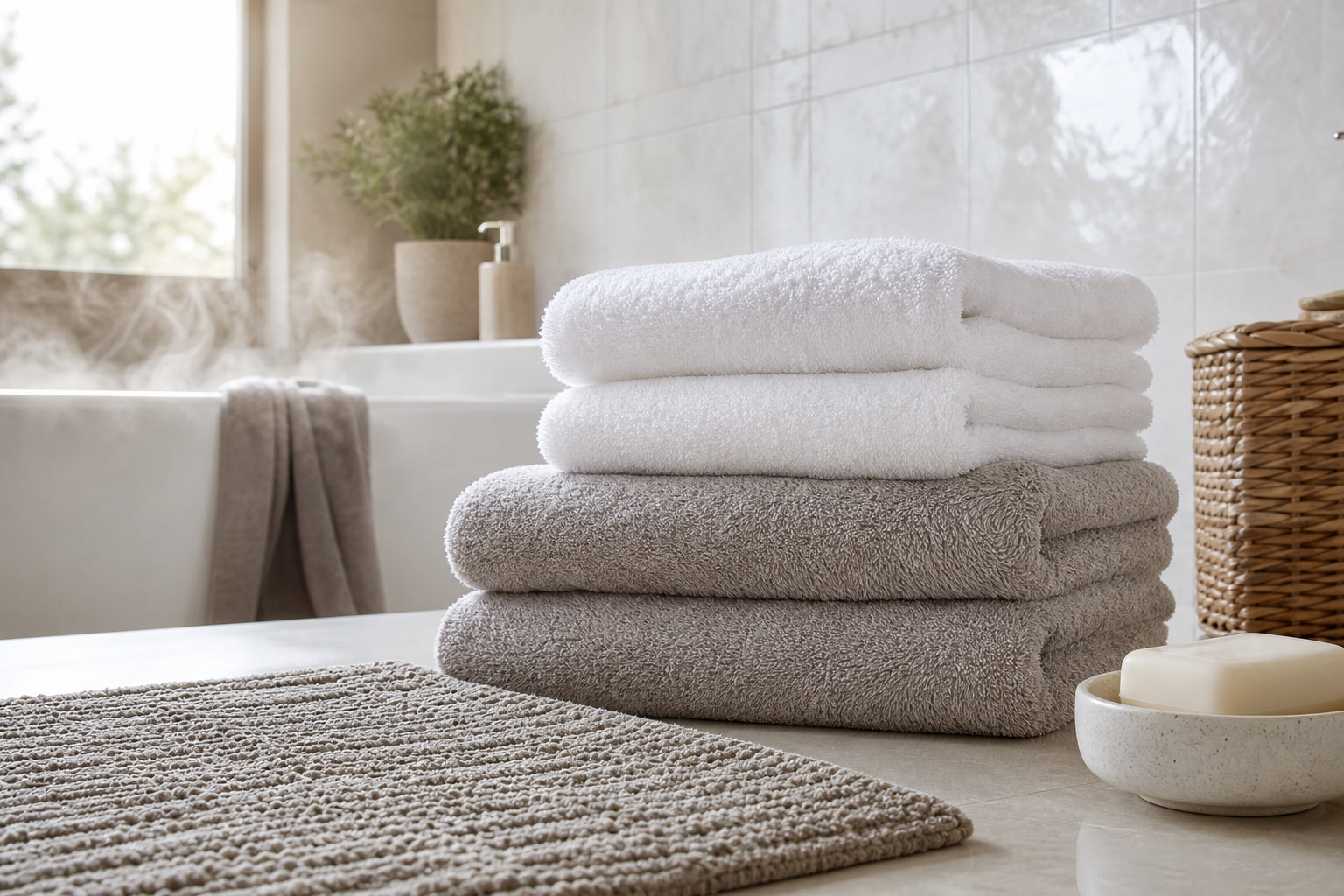
The bathroom operates as a distinct microclimate within the home, characterized by rapid fluctuations in temperature and sustained periods of high humidity. When approaching bathroom textiles-bath towels, hand towels, and floor mats-consumers frequently default to the hospitality standard of maximum thickness, assuming that heavier weight equates to higher quality. However, importing hotel-grade, ultra-plush terry cloth into a residential bathroom lacking commercial-grade HVAC ventilation almost inevitably results in perpetual dampness, accelerated bacterial growth, and a persistent musty odor. Upgrading bathroom textiles requires a calculated balance between tactile comfort against bare skin, the physical properties of moisture absorption, and the reality of your specific laundering and ventilation capabilities. This is an examination of how to select, maintain, and store fabrics that actually perform efficiently in wet environments, moving past aesthetic matching bundles to focus on structural integrity, material behavior, and long-term utility.
The Physics of Dampness and Material Selection
The fundamental flaw in how most households purchase towels lies in prioritizing extreme plushness without calculating the ambient humidity of their space. Towel weight is measured in Grams per Square Meter (GSM). While a 700 to 800 GSM Egyptian cotton towel feels exceptionally dense and luxurious, it relies on millions of tightly packed terry loops that require significant airflow to dry. In a standard residential bathroom with a basic exhaust fan, these high-GSM textiles trap moisture deep within their base weave. Over hours of hanging in a damp room, this trapped moisture becomes a breeding ground for mildew, completely negating the initial luxury of the fabric. For the majority of homes, a mid-weight towel in the 400 to 600 GSM range offers a far more practical equilibrium, providing sufficient absorbency while allowing the fibers to release moisture back into the air before sour smells develop.
Understanding the origin and staple length of the cotton is equally critical for long-term use. Egyptian cotton is prized for its long, dense fibers that maximize water retention, making it ideal for dry climates or highly ventilated spaces. Conversely, Turkish cotton features longer fibers but fewer of them per square inch. This specific structural difference means Turkish cotton does not absorb moisture quite as rapidly as its Egyptian counterpart, but it dries exponentially faster. Furthermore, Turkish cotton exhibits a unique material behavior: the fibers physically open up and become softer and more absorbent with successive washes. For environments where dampness is a constant battle, prioritizing the drying speed of Turkish cotton over the immediate density of Egyptian cotton drastically reduces the daily maintenance burden.
For those willing to step away from traditional terry cloth entirely, waffle weaves and pure linen present highly efficient alternatives. Waffle knit cotton utilizes a honeycomb structure that creates a massive surface area for evaporation, cutting drying times in half while offering a lightweight, slightly exfoliating texture against the skin. Pure linen, woven from flax, operates on a different mechanical principle. It absorbs moisture rapidly but lacks the wrapping warmth of a thick towel. Linen is naturally antimicrobial and dries faster than any cotton variant, making it the superior choice for chronically damp, poorly ventilated bathrooms. While the initial tactile experience of linen is crisp and somewhat rigid, it breaks down into a fluid, incredibly soft drape over months of continuous use, rewarding patience with exceptional longevity.
Bath Mats and the Floor-Level Moisture Trap
Bath mats endure the highest moisture load of any bathroom textile while suffering from the absolute lowest airflow. Gravity pulls ambient humidity down, and the physical act of stepping out of a shower drives standing water directly into the mat's fibers. The most common commercial solution-memory foam mats with thermoplastic rubber (TPR) backings-creates a severe moisture trap. The rubber backing prevents water from evaporating downward, while the dense foam holds water like a sponge. Over time, this trapped moisture degrades the flooring beneath, particularly hardwood or porous stone, and the rubber backing eventually disintegrates in the washing machine or melts onto heated bathroom floors. Transitioning away from backed mats is the first step in mitigating floor-level humidity.
The maintenance burden of heavy, tufted cotton bath rugs is notoriously high. Their sheer weight when wet throws washing machines off balance, and their dense pile requires multiple, energy-intensive dryer cycles to fully cure. Furthermore, the tufted construction is prone to severe shedding, clogging lint traps and leaving residue on other garments if washed together. A highly practical alternative adopted from the hospitality industry is the towel-style bath mat. Woven from heavy-duty, tightly spun cotton without a rubberized backing, these mats function essentially as thick, floor-specific towels. They can be washed and dried in the exact same cycle as your daily bath towels, entirely eliminating the friction of separate laundry loads while ensuring the mat is actually sanitized regularly.
For households seeking to eliminate the textile laundry burden altogether, diatomaceous earth mats have emerged as a functional, non-fabric alternative. Composed of fossilized phytoplankton, these rigid boards are highly porous. They absorb standing water from wet feet almost instantaneously and evaporate that moisture back into the air within minutes, remaining dry to the touch. While they completely bypass the washing machine, they introduce a different maintenance routine: they require occasional sanding to remove surface oils and restore their natural porosity. Additionally, their rigid, stone-like texture feels cold underfoot during winter months, which may deter users who prioritize the soft, warming sensation of a traditional textile after a hot shower.
The Chemistry of Washing and Restoring Absorbency
The fastest way to destroy the functional utility of a high-quality towel is the application of liquid fabric softeners and dryer sheets. These commercial laundry products operate by coating textile fibers in a thin layer of hydrophobic silicone derivatives and synthetic lipids. While this coating artificially smooths the fibers to create a temporary sensation of softness, it completely waterproofs the cotton. A towel coated in fabric softener will simply push water around the skin rather than absorbing it. Furthermore, this waxy buildup traps detergent residues, dead skin cells, and hard water minerals within the terry loops, eventually leading to a stiff, scratchy texture and a permanent, sour odor that activates the moment the towel gets damp.
To reverse this material degradation and restore a towel's original capillary action, a dedicated stripping routine is necessary every few months. This process involves washing the textiles in hot water with a cup of distilled white vinegar, completely omitting any detergent. The acetic acid in the vinegar dissolves accumulated mineral deposits from hard water and breaks down alkaline detergent residues. This is immediately followed by a second hot wash cycle using only half a cup of baking soda, which acts as a mild abrasive to dislodge remaining buildup and neutralizes any lingering organic odors. This chemical reset forces the cotton loops to stand upright again, dramatically improving both the tactile softness and the moisture-wicking efficiency of the fabric.
Drying protocols dictate the long-term structural integrity of bathroom textiles. Defaulting to the highest heat setting on a dryer literally cooks the cotton fibers, causing them to become brittle, snap, and shed excessively as lint. Over-drying also damages the elastic properties of the dobby-the decorative flat-woven band near the edge of the towel-causing it to shrink at a different rate than the terry cloth, resulting in a puckered, warped towel that refuses to fold flat. Tumble drying on a medium heat setting, augmented by the use of solid wool dryer balls, provides the optimal environment. The wool balls physically agitate the fabric, pounding the terry loops to restore fluffiness mechanically rather than chemically, while simultaneously creating air pockets in the dryer drum that reduce overall drying time.
Storage Solutions and Ambient Humidity Management
Storing textiles directly inside the bathroom requires strategic placement to prevent premature degradation. The bathroom air is frequently saturated with moisture, and fabrics act as passive dehumidifiers, absorbing ambient water vapor even when not in use. Storing clean towels inside closed vanity cabinets under the sink is particularly problematic; these dark, unventilated spaces trap humidity and often share micro-leaks with plumbing fixtures, leading to musty smells before the towel is ever pulled out for use. Open shelving allows for necessary ambient airflow, but it leaves the fabrics exposed to aerosolized particles from showers and toilets. If towels must be stored in the bathroom, they should be placed on high, open shelves as far from the shower zone as the architecture permits.
The physical method of folding impacts both spatial efficiency and the lifespan of the fibers. The traditional flat fold, while visually neat, creates hard creases. Over years of storage, the weight of a heavy stack pressing down on these sharp creases can weaken the cotton fibers along the fold lines. The rolling method, frequently utilized in spas, mitigates this issue by eliminating hard creases entirely while maximizing vertical storage space on narrow shelves. However, the most effective storage strategy for preserving the structural integrity of a textile collection is to keep the bulk of the rotation in a dedicated hallway linen closet. Removing the primary supply from the bathroom's daily moisture cycles ensures that the fabrics remain bone-dry and structurally sound until the exact moment they are needed.
Implementing a strict rotation strategy is crucial for long-term use. Utilizing the same two towels continuously accelerates wear, as the cotton fibers are never given adequate time to fully dry, rest, and recover their natural elasticity between laundry cycles. A highly functional household inventory requires a minimum of three to four bath towels per person. This allows for a first-in, first-out rotation system. When clean towels are put away, they must be placed at the bottom of the stack or the back of the shelf, forcing the use of the older inventory first. This simple logistical habit ensures even wear across the entire collection, preventing the scenario where two favorite towels disintegrate into rags while the rest of the set remains stiff and unused.
Pre-purchase checklist
- Inspect the towel's dobby (the flat woven decorative band) for excessive tension; tight, rigid bands will shrink at a different rate than the terry loops, causing the towel to pucker and warp after the first hot wash.
- Assess your bathroom's mechanical ventilation; if the space lacks a high-CFM exhaust fan or a window, strictly cap your towel purchases at 500 GSM or transition to waffle weaves to prevent chronic mildew.
- Verify the backing material of any bath mat prior to purchase; actively avoid TPR or synthetic rubber backings if your home features heated bathroom floors, as the heat will degrade the rubber and fuse it to the tiles.
- Audit your laundry room for liquid fabric softeners and dryer sheets; these products must be completely banned from your towel washing routine, as they coat cotton fibers in silicone and destroy water absorbency.
- Confirm the vertical dimensions of your storage space before buying high-GSM luxury towels; ultra-plush terry cloth requires nearly double the stacking height of standard or Turkish flat-woven towels.
Who should skip this
Individuals living in highly humid, tropical climates, or those residing in older homes with poor ventilation and no in-unit drying machines, should entirely skip heavy, luxury terry cloth towels (anything above 600 GSM). In these environments, thick cotton acts as a moisture trap, refusing to dry completely and quickly developing a sour, bacterial odor that transfers to the skin. Furthermore, individuals with severe eczema or highly sensitive skin may find the friction of thick, heavy terry loops irritating when drying off. For these demographics, the smooth, pat-dry efficiency of pure linen, lightweight muslin, or flat-woven Turkish pestemals offers a far superior, hygienic, and non-abrasive alternative that aligns with both their environmental constraints and dermatological needs.
Affiliate transparency
FikaLooks maintains a strict editorial separation between content creation and commercial partnerships. The textiles, materials, and storage solutions discussed in this guide are selected based on their structural merits, material behavior, and long-term utility in damp environments. If you choose to purchase through the links provided in our sourcing directories, we may earn a commission. This mechanism funds our independent research without influencing our critical assessment of fabric performance or maintenance burdens.
FAQ
Why do my towels smell sour even immediately after they come out of the washing machine?
A sour smell immediately after washing indicates a buildup of detergent residue, hard water minerals, and trapped body oils deep within the terry loops. Standard detergent cannot penetrate this waxy barrier, meaning the bacteria causing the odor are never actually washed away. You need to strip the towels using a hot water cycle with white vinegar, followed by a separate cycle with baking soda, to dissolve the buildup and reset the fibers.
Should I wash my bathroom towels in hot or cold water?
For daily maintenance and preserving the lifespan of the cotton fibers, warm water is optimal, as it dissolves body oils without causing excessive shrinkage. However, bathroom textiles require periodic sanitization. Washing them in hot water (around 140 degrees F or 60 degrees C) once a month is necessary to effectively kill bacteria and mold spores that thrive in damp environments. Avoid boiling water, which will permanently degrade the cotton's elasticity.
How long should a high-quality cotton towel actually last before it needs replacing?
With a proper rotation strategy (using three to four towels per person) and a strict avoidance of fabric softeners, a high-quality cotton towel should maintain its structural integrity and absorbency for two to three years. Beyond this point, the constant friction of use and laundering will naturally break down the staple fibers, causing the towel to thin out, lose its plushness, and significantly drop in moisture-wicking efficiency.
Are bamboo rayon towels better for damp bathrooms than traditional cotton?
No. While bamboo rayon is exceptionally soft and highly absorbent-often absorbing more water than cotton-it holds onto that moisture tenaciously. Bamboo fibers take significantly longer to dry than cotton or linen. In a damp, poorly ventilated bathroom, a bamboo towel will remain wet for hours, making it highly susceptible to mildew and a poor choice for environments that struggle with humidity management.