Start with the coat you will actually carry
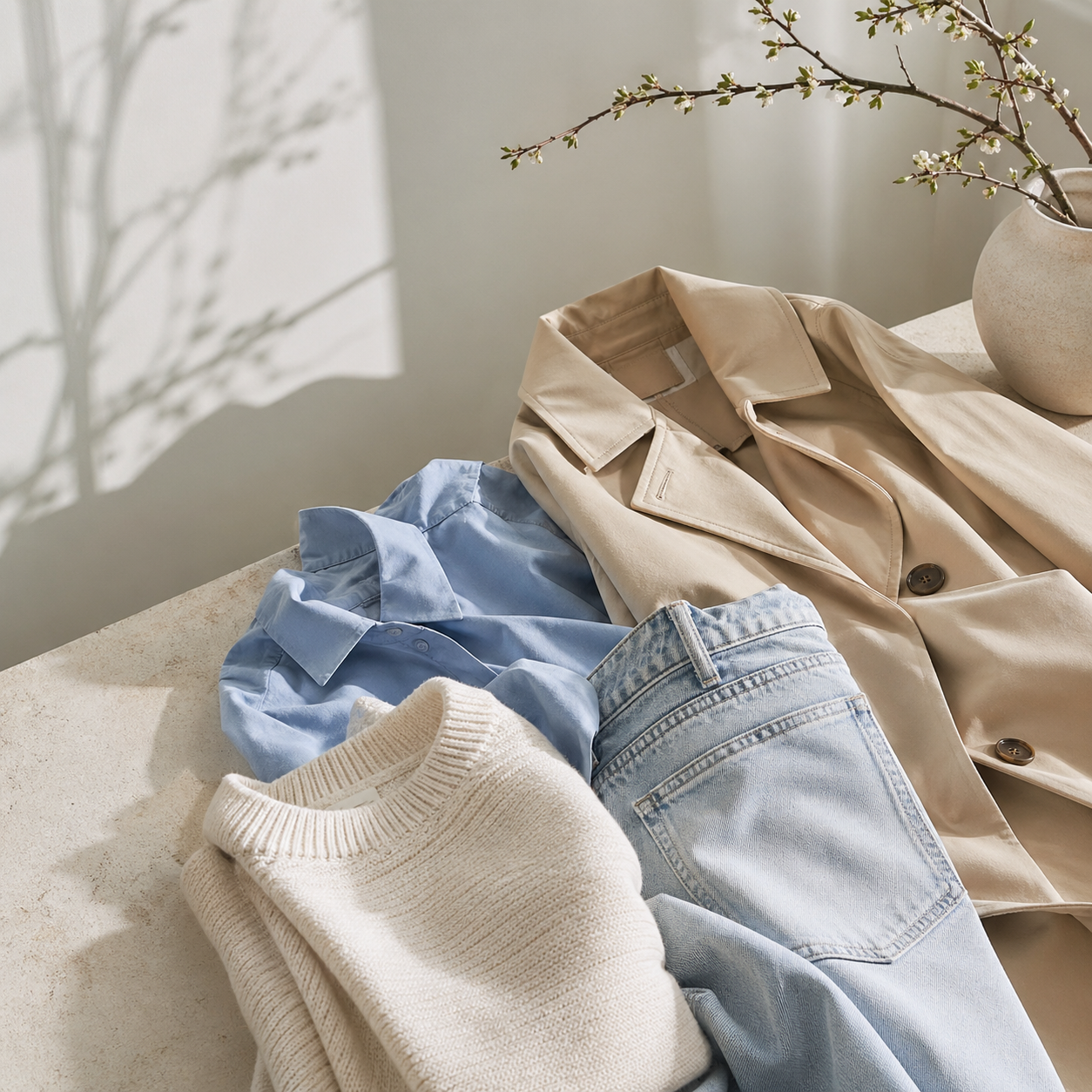
The first spring switch is often psychological: you want to stop wearing winter wool, but the weather may not be ready for linen jackets and open collars. A light trench is the most practical bridge because it protects against wind and drizzle without adding the bulk of a padded coat. For early spring in the UK, northern Europe, coastal Canada, or southern Australia, look for cotton-rich gabardine, compact twill, or a cotton blend with enough structure to skim rather than cling. Very soft trenches can collapse over layers; very stiff ones can feel formal and noisy on public transport.
Fit matters more than the idea of the trench itself. The shoulder should allow a cotton knit underneath without pulling across the back, and the sleeve should be long enough to cover a shirt cuff on wet days. A mid-thigh or knee-length cut is usually the most versatile with pale denim, tailored trousers, and skirts, while a belt that can be tied rather than buckled gives the coat a less rigid line. If your wardrobe is mainly navy, grey, black, or denim, stone, warm beige, olive, or soft taupe will earn repeat wear. Check the care label before buying or recommitting: a trench that needs frequent specialist cleaning is less useful for a season of sudden showers and splashed pavements.
Use cotton knits to change the temperature, not the outfit
A spring capsule wardrobe works best when warmth can be adjusted in small increments. Cotton knits are useful because they sit between winter wool and summer jersey. A fine-gauge cotton crew neck, a ribbed cardigan, or a half-zip in a dry cotton blend can soften tailoring, warm up shirting, and still breathe when the sun comes out. Pure cotton can stretch at elbows and hems if it is loosely knitted, so handle matters. A knit should feel substantial enough to recover its shape when gently pulled, with seams that sit flat at the shoulder and cuffs that do not flare after one wear.
The best spring knits are not necessarily the thinnest. In damp climates, a slightly denser cotton knit over a blue shirt can be more comfortable than a flimsy layer that leaves you cold in the shade. For proportion, keep the hem in conversation with your waistline. A knit that ends at the high hip works well with straight pale denim and wider trousers; a longer cardigan can be useful over narrow skirts or slim jeans, but it should not fight the trench layered over it. Wash cotton knits inside out on a cool, gentle cycle, reshape flat, and avoid hanging them wet. This is the difference between a piece that lasts three springs and one that becomes gardening wear by April.
Let the blue shirt do more than look crisp
The blue shirt is often treated as a neat classic, but in early spring it is most valuable as a flexible layer. A pale poplin shirt under a cotton knit gives a cleaner neckline than a T-shirt and adds a little warmth at the wrist and collar. A chambray or soft Oxford shirt can be worn open over a vest or fine tee when the weather is unsettled. The shade of blue is worth considering: clear sky blue brightens grey days, while faded blue looks relaxed with ecru, beige, olive, and pale denim. If you wear a lot of black, a slightly deeper blue tends to hold its own better than powdery pastel.
Fit should follow how you plan to wear it. A shirt intended for layering under knitwear needs a smooth shoulder and enough room at the bust or chest to avoid gaping, but not so much fabric that it bunches under sleeves. A shirt worn open can be a little boxier, with a hem that sits just below the waistband. Cotton poplin looks sharp but creases visibly; Oxford cloth is more forgiving; chambray feels softer and less corporate. None is better in the abstract. The right choice is the one you will rewear without fuss. Steam collars and plackets rather than ironing the entire shirt every time, and hang it properly after washing. A slightly lived-in blue shirt can look intentional; a twisted seam or greyed collar rarely does.
Treat pale denim as a neutral, with limits
Pale denim brings light into a capsule faster than almost anything else, but it needs the right weight and cut to feel grown-up rather than fragile. Early spring is not always kind to white or very light jeans: rain, train seats, wet grass, and dark coats all leave marks. A pale blue, washed ecru, or soft grey-blue denim is usually easier to maintain than stark white, especially if you commute, travel with children, or sit outdoors before surfaces are properly dry. Mid-weight denim with a firm hand is more reliable than thin stretch denim, which can reveal pocket bags and lose shape by the second wear.
The cut should balance your existing layers. Straight-leg pale denim works with trenches, cotton knits, loafers, trainers, and ankle boots without demanding a new set of proportions. A wide leg can look excellent with a shorter knit or tucked blue shirt, but it needs enough length to avoid looking accidental; hems that skim the top of the shoe are easier to keep clean than puddling lengths in spring weather. If your capsule already relies on dark denim, introduce pale denim as a two-to-three-times-a-week option rather than replacing everything. Wash inside out, less often than you think, and spot-clean small marks promptly. Pale denim rewards care, but it should not make you nervous to leave the house.
Refresh the combinations, not the whole wardrobe
The point of a spring refresh is to increase the number of outfits you can repeat comfortably. Start by laying out what already works from late winter: dark trousers, a navy knit, a black skirt, a grey blazer, ankle boots, trainers, perhaps a favourite striped top. Then add the lighter pieces one at a time. A trench over a blue shirt and dark trousers feels right when the morning is cold. The same trench over a cotton knit and pale denim feels lighter for a dry afternoon. A blue shirt under a cardigan can replace a heavier jumper without making the outfit feel unfinished. These are small edits, but they change the mood of daily dressing.
Colour discipline helps. Early spring capsules often become messy when every pale shade is added at once. Choose a narrow range: blue, stone, cream, pale denim, and one grounding dark such as navy, charcoal, brown, or black. Shoes should respect the weather as much as the outfit; suede may be lovely on a bright day, but treated leather, rubber soles, or washable canvas are kinder when pavements are wet. Accessories can stay quiet: a cotton scarf, a compact umbrella, a belt that matches the tone rather than the exact colour. The best spring capsule wardrobe is not a fantasy of permanent sunshine. It is a practical set of clothes that can handle a cold platform, a warm office, a breezy school run, and dinner without a full change.