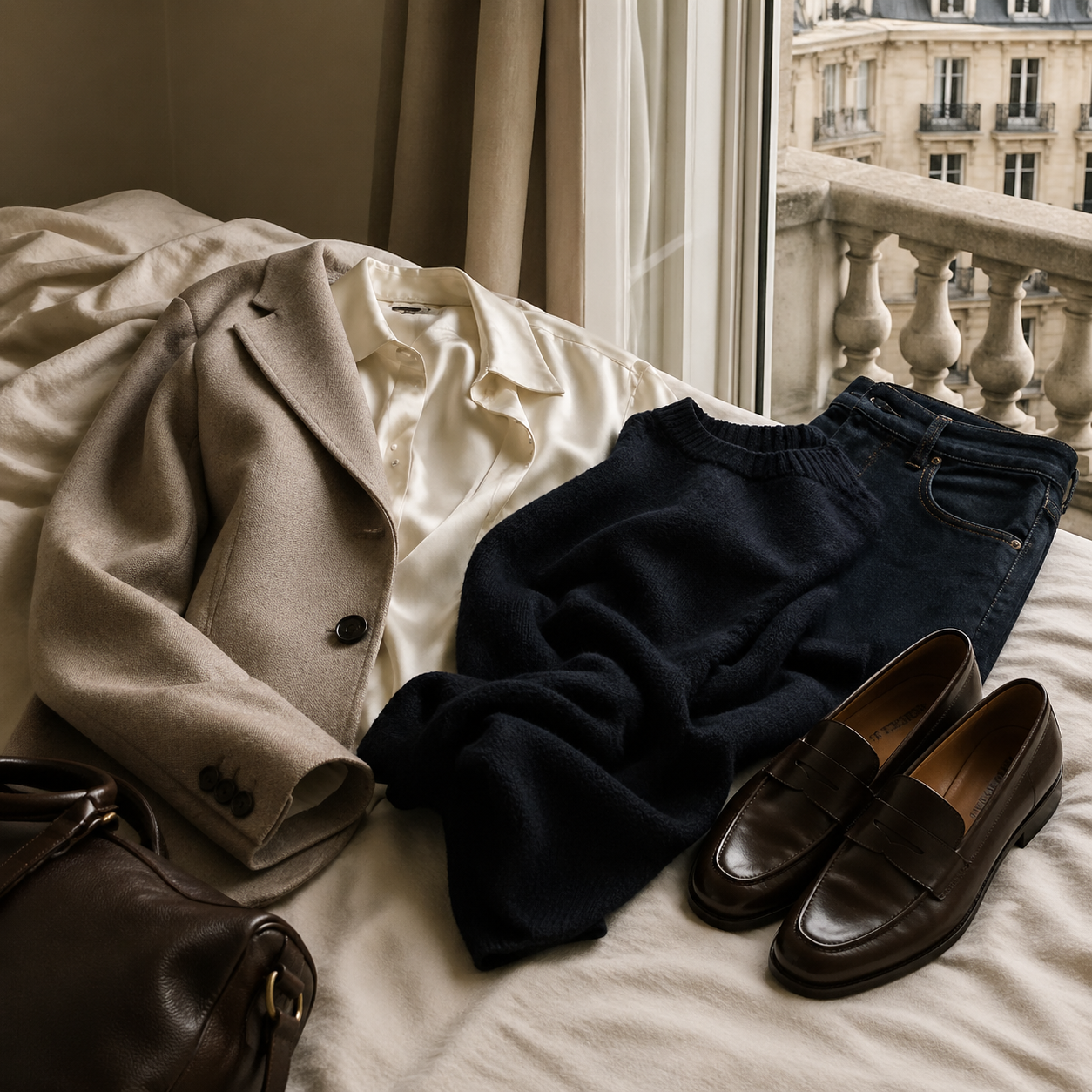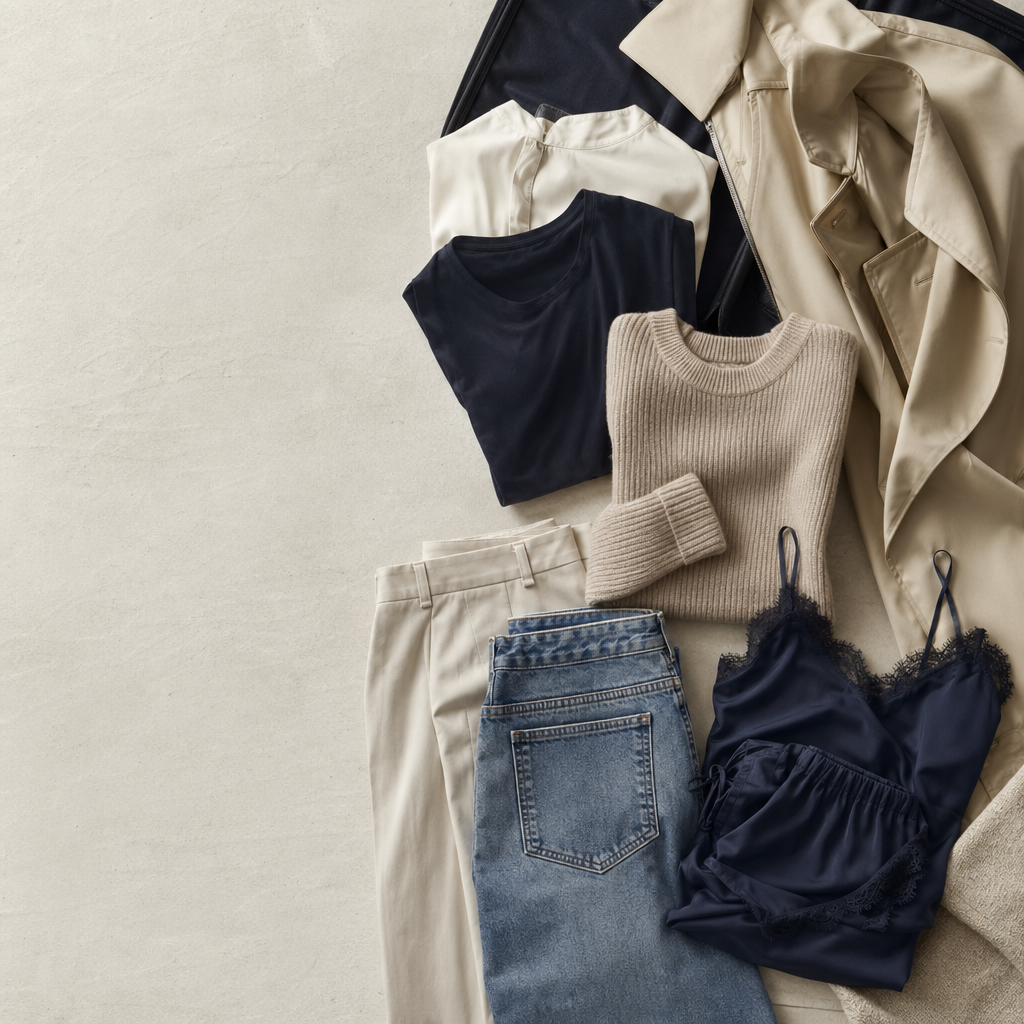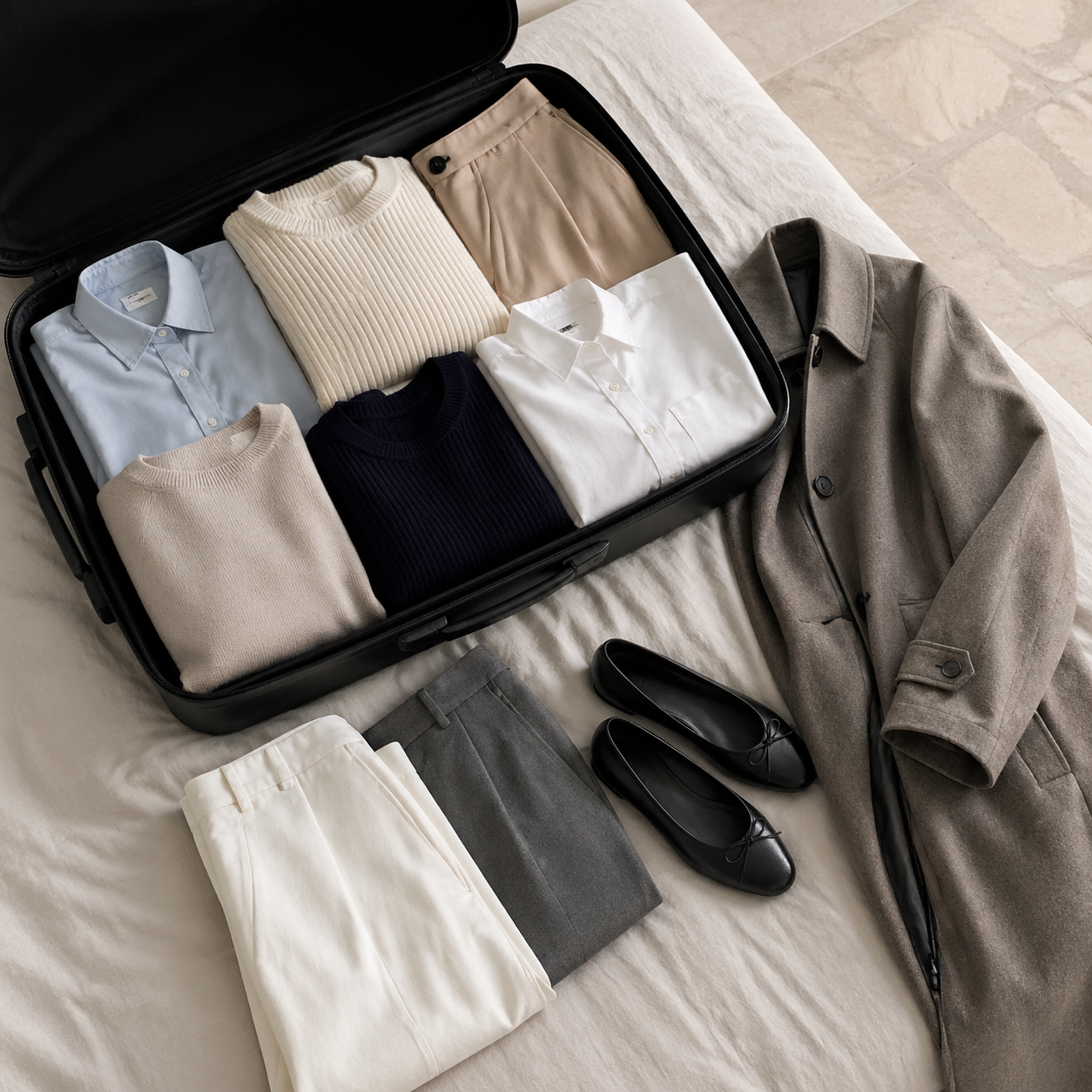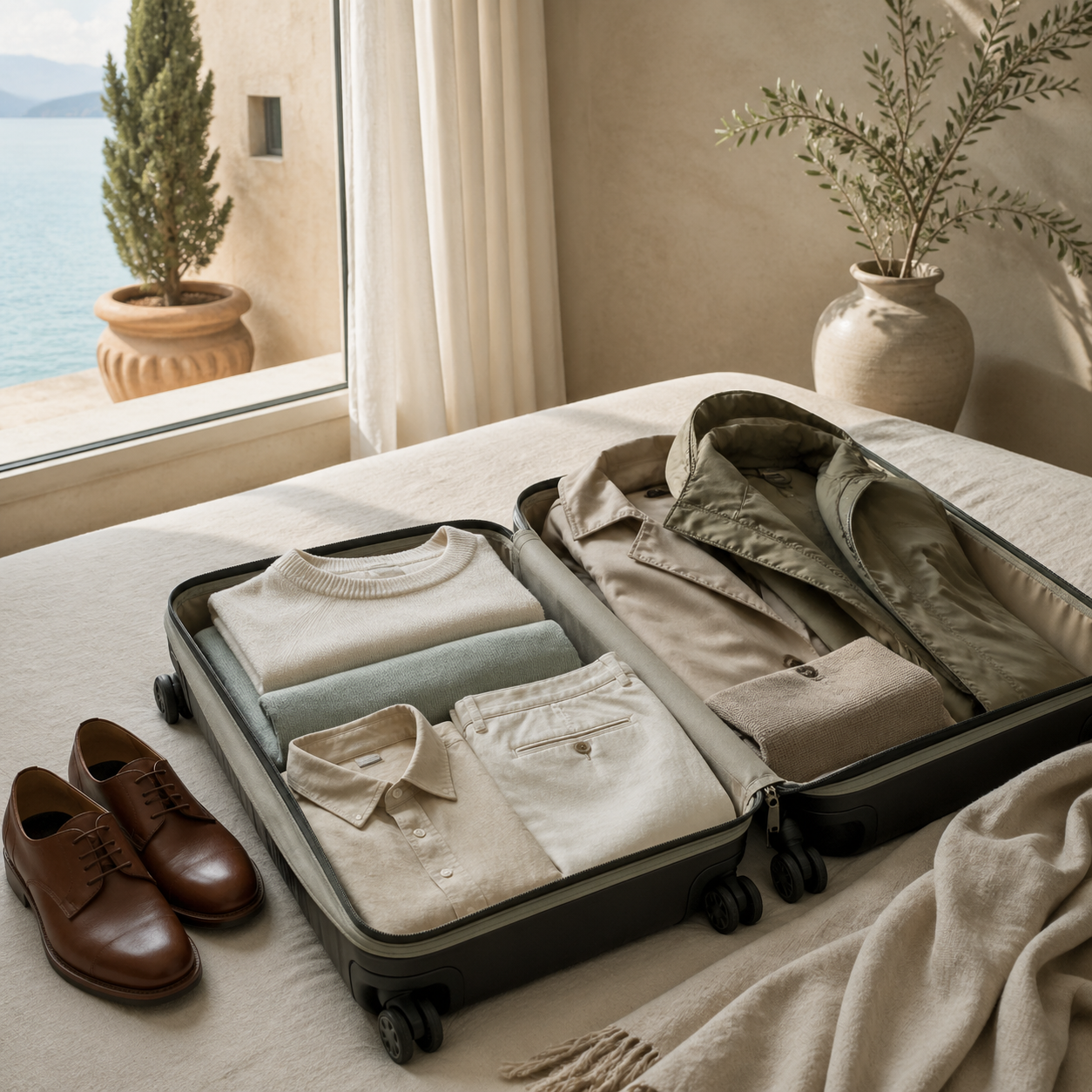
Start with the coldest morning
The mistake with packing two climates is usually optimism. Spring light makes us imagine linen shirts and bare ankles, while the airport transfer at dawn has other plans. Begin with the coldest likely morning, not the warmest afternoon. If the low temperature is under 12掳C, you need a genuine outer layer, not simply a shirt jacket. If rain is likely, you need a coat that can tolerate moisture without becoming heavy, clammy or creased into defeat.
A packable coat earns its place when it compresses without looking like camping kit at dinner. Look for a clean shoulder, enough room to sit over a light knit, and a length that covers the hip or upper thigh. Very cropped coats can be neat, but they leave the body exposed when sitting outdoors or walking in wind. A matte finish usually reads more polished than a shiny one, and darker neutrals disguise travel marks better than pale stone or cream.
The coat should not be treated as an emergency item buried at the bottom of the case. Wear it on the plane or train if the departure climate is cool, then fold it into a tote when you arrive somewhere warmer. A thin hood is useful, but if it adds bulk or collapses awkwardly around the neck, a compact umbrella may serve better. The point is to protect your outfit without building the entire suitcase around bad weather.
Let light knits do the work
Light knits are the quiet machinery of a spring travel wardrobe. They provide warmth without the storage penalty of bulky jumpers, and they sit more neatly under coats than sweatshirts or thick fleece. Fine merino, cotton-cashmere blends, compact ribbed cotton and smooth viscose mixes all behave differently, so judge by hand as much as label. The best travel knit has bounce, recovery and a surface that will not snag on bag hardware.
A crew neck is often the most reliable shape because it layers cleanly over a T-shirt or under a coat without competing with collars. A fine polo knit can look sharper in cities and still feel relaxed with linen trousers, while a cardigan offers better temperature control on flights and in restaurants. Avoid anything so oversized that it bunches at the waist under outerwear. Ease is useful; excess fabric is not.
Care matters because repeat wear is the basis of sensible packing. Choose knits that can be aired overnight and spot-cleaned, and avoid pale shades if you will be eating in transit or moving luggage through stations. A mid-grey, navy, olive, camel or soft brown knit can be worn several times without announcing itself. If you are packing two, vary the neckline or texture rather than taking two near-identical pieces. One smooth knit and one ribbed or collared knit will do more styling work.
Make linen behave
Linen is often blamed for creasing when the real issue is choosing the wrong linen for travel. Very thin, loosely woven linen can look beautiful at breakfast and exhausted by lunch. For spring trips, a medium-weight linen or linen blend is more forgiving, particularly when mixed with cotton or viscose. It still breathes in warmer weather, but it resists the sharp, papery creases that make an outfit feel neglected rather than relaxed.
A linen shirt is one of the most useful warm-climate pieces because it can function as a top, a light overshirt or a sun cover. The fit should skim rather than cling, with sleeves that roll securely and a hem long enough to half-tuck. If the shirt is too sheer, it becomes dependent on another layer beneath it, which may be fine in Greece in May but less helpful in a cool Canadian city or a windy European port. Opaque white, washed blue, tobacco, black and olive tend to earn their keep.
Linen trousers can work across climates if the cut is disciplined. A full, puddling leg may look graceful in a resort setting but drag on wet pavements. A straight or softly wide leg that clears the shoe is more practical and still airy. Elasticated backs can improve comfort on travel days, but a flat front usually looks neater under a tucked knit or shirt. Hang linen in the bathroom while shower steam softens creases, then smooth by hand; it will not look pressed, but it will look intentional.
Choose trousers before tops
Trousers determine how adaptable the rest of the suitcase becomes. For a two-climate spring trip, aim for one pair with structure and one with ease. The structured pair might be a straight-leg trouser in cotton twill, compact wool blend or a substantial technical fabric with a dry hand. It should hold its shape after sitting, resist bagging at the knee and work with closed shoes. This is the pair for cooler days, dinners, museums and travel connections.
The easier pair can be linen, linen blend or a lighter cotton. It should still have enough opacity and shape to be worn beyond the beach or poolside. Drawstring waists are comfortable, but they need enough tailoring in the leg to avoid looking like sleepwear. If you prefer a wider leg, keep the top half more contained: a fine knit, a tucked shirt, or a cropped jacket. If the trouser is narrow, a looser linen shirt or soft cardigan can balance the silhouette.
Colour is where many suitcases become inefficient. Two trousers in related neutrals will take you further than one statement print and one practical pair. Navy with ecru, charcoal with stone, olive with black, or tobacco with cream all allow repeat outfits without feeling monotonous. Before packing, put every top with every trouser and check proportions in a mirror with the shoes you intend to wear. A hem that looks right barefoot can look wrong once a trainer or loafer is introduced.
Closed shoes and the final edit
Closed shoes are not glamorous to discuss, but they are often what makes spring travel comfortable. Open shoes are tempting when the destination forecast looks warm, yet spring pavements can be wet, dusty or uneven, and evenings cool quickly. A closed shoe protects the foot, works with socks when needed, and makes trousers look more finished. The right pair should handle a long walk without rubbing, but also look acceptable in a restaurant that is casual rather than beachside.
A leather or suede loafer, a plain low-profile trainer, a soft lace-up or a neat flat can all work, depending on your itinerary. Avoid taking a brand-new pair unless it has already survived a full day at home. Soles should have enough grip for rain-slick streets and station steps. If one climate is likely to be humid, breathable linings and socks matter; if one is likely to be cold, leave room for a slightly thicker sock. Shoes consume space and weight, so two pairs should be the upper limit for most spring trips, with the bulkier pair worn in transit.
The final suitcase should read like a small, coherent wardrobe rather than a set of weather contingencies. A practical formula might be one packable coat, two light knits, two linen or cotton shirts, two trousers, a simple base layer or two, closed shoes, and the smallest accessories that alter temperature: socks, a scarf, sunglasses. The edit is not austere; it is deliberate. When each piece can be worn at least three ways, packing two climates becomes less about sacrifice and more about judgement.