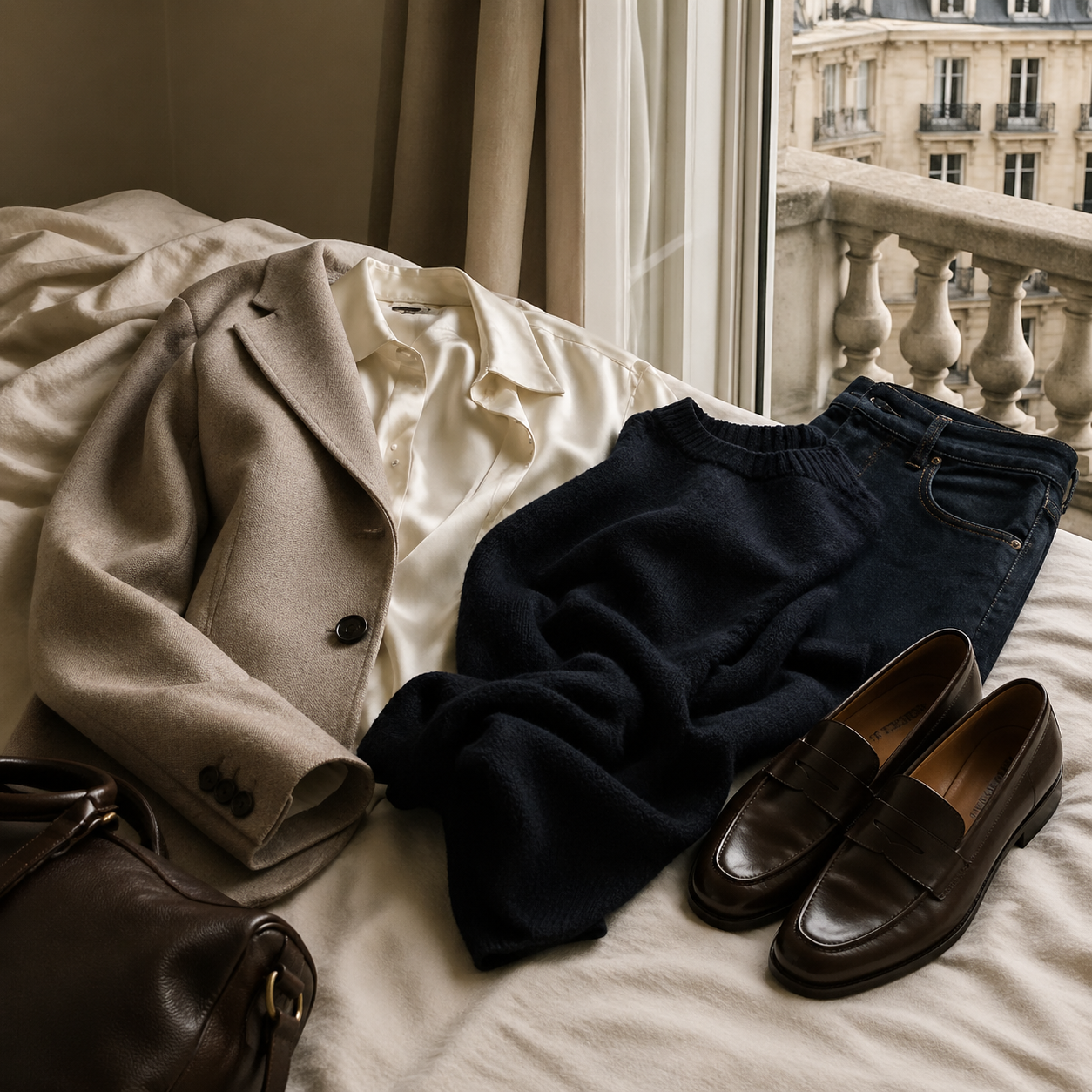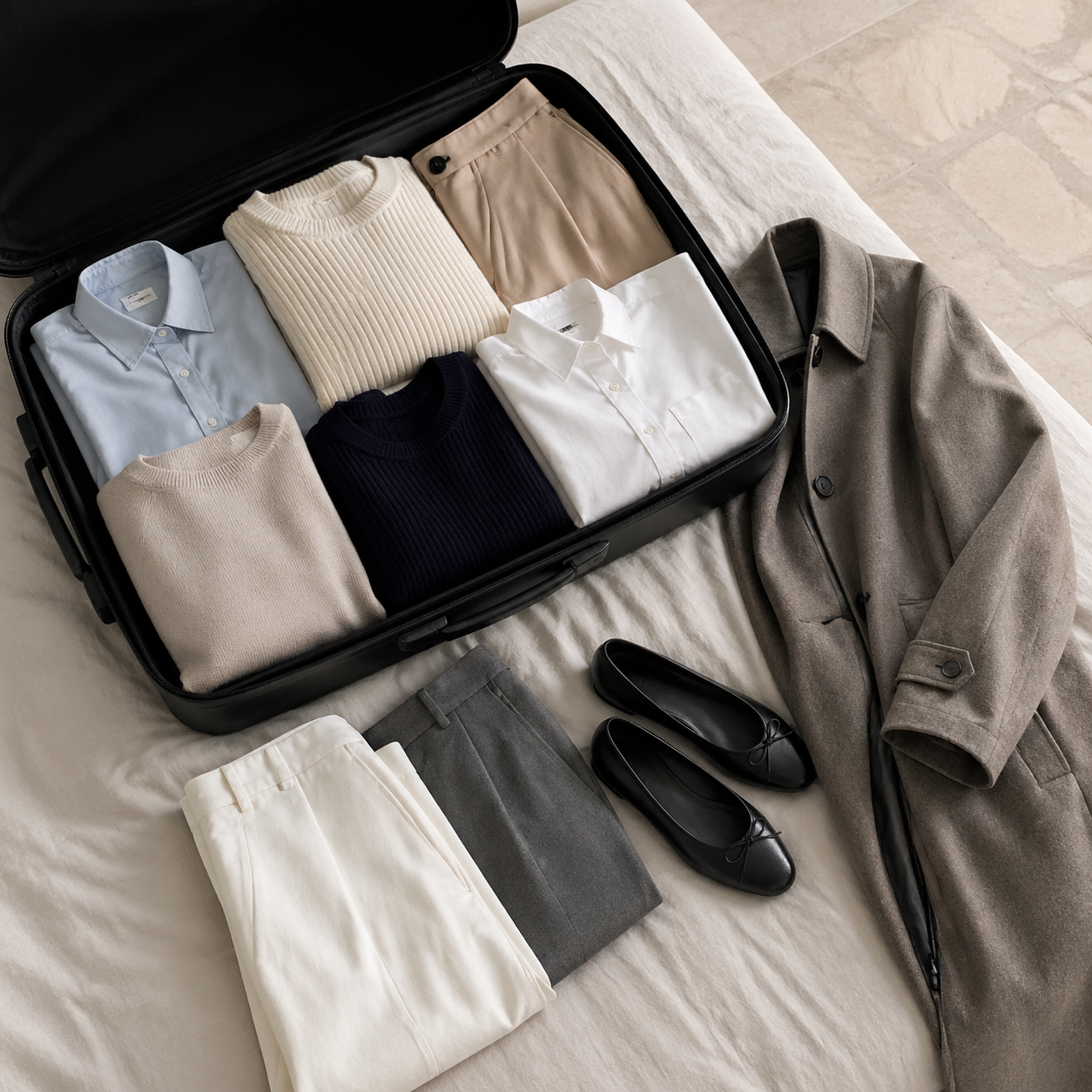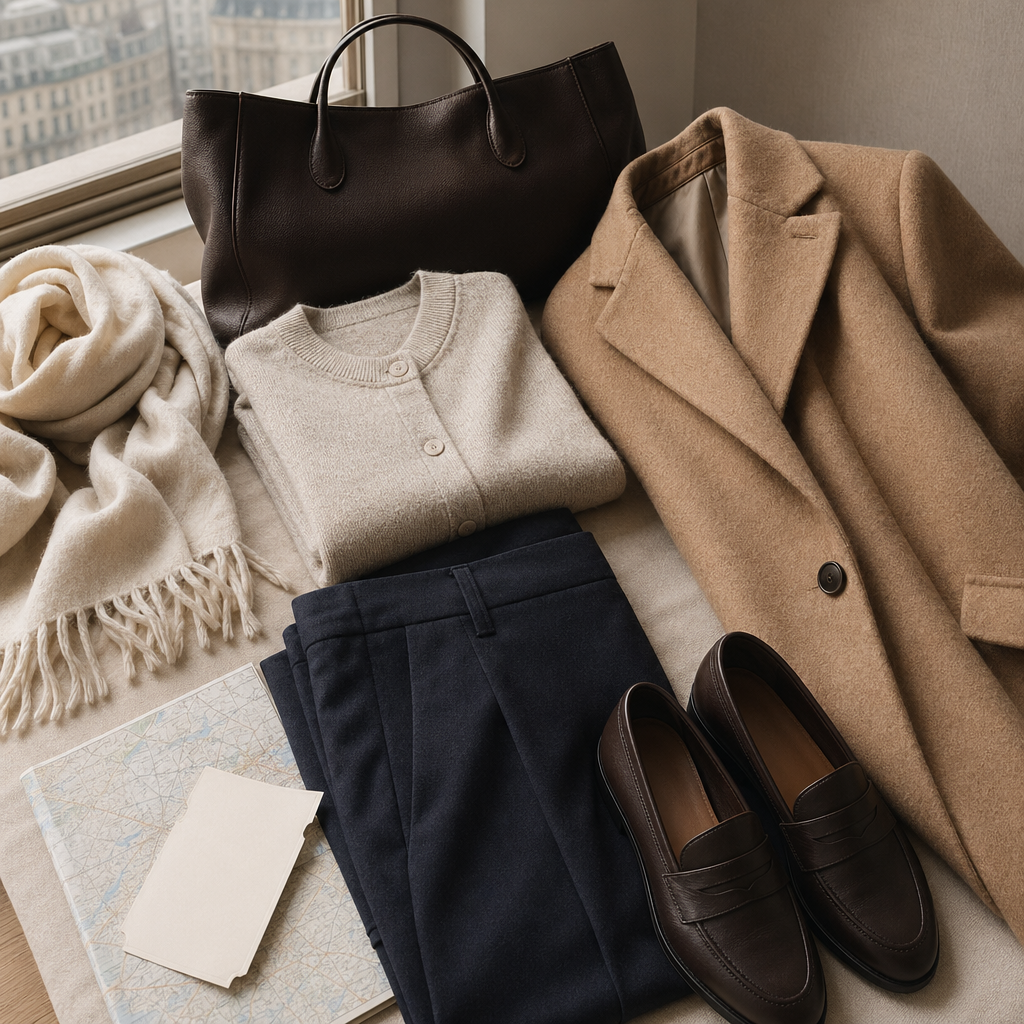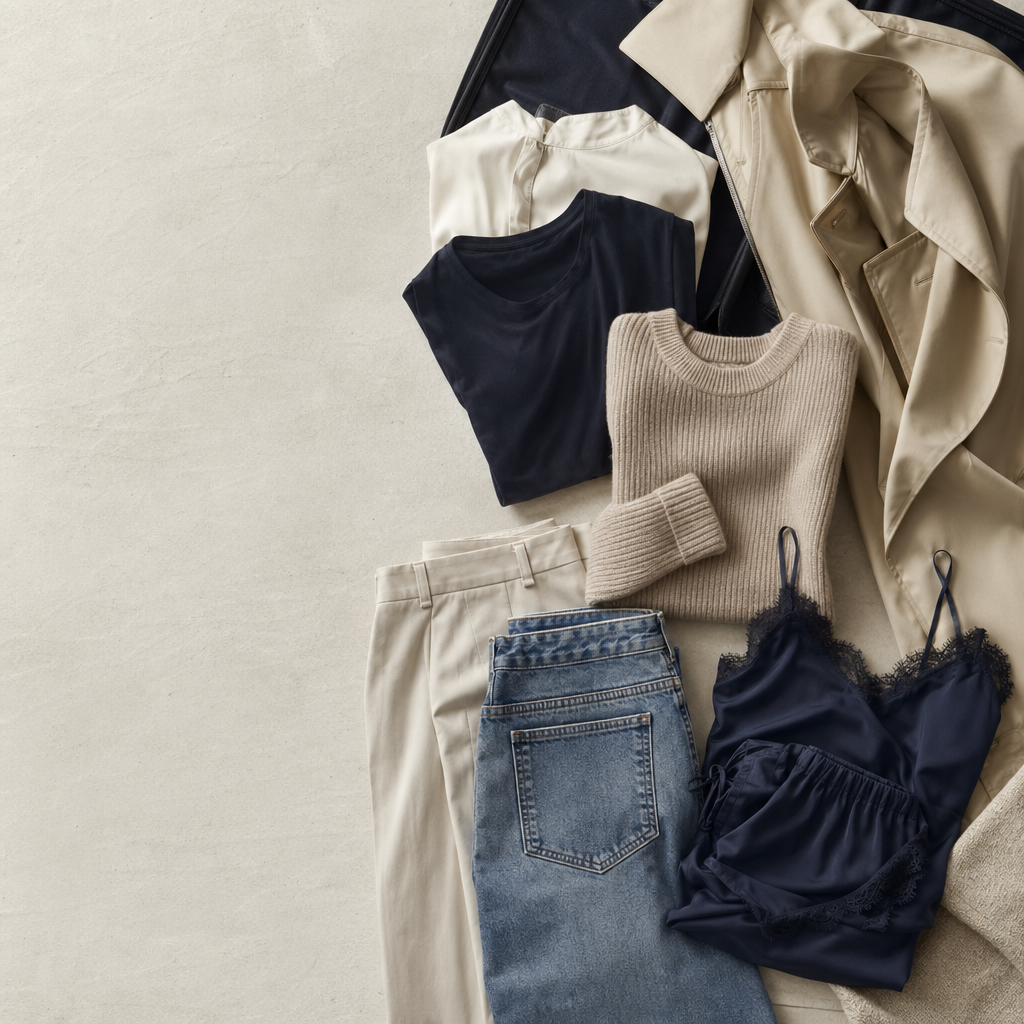
Start with the real itinerary
The mistake most people make with a weekend away is packing for a mood rather than a schedule. Two nights rarely contain more than one dressed-up moment, one casual day, and one travel outfit, yet the bag fills with versions of imaginary plans: another blouse in case the restaurant is smarter, another pair of bottoms in case the weather changes, another knit because the first one might feel wrong. A useful weekend packing list begins with the actual shape of the trip, not the fantasy of it.
For a city break, country visit, coastal stay, or family weekend, assume clothes will need to work twice. That means favouring pieces that do not announce themselves too loudly and fabrics that recover well between wears. A crisp cotton shirt may look perfect at departure but can crease sharply by dinner; a cotton poplin with a little density, a fine rib, a soft jersey, or a fluid woven fabric will usually be kinder in a small bag. If you are travelling in the UK, northern Europe, Canada, or southern Australia, the weather can shift within hours, so the answer is not more clothes but better layers.
Lay out the pieces before they enter the bag: two tops, one knit, one pair of trousers, one pair of denim, outerwear, and sleepwear. If those pieces do not make at least four combinations, edit before you pack. Colour does most of the work here. Keep the base quiet 鈥?navy, charcoal, ecru, black, olive, brown, washed blue 鈥?then allow one top to carry pattern, texture, or a stronger colour. This keeps repeat wear intentional rather than accidental.
Choose two tops with different jobs
The first top should be the one you are happy to be seen in at dinner without needing complicated styling. That does not necessarily mean dressy. A clean neckline, a good shoulder line, and fabric with enough weight to skim rather than cling are more reliable than anything fussy. A silk-feel viscose, fine cotton knit, soft merino blend, or substantial jersey can sit well under outerwear and survive being folded. Check that it works with both trousers and denim, and that the hem sits at a useful point: just below the waistband for easy untucked wear, or long enough for a neat half-tuck without bunching.
The second top should be the quiet worker: breathable for travel, comfortable at breakfast, and easy to layer under the knit. A long-sleeve cotton tee, fine ribbed top, chambray shirt, or lightweight roll neck can all do this job depending on season. In warm weather, short sleeves are fine, but avoid anything so sheer that it needs a specific bra or camisole unless you truly want to pack that too. White looks fresh but is not always forgiving on a two-night trip; cream, grey marl, navy, tobacco, or soft stripes often handle coffee, sunscreen, and repeat wear with less drama.
If space is tight, wear the bulkier or more crease-prone top on the journey and pack the smoother one flat. Turn delicate fabrics inside out and place them between the trousers and denim rather than scrunching them into gaps. A small stain remover wipe can be helpful, but the better test is whether the top can air overnight and look respectable the next day. Clothes that need immediate laundering after one gentle wear are rarely the right candidates for a weekend bag.
Let the knit do the layering
One knit is enough if it is chosen with precision. It should fit under your outerwear without making the sleeves tight, sit over both tops without distorting the neckline, and feel comfortable against the skin if the day warms up and you remove a layer beneath it. A fine to mid-weight merino, lambswool blend, cotton knit, or compact cashmere blend works harder than a bulky jumper that consumes half the bag. Look for ribbing at the cuff that actually holds its shape, because stretched cuffs make repeat wear look tired quickly.
The proportion matters. With wide-leg trousers, a cropped or semi-cropped knit keeps the outline clean. With straight denim, a longer crew neck or V-neck can look relaxed without becoming shapeless. If the knit is oversized, make sure the outerwear is cut generously enough through the armhole and shoulder; otherwise you will spend the weekend tugging at sleeves. A cardigan can be more flexible than a pullover, especially for train carriages, ferries, and airports where temperatures swing from overheated to draughty in minutes.
Care is part of the decision. Wool does not need washing after every wear and often improves after airing, which makes it excellent for travel. Hang it over a chair overnight rather than leaving it compressed in the bag. If the knit pills easily, pack a small comb only if you know you will use it; otherwise choose a smoother yarn. Pale knits are beautiful but less practical if your weekend includes muddy paths, pub benches, children, dogs, or takeaway coffee in transit.
Pack two bottoms, not three
Trousers and denim are enough for a two-night trip because they give you two different registers. The trousers should be the smarter pair: something you could wear to dinner, a gallery, a family lunch, or a work-adjacent Monday if your weekend blends into travel. Crease resistance is more important than novelty. A wool blend, ponte, twill, substantial viscose blend, or technical cotton can look polished after sitting. Very high-waisted cuts are elegant when standing but can dig in on long journeys, so sit down in them before you decide they are coming.
Denim is the practical counterweight. Straight, relaxed straight, or a gentle barrel leg tends to pack and rewear better than skin-tight denim, which can feel restrictive after hours of travel, or very wide denim, which may drag in wet streets. Dark or mid-blue washes hide wear better than very pale denim, particularly in winter or during rainy shoulder seasons. If the trip involves walking, check the hem with the shoes you will actually wear. A hem that brushes the ground on a dry bedroom floor will be filthy after one damp pavement.
The key is that both bottoms must work with both tops and the knit. If the trousers only suit one blouse, they are not earning their space. If the denim only works with a casual top, it narrows the weekend too much. Think of the combinations plainly: trousers with the dinner top, trousers with the knit, denim with the quiet top, denim with the dinner top under outerwear. That is already four outfits before changing shoes or jewellery, and it avoids the spare outfit panic that usually leads to overpacking.
Outerwear and sleepwear still count
Outerwear is not an afterthought; on many two-night trips it is the piece people see most. Choose one coat or jacket according to the wettest likely condition, not the prettiest possible forecast. In Britain, Ireland, coastal Europe, parts of Canada, and changeable Australian winters, water resistance often matters more than warmth. A trench, waxed cotton jacket, wool coat, padded liner, or neat rain shell can all be right, but the deciding factors are sleeve room, pocket depth, and whether it covers the longest layer beneath. If rain is likely, a hood or packable hat is more useful than a second jacket.
Sleepwear deserves proper space because poor sleep makes every outfit feel worse. Pack something you can comfortably wear to breakfast in a shared house or open the door in if needed: soft cotton, modal, jersey, or lightweight flannel depending on the season. Avoid bringing worn-out pieces simply because they are hidden; they often take up the same space while making the trip feel less considered. If you run cold, a pair of socks for sleeping can do more than an extra jumper. If you run warm, breathable sleepwear will matter more than another daytime top.
Before closing the bag, do one final maintenance check. Remove anything that needs ironing unless you will have access to one and genuinely intend to use it. Fasten buttons, fold knits rather than hanging them, and pack denim at the base to give the bag structure. Underwear, socks, and toiletries are outside the clothing formula, but they should follow the same restraint: enough for each day, plus one sensible spare if travel is uncertain. A good weekend packing list is not severe; it is reassuring. It lets you arrive with clothes that make sense, repeat well, and leave room for the small pleasures of being away.