Start with the shape
Coat shape is the first decision because it decides what the rest of the outfit can do. A straight coat, cut with a clean shoulder and a column-like fall, is the most adaptable option for a capsule wardrobe. It works over fine knitwear during the week, over cotton shirting when the office is warm, and over a slightly dressier evening look without appearing too casual. If the hem sits around the knee or just below it, it will cover most jackets and longer shirts while still feeling manageable on stairs, buses, and station platforms.
A wrap coat gives softness and waist definition, but it asks for more attention. The belt can be flattering, yet it can also bunch over thicker layers or loosen when you are carrying a tote, umbrella, or groceries. A double-breasted coat brings structure and weather protection across the chest, especially useful in wind, but it needs enough width through the body to close without pulling. The most common mistake is buying the neatest size in the mirror rather than the size that allows the first layer beneath it to sit smoothly.
Look at the coat from the side as much as the front. The shoulder seam should not ride up when your arms move forward, and the sleeve should be long enough to cover the wrist when you hold a rail or steering wheel. A little air between body and coat is not a fit failure; it is what lets wool trap warmth. Too tight, and even good cloth feels oddly cold because the layers are compressed.
Choose weight with weather in mind
A wool coat for a cold commute needs enough substance to resist a sharp morning, but not so much weight that it becomes a burden by early evening. In much of the UK and Europe, the challenge is often damp cold rather than deep freeze: low single digits, persistent drizzle, wind tunnelling between buildings, and warm interiors once you arrive. In parts of Canada, the same coat may be a shoulder-season piece unless layered carefully. In southern Australian cities, it may be the main winter coat, particularly for early starts and late dinners.
Cloth weight changes everything. A dense wool or wool-rich coating with a firm hand will hang better and block wind more effectively than a soft, fluffy cloth of the same thickness. Very brushed surfaces can look inviting, but they may pill under bag straps or at the hip where a hand rests. A smoother melton-style finish is practical for repeat wear because it sheds lint more easily and keeps a sharper outline. If there is a lining, check that it feels slippery enough over shirting and knitwear; a clingy lining makes dressing feel awkward and can twist sleeves during the day.
Pure wool is warm and breathable, but a small percentage of other fibres can improve durability or reduce creasing, depending on the cloth. The caveat is that a beautiful fibre content label does not guarantee a good coat. Hold the garment at the shoulders and let it hang. If the front collapses, the lapel rolls unevenly, or the hem ripples before it has been worn, those issues are unlikely to improve with use. A capsule coat should look composed after a full week, not only under changing-room lights.
The first layer matters
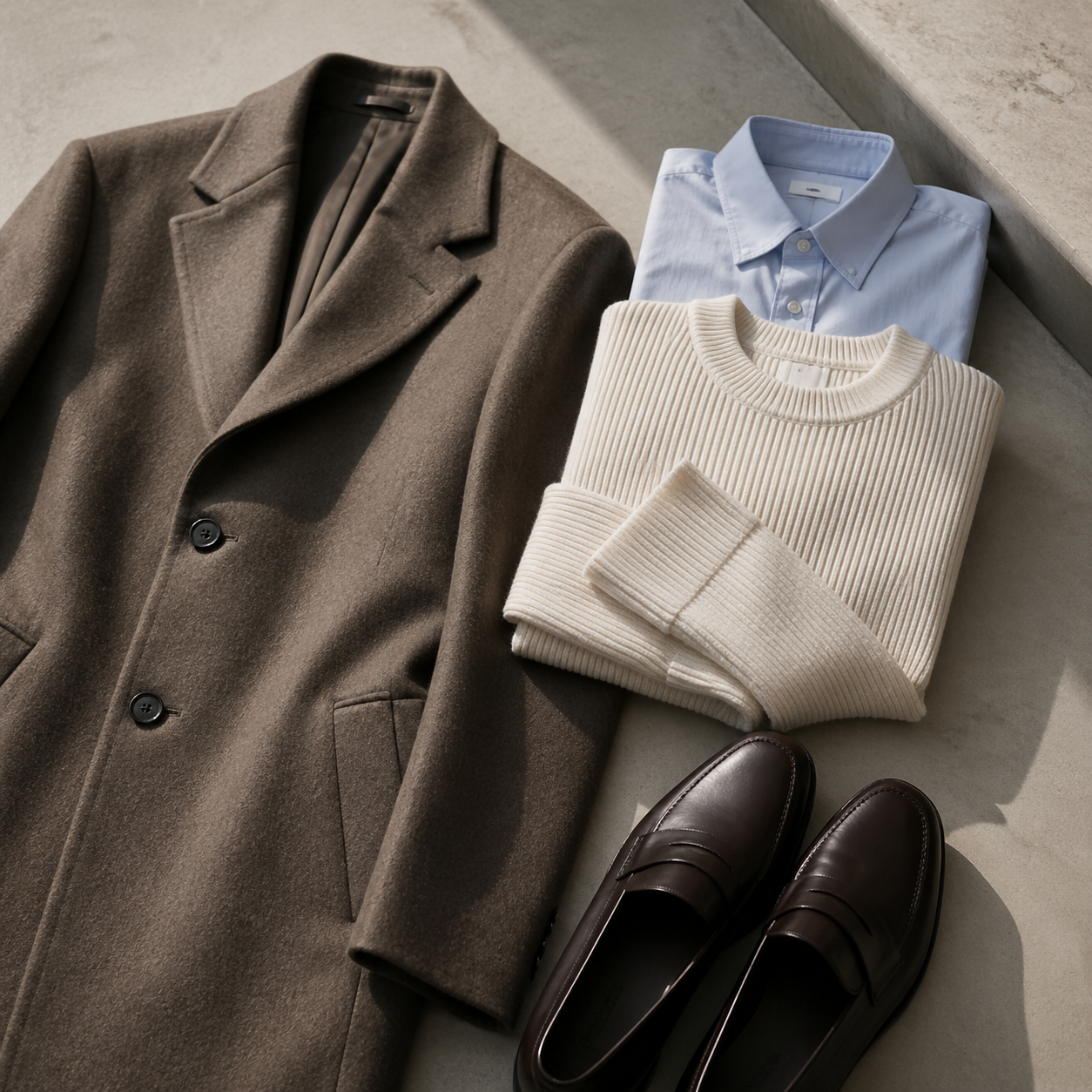
The layer directly beneath the coat sets the comfort level for the whole outfit. Fine knitwear is often the easiest answer: merino, lambswool with a smooth finish, or a fine cotton-wool blend can add warmth without bulk. A crew neck sits cleanly under a notched lapel, while a fine roll neck gives extra protection at the throat on windy mornings. The knit should skim rather than cling, especially if it will be worn under a coat for a long commute, because close layers can become clammy once you move indoors.
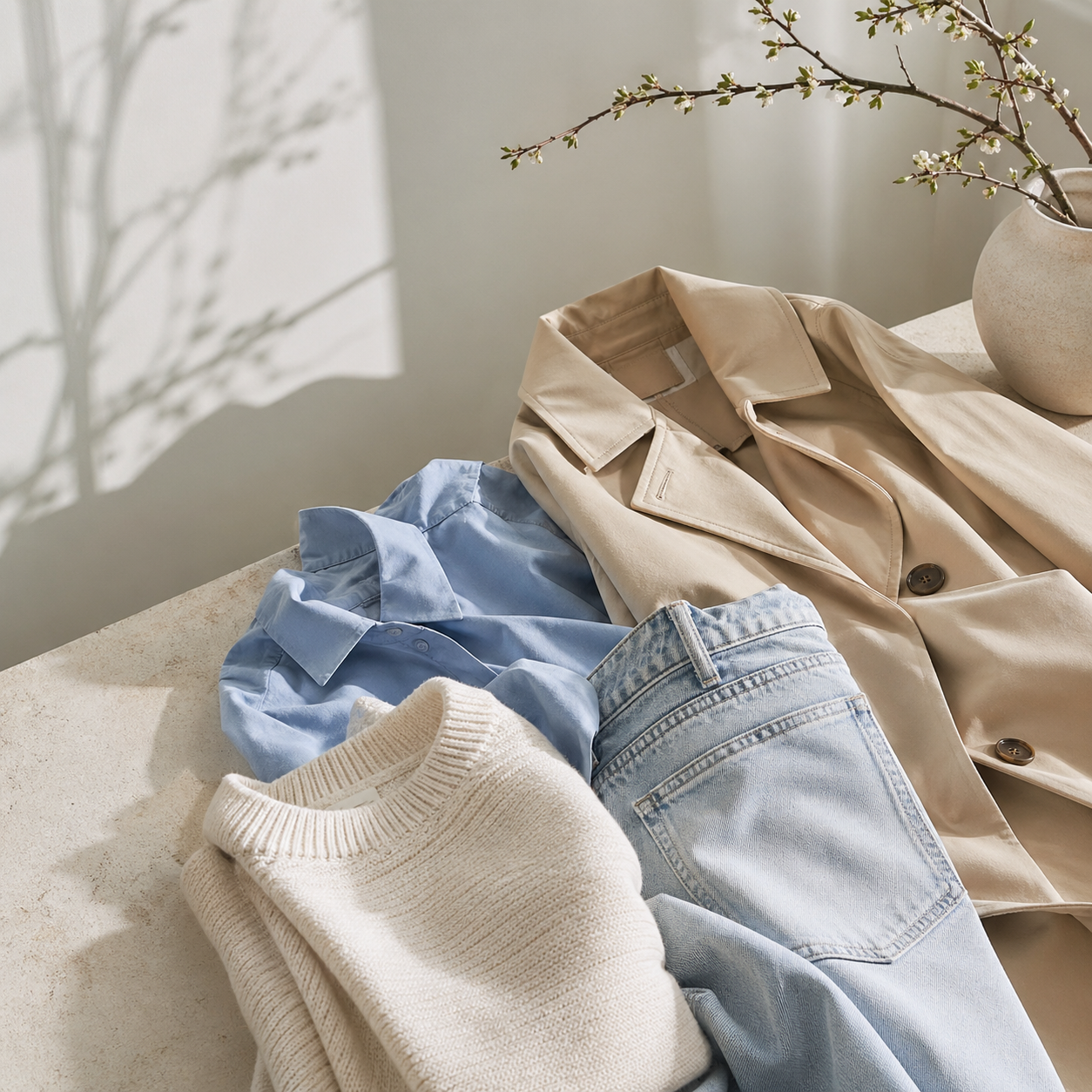
Cotton shirting brings crispness, but on its own it offers little warmth. It works best when the coat is substantial and the journey is not too exposed, or when a fine knit is added over the shirt. Pay attention to collar behaviour: a stiff collar can fight with a narrow coat lapel, while a soft collar may disappear under a heavier coat. If you often go from work to evening plans, a cotton shirt with a fine knit over the shoulders or under the coat gives you options without carrying a full change.
The armhole relationship is where many outfits fail. A coat with high, narrow armholes may look refined but can feel restrictive over even a thin jumper. Conversely, an oversized coat with very dropped shoulders can swallow fine shirting and feel draughty at the neckline. Try the coat with the real layers you wear most: a fine knit, a cotton shirt, and the bag you carry. Lift your arms, sit down, reach into a pocket, and button the coat fully. Practical elegance is tested in movement.
Proportion from hem to shoe
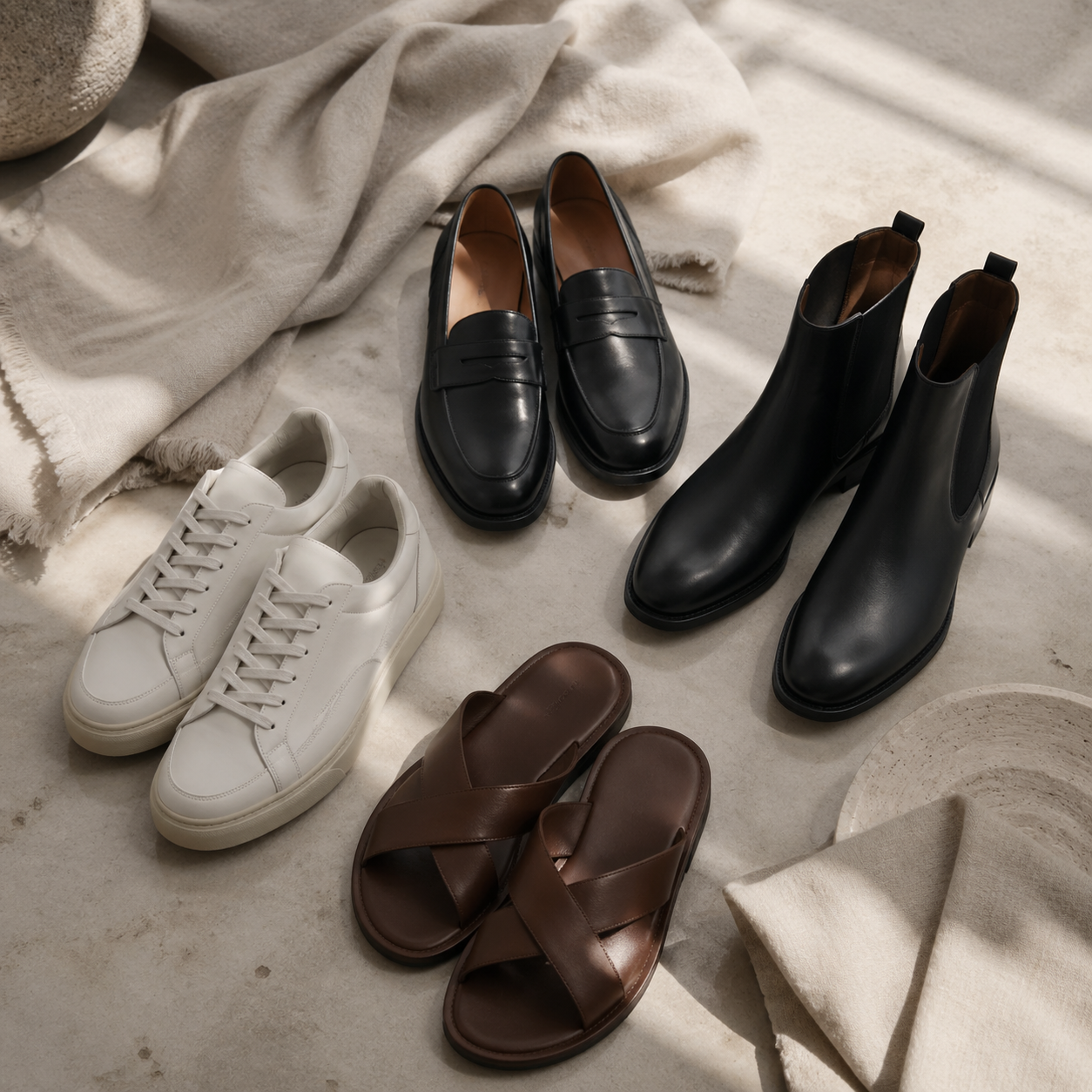
A coat does not end at the hem; it continues visually into the trousers, skirt, socks, and leather shoes beneath it. For cold commutes, the most useful proportions are calm rather than extreme. A knee-length or mid-calf wool coat works with straight trousers, fuller wool trousers, denim, and longer skirts. If the coat is very long, the shoe needs enough presence to balance it: a leather loafer with a substantial sole, an ankle boot, or a polished lace-up will usually look steadier than a delicate flat on wet pavements.
Leather shoes deserve the same practical scrutiny as the coat. Smooth leather can be polished and conditioned, but it needs protection from salt, slush, and heavy rain. Suede is beautiful in dry cold but unforgiving in persistent wet weather unless treated and brushed regularly. A rubber-inset sole or a slightly raised sole is kinder for commuting than thin leather soles, particularly on slick stone, tram stops, and icy kerbs. The smartest winter outfits often succeed because the shoe is realistic about the ground.
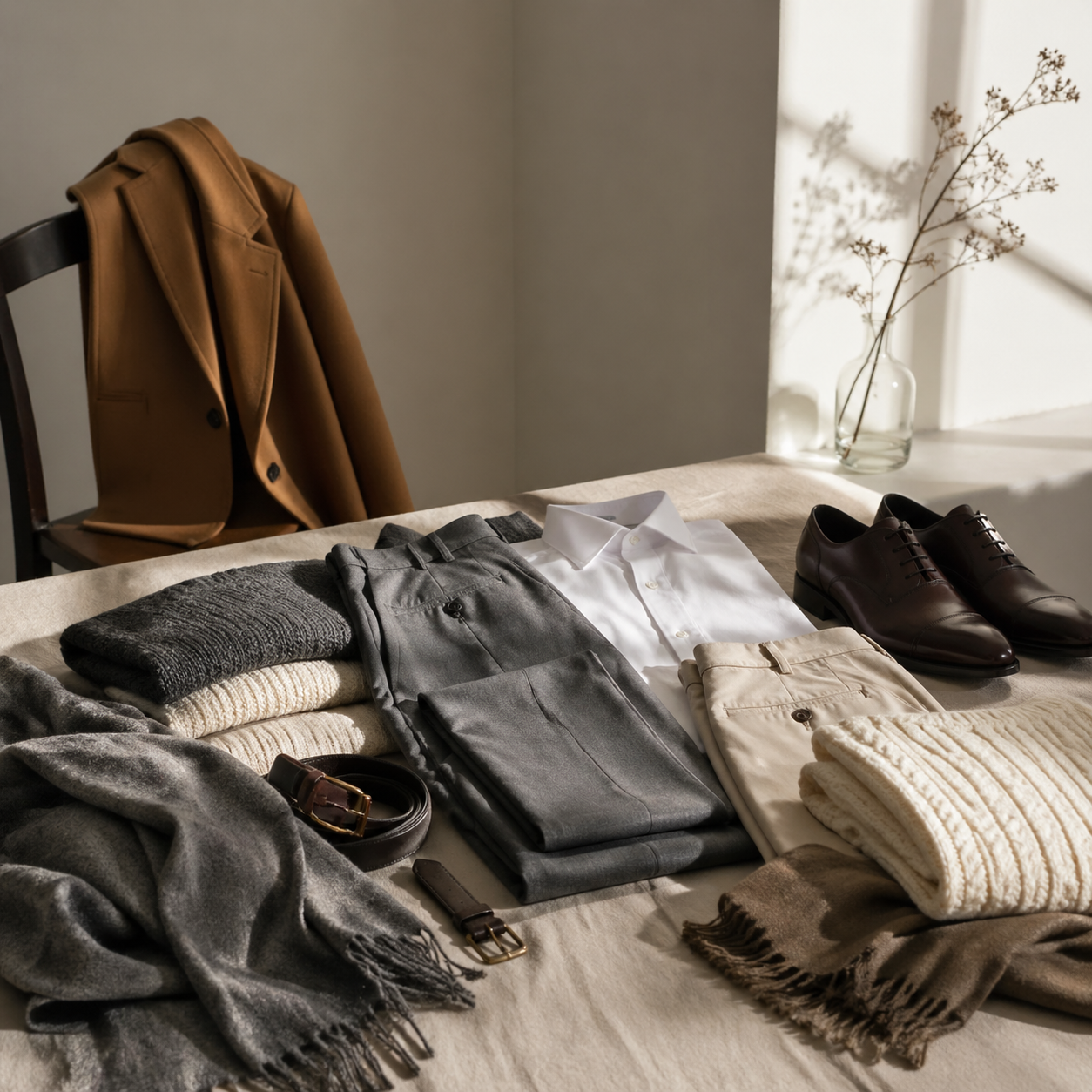
Colour also affects repeat wear. A black, charcoal, navy, camel, olive, or deep brown coat will work hard across most wardrobes, but the right choice depends on what sits underneath. If your fine knitwear is mostly grey, cream, navy, or black, a camel or brown coat can soften the palette. If your cotton shirting leans blue and white, navy or charcoal can feel sharper. A capsule is not built by choosing the most neutral item in isolation; it is built by choosing the neutral that makes your existing clothes easier to wear.
Care for repeat wear
A wool coat should not be cleaned too often. Over-cleaning can flatten the cloth, disturb the structure, and shorten the life of the garment. Instead, brush it with a clothes brush after several wears, especially at the cuffs, pockets, and hem where dust and street grit collect. Let it air on a broad hanger before returning it to a wardrobe, and avoid cramming it between heavy garments. Wool recovers well when given space; it resents being crushed.
After rain or wet snow, hang the coat away from direct heat and let it dry naturally. Radiators can make wool brittle and may affect the internal canvas, fusing, or lining. If the hem has picked up mud, wait until it dries, then brush gently rather than rubbing damp dirt into the fibres. Small pills can be removed carefully with a fabric comb, but aggressive shaving can scar the surface. For stains, seek a reputable cleaner and explain the mark rather than sending the coat in without context.
The final test of a capsule coat is not whether it feels special on the first outing. It is whether you can wear it on Monday with cotton shirting and leather shoes, on Wednesday over fine knitwear in sleet, and on Friday evening without wishing you had brought something else. The right coat shape gives you room, the right weight gives you comfort, and the right first layer keeps the whole system working. That is the quiet discipline of a coat that belongs in a capsule wardrobe.