Work Bag Size Guide
Work Bag Size Guide is a buying decision for readers weighing laptop fit, strap comfort, interior pockets, and daily carry weight. The wardrobe decision note explains what to check before buying, who should skip it, and where the purchase can become more work than it first appears.
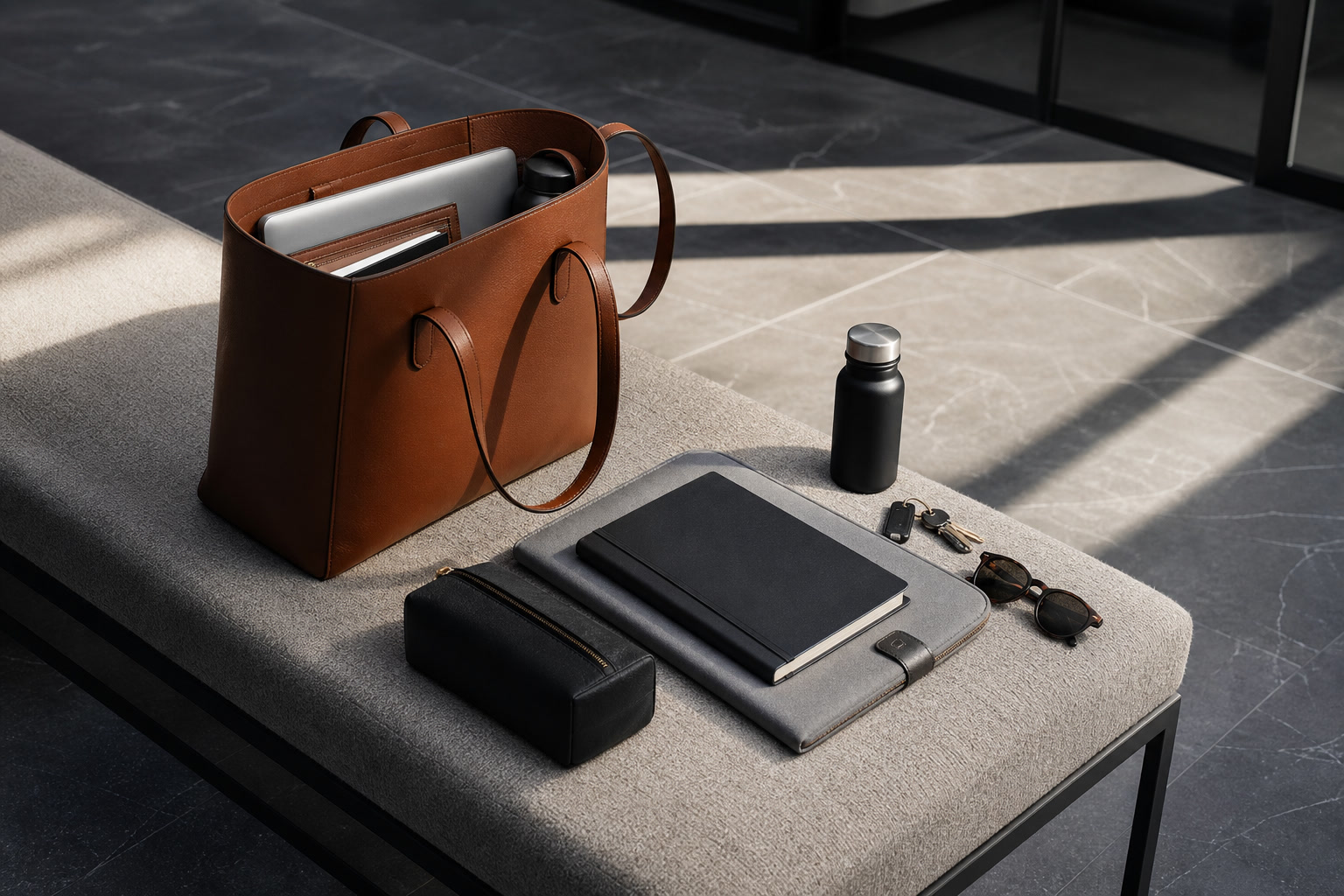
The modern commute is an exercise in logistical compromise, forcing professionals to balance the rigid geometry of technology with the soft, unpredictable bulk of personal care items. We frequently overcompensate by purchasing massive, cavernous totes, only to suffer the physical consequences of asymmetrical shoulder strain and the daily frustration of excavating a ringing phone from a dark, unorganized abyss. Selecting the correct capacity for a work bag is rarely about maximizing square footage; rather, it requires a precise calculation of your daily non-negotiables-a laptop, a compact umbrella, a makeup pouch-measured against the anatomical realities of carrying that weight across city blocks or transit systems. A successful slower buying decision in this category demands looking past the aspirational styling of a bag on a mannequin and rigorously evaluating its empty weight, strap mechanics, and structural integrity under a heavy, shifting load.
The Anatomy of Daily Carry and the Volume Illusion
A profound discrepancy exists between a bag's stated exterior dimensions and its actual usable volume. Brands frequently advertise a tote as capable of holding a 15-inch laptop because the bag measures 16 inches across its widest point. However, this measurement often reflects the top edge of an inverted trapeze shape, while the base-where the laptop must actually rest-narrows to a restrictive 13 inches. Furthermore, internal dividers, thick padded sleeves, and intrusive magnetic closures can shave off crucial inches from the entry point, requiring you to force your device through a tight opening at an awkward angle, risking scratches to the hardware and tearing the bag's lining.
To accurately gauge necessary capacity, you must categorize your daily load into rigid non-negotiables and pliable variables. A laptop, a charger block, and a rigid glasses case dictate the absolute minimum height and width requirements. Conversely, items like a compact umbrella, a glass lunch container, or a structured makeup pouch dictate the necessary depth, or gusset width. A bag that is tall and wide but lacks a base depth of at least five inches will force bulky items to stack vertically. This creates a frustrating 'Tetris' effect, where retrieving a lip balm or a transit pass from the bottom requires completely unpacking the bag on a crowded train.
The internal architecture of the bag determines how these items interact. Open-compartment totes offer maximum flexibility for odd-shaped items like a pair of commuter sneakers, but they allow heavy objects to shift, throwing off your center of gravity. Bags with a fixed center zip compartment provide excellent organization for flat documents and tablets, but they rigidly divide the remaining space, often making it impossible to lay a water bottle flat or accommodate a wider lunchbox. Evaluating your capacity needs means deciding whether you prefer the freedom of an open void paired with modular pouches, or the built-in discipline of a highly compartmentalized interior.
Material Behavior Under Load and Strap Mechanics
The material composition of a work bag dictates not only its aesthetic longevity but its empty weight-the silent contributor to commuting fatigue. Thick, full-grain leather exudes professional authority and molds beautifully over time, but it frequently adds two to three pounds of dead weight before you insert a single item. When you add a four-pound laptop, a water bottle, and daily essentials, the total load easily exceeds ten pounds. Saffiano leathers and coated canvases offer a lighter, more scratch-resistant alternative, but their inherent stiffness means they do not stretch to accommodate an overstuffed day, and the rigid edge glazing is prone to cracking at the stress points where the handles meet the body.
Strap mechanics are the primary interface between the bag's capacity and your physical comfort. Thin, rolled leather handles may look elegant on a desk, but under a heavy load, they act like wire, digging into the collarbone and compressing the nerves of the shoulder, leading to numbness down the arm during a long transit. Flat straps, ideally measuring at least an inch in width, distribute the payload more evenly across the trapezius muscle. Equally critical is the strap drop-the vertical clearance from the peak of the handle to the top edge of the bag. A strap drop under nine inches will inevitably pinch the underarm, severely limiting mobility when wearing a heavy winter coat or a tailored blazer.
Friction between the bag's material and your clothing is another crucial consideration for daily use. Unlined suede interiors, while luxurious to the touch, grip onto silicone electronics cases and generate a fine dust that coats dark items. Smooth nylon or twill linings allow files and laptops to slide in and out without fuss, though they require careful handling of sharp objects like keys to prevent tearing. Externally, abrasive canvas or heavily textured, unpolished leathers act like sandpaper against delicate fabrics, causing irreversible pilling on the side of your silk blouses or fine-knit cashmere sweaters where the bag naturally rests during your walk.
The Ergonomics of Commuting and Asymmetrical Strain
The physical toll of the unilateral carry is a medical reality for many professionals. Carrying a dense, heavy load on one shoulder forces the spine into a subtle lateral curve, prompting the opposing side of the body to overcompensate to maintain balance. Over months of daily commuting, this asymmetrical strain manifests as tight upper traps, chronic neck stiffness, and tension headaches. The illusion that a larger capacity bag is inherently better often exacerbates this issue; given empty space, human nature dictates we fill it with 'just in case' items-a hardcover book, an extra sweater, heavy cosmetics-transforming a functional accessory into an orthopedic liability.
Evaluating the nature of your specific commute is essential for determining the right capacity and closure style. A multi-transfer subway or bus commute demands a bag with a secure top zip to prevent contents from spilling onto the floor if the bag tips, and ideally includes a crossbody strap option to free up both hands for holding onto transit rails. Conversely, a car-to-office commute is far more forgiving. If the bag spends the majority of its journey resting on a passenger seat and only requires carrying across a parking lot, open-top bucket bags or wider, less secure totes become viable, allowing for rapid access to your belongings.
When the daily required load consistently exceeds eight pounds, transitioning away from the traditional shoulder tote becomes a necessity rather than a stylistic choice. Modern commuter backpacks and hybrid convertible bags have evolved significantly, offering sleek, professional aesthetics utilizing high-denier nylons and refined leather trims. These alternatives center the weight across both shoulders and the thoracic spine, neutralizing the asymmetrical strain. Clinging to a traditional tote when your capacity needs dictate a backpack often results in premature wear on the bag's straps and inevitable visits to a physical therapist.
Maintenance Burden and Storage Realities
The long-term upkeep of a high-capacity workhorse bag requires a realistic assessment of your maintenance tolerance. Large leather bags demand bi-monthly conditioning to prevent the bottom corners from drying out, cracking, and scuffing against abrasive subway floors or rough office carpets. Light-colored leathers, while visually striking, are highly susceptible to denim dye transfer-a permanent stain that can ruin the aesthetic of a premium bag within weeks of wear if it constantly rubs against dark jeans during your commute. If you are unwilling to regularly clean and condition the material, opting for a dark, wipeable nylon or a heavily treated coated canvas is the more pragmatic decision.
Structural degradation over time is the enemy of the oversized work bag. A tote lacking metal base feet or a reinforced bottom panel will eventually succumb to gravity, creating a 'puddle' effect where the center sags lower than the corners. This structural failure not only looks sloppy and unprofessional, but it also forces flat items like laptops to sit at awkward, unprotected angles, significantly increasing the risk of screen damage when the bag is set down abruptly on a hard surface. A high-quality work bag must possess the architectural integrity to stand upright on its own, even when completely empty.
The reality of storing large work bags at home is frequently overlooked during the purchasing process. Unlike soft evening clutches or pliable weekenders, a structured 15-inch leather tote demands dedicated, vertical closet real estate. Storing these bags flat crushes their gussets and permanently distorts their silhouette, while hanging them by their straps stretches the leather and weakens the edge glazing over time. They must be stored upright on a shelf, ideally stuffed with acid-free tissue paper or a dedicated bag pillow, to maintain their shape and prevent the leather from creasing during periods of non-use.
Return Risks and Evaluating Long-Term Viability
Work bags suffer from exceptionally high return rates due to the precise, unforgiving nature of carrying technology. The most common point of failure upon delivery is the internal laptop sleeve. Buyers frequently assume their specific device will fit based solely on the diagonal screen size, forgetting that older laptop models, extended batteries, or protective hardshell cases add crucial millimeters that prevent the sleeve's magnetic tab from snapping shut. It is imperative to test the bag at home with your exact, fully loaded daily carry-including your umbrella and makeup bag-before removing the tags or discarding the protective hardware films.
Immediate inspection of the hardware and stitching is critical for assessing long-term viability. Check the tension and smoothness of the main zipper; a zipper that catches or requires excessive force on day one will inevitably fail under the stress of a fully packed bag. Examine the stitching where the straps attach to the main body. This specific junction bears the entire brunt of the weight and should feature reinforced box stitching, heavy-duty rivets, or an extended leather anchor patch. Single-line stitching at the strap base is a severe structural red flag for any bag intended to carry a laptop.
A high-quality work bag represents a significant financial investment that should yield a low cost-per-wear over a three to five-year lifespan. To achieve this, avoid trend-driven shapes like extreme micro-totes, overly slouchy hobo bags, or exaggerated asymmetrical designs, as they fundamentally fail the functional requirements of carrying flat tech and structured files. Prioritize neutral tones, architectural lines, and durable materials that transcend seasonal shifts. A slower buying approach means waiting until you find a piece that perfectly marries your precise volumetric needs with enduring ergonomic comfort, rather than settling for a bag that merely looks the part.
Pre-purchase checklist
- Measure your laptop with its protective case on, and compare this exact dimension to the bag's internal base width, not the exterior top opening.
- Verify the strap drop is a minimum of 9.5 inches to guarantee clearance over heavy winter coats without pinching the underarm or restricting mobility.
- Weigh your daily non-negotiable items together; if the total payload exceeds 8 pounds, eliminate unpadded, thin-strap single-shoulder totes from your options.
- Inspect the bag for metal base feet and a rigid bottom panel to prevent the material from sagging and exposing your electronics to impact damage.
- Check the empty weight of the bag in the product specifications; if the bag weighs over 2.5 pounds empty, the fully loaded weight will likely cause severe shoulder strain.
Who should skip this
Professionals whose daily carry is limited to a smartphone, a slim wallet, and keys should entirely bypass the large work tote category, as the excess volume will merely accumulate debris and add unnecessary weight to your commute. Furthermore, individuals suffering from chronic back pain, sciatica, or severe shoulder tension should skip single-shoulder bags altogether; your physical health dictates an immediate default to an ergonomic, dual-strap commuter backpack or a rolling briefcase, regardless of workplace dress codes or stylistic preferences.
Affiliate transparency
FikaLooks funds its independent editorial research, material analysis, and ergonomic evaluations through transparent affiliate partnerships. If you choose to purchase a work bag through the links provided in our guides, we may earn a commission. This financial structure never influences our rigorous assessment of strap drops, structural integrity, or the realistic carrying capacity of the products we recommend.
FAQ
Does a 13-inch laptop easily fit into a bag advertised as 13 inches wide?
Rarely. The internal dimensions of a bag are always smaller than the exterior due to the thickness of the leather, the lining, and internal seams. Always add at least 1.5 to 2 inches to your laptop's physical width when evaluating bag specifications to ensure a smooth fit.
How can I prevent thin leather straps from constantly slipping off my shoulder?
Strap slippage is caused by a combination of strap tension, stiffness, and friction against your clothing. You can mitigate this by opting for bags with a slightly asymmetrical strap length (where the outer strap is a fraction shorter), or by applying a discrete, adhesive silicone grip strip to the underside of the straps.
Is canvas or nylon the better material choice for a rainy, walking commute?
High-denier nylon is vastly superior for wet commutes. It is inherently water-resistant, prevents moisture from reaching your electronics, and wipes dry instantly. Cotton canvas, unless heavily treated with wax, absorbs water, becoming significantly heavier and allowing dampness to seep into the interior lining.
Will purchasing a rigid bag organizer insert fix a sagging leather tote?
An organizer insert provides excellent internal pocketing and slight lateral rigidity, but it cannot fix a bag with a fundamentally soft, unreinforced base. Additionally, structured inserts often add an extra half-pound to a pound of empty weight to your daily carry, which can exacerbate shoulder strain.