White Tee Quality Signs
White Tee Quality Signs is a basics audit for readers weighing fabric weight, neckline recovery, sleeve shape, and opacity. The wardrobe decision note explains what to check before buying, who should skip it, and where the purchase can become more work than it first appears.
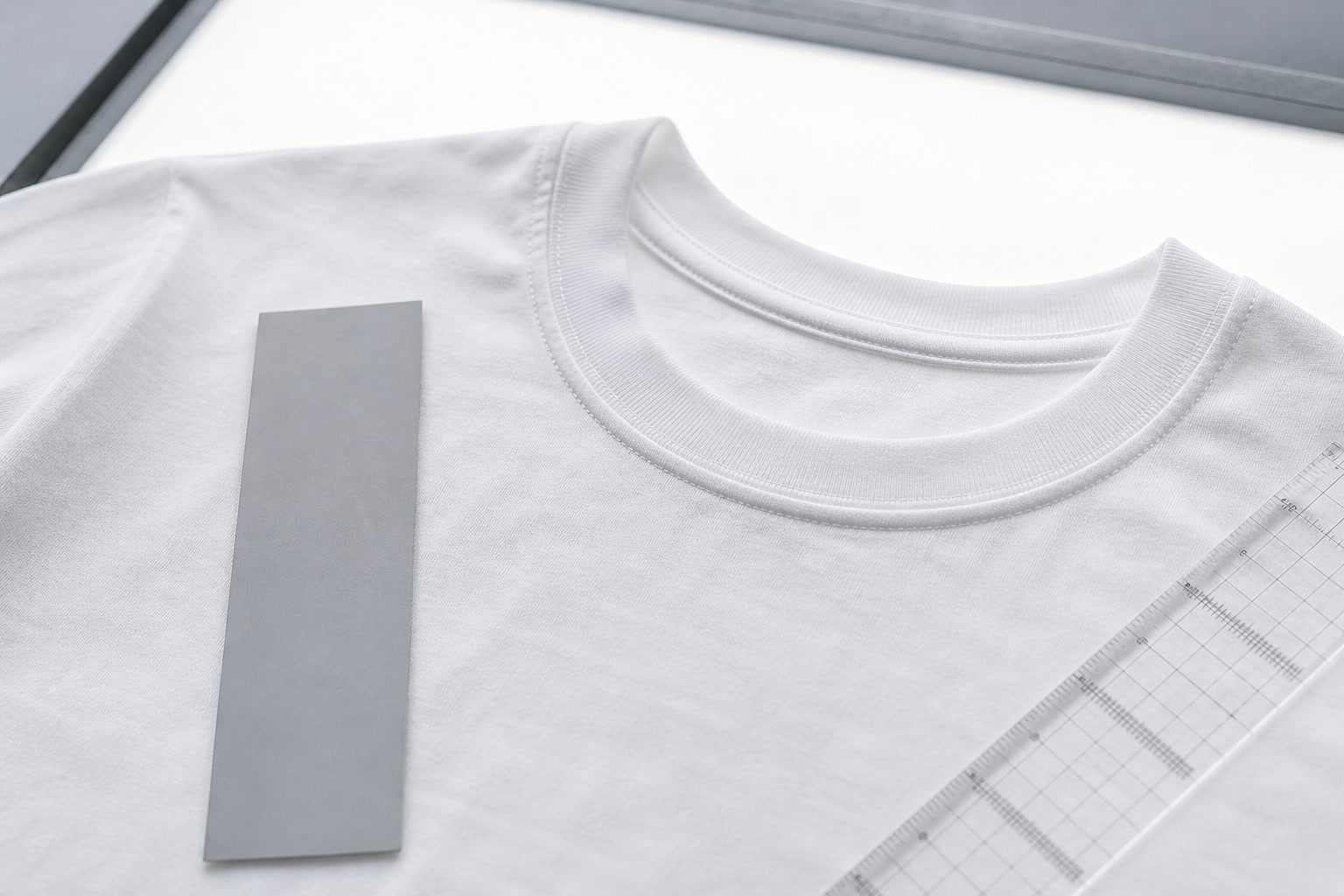
The plain white t-shirt operates as a magnifying glass for manufacturing standards. Stripped of pattern, color, and complex tailoring, it leaves nowhere for poor construction to hide. Evaluating a white t-shirt requires moving past the initial visual appeal on a hanger and examining the structural engineering of the garment. The true cost of a basic tee is not its retail price, but its cost-per-wear, which is violently interrupted when collars warp, side seams twist, or the fabric turns translucent under harsh daylight. This assessment criteria focuses on four non-negotiable quality signals: the architecture of the neckline, the mechanics of fabric weight, the reality of opacity, and the garment's morphological stability after domestic laundering. Understanding these physical properties separates a disposable seasonal purchase from a foundational wardrobe component that will endure years of regular rotation.
The Collar Architecture: Tension, Ribbing, and Shape Retention
The neckline is the structural anchor of any t-shirt, bearing the brunt of physical stress during dressing and undressing. A high-quality collar relies on a precise balance of tension and recovery. Look for neckbands constructed with a slight percentage of elastane or spandex (typically 1% to 5%) woven into the cotton ribbing. This inclusion allows the collar to stretch over the head and immediately snap back to its original circumference. Pure cotton ribbing, while historically traditional, often lacks the mechanical memory required to prevent the gradual, permanent stretching known colloquially as 'bacon neck'. The method of attachment also matters; a bound neckline, where the fabric is folded over the raw edge and stitched down, offers a cleaner, flatter profile, whereas a traditional ribbed crewneck provides more vintage-leaning volume.
Stitching density around the collar serves as an immediate indicator of factory pacing. Twin-needle cover-stitching-two parallel rows of thread running along the base of the collar-flattens the seam allowance inside the shirt, preventing the neckline from rolling outward. Run your thumb along the inside seam where the collar meets the body. Premium manufacturers will finish this interior edge with a woven tape, extending from shoulder to shoulder. This taping conceals the raw overlocked edges, prevents friction against the collarbone, and acts as a structural stabilizer, stopping the shoulder seams from stretching out of proportion under the weight of the fabric.
The depth and width of the collar opening dictate how the garment interacts with the wearer's anatomy. A tight, high crewneck demands a pristine, unyielding rib to look intentional, often communicating a more structured, masculine-leaning aesthetic. Conversely, a scooped or relaxed neckline requires a finer, narrower binding to drape fluidly without buckling. When evaluating the collar, stretch it gently with both hands. If the fabric yields with a hollow, papery resistance and fails to retract instantly, the internal fibers lack the necessary elasticity. A collar that fails in the fitting room will inevitably collapse after its first encounter with a washing machine.
Fabric Weight and Drape Mechanics
Fabric weight, measured in Grams per Square Meter (GSM) or ounces per square yard, dictates the physical relationship between the textile and the wearer. Lightweight t-shirts, falling between 120 and 150 GSM, utilize fine-gauge yarns. These garments drape closely to the body, offering high breathability and a fluid, second-skin movement ideal for humid climates or layering under tailored knitwear. However, this lower weight severely compromises structural integrity; lightweight cotton is highly susceptible to abrasion, pinholing around the beltline, and rapid degradation from frequent washing. It requires a gentle maintenance routine, strictly cold water, and air drying to survive beyond a single season.
Mid-weight cotton, ranging from 160 to 200 GSM, represents the industry standard for a standalone white t-shirt. At this density, the fabric possesses enough substance to hold its own shape rather than merely clinging to the body's contours. It offers a balanced compromise: opaque enough to conceal undergarments, yet breathable enough for year-round wear. The drape of a mid-weight tee is determined by the spinning process of the yarn. Ring-spun cotton, where fibers are continuously twisted and thinned, produces a notably smoother, softer hand-feel than open-end cotton, which feels coarser and more rigid. Combed cotton takes this further by mechanically removing short, uneven fibers before spinning, resulting in a textile with a subtle, refined luster.
Heavyweight t-shirts, exceeding 210 GSM, function almost as light outerwear. These garments are characterized by a stiff, architectural drape that stands away from the body, effectively masking physical contours. The density of heavyweight cotton provides exceptional durability and resistance to friction, making it a low-maintenance option that withstands aggressive laundering. Yet, this thickness significantly reduces air circulation, trapping body heat and rendering the garment uncomfortable in high temperatures. When selecting a heavyweight white tee, pay close attention to the armhole cut; the rigid fabric requires a slightly wider armscye to prevent the material from bunching uncomfortably directly under the armpit.
Opacity and Undergarment Mapping
The transparency of a white t-shirt is the most frequent point of failure in foundational basics. A common misconception equates fabric thickness directly with opacity. While a 250 GSM heavyweight cotton will naturally block light, true opacity in mid-weight and lightweight garments relies on the density of the knit and the twist of the yarn. High-twist yarns pack cotton fibers tightly together, reducing the microscopic gaps between threads. This manufacturing technique creates a fabric that feels relatively thin and breathable but effectively blocks light transmission. To test this in a retail environment, slide your hand inside the garment and press it flat against the fabric. If the distinct outline of your fingers and the color of your skin are immediately visible, the shirt will inevitably map the precise lace pattern and color of any undergarment.
The interaction between the starkness of the white dye and the wearer's skin undertone also influences perceived opacity. Brilliant, optical whites-achieved through chemical brighteners-reflect maximum light, which can paradoxically highlight the contrast between the fabric and the shadows created by the body underneath. Unbleached or soft ivory tones absorb light differently, often providing better visual coverage and a less clinical appearance. Furthermore, a highly opaque white t-shirt still requires strategic undergarment choices. The goal is to match the undergarment to the wearer's skin tone, not to the white of the shirt, thereby eliminating the contrast line that draws the eye.
Surface texture plays a secondary role in managing transparency. Slub cotton, characterized by intentional, organic variations in yarn thickness, creates a subtly mottled surface. This micro-texture scatters light, confusing the eye and reducing the stark visibility of whatever lies beneath the fabric. However, slub textures lean inherently casual and disrupt the smooth, uniform finish required for a dressier, polished aesthetic. Evaluating opacity requires acknowledging the intended use-case: a sheer, lightweight tissue tee designed specifically for layering operates under different rules than a dense, standalone piece expected to perform flawlessly in a corporate casual environment.
Post-Wash Reality and Maintenance Burden
Cotton is a dynamic, reactive fiber. Its true state is only revealed after the first immersion in water and subsequent drying cycle. The most severe post-wash failure is torque, commonly known as side-seam twisting. This occurs when the tension of the spun yarn is released during washing, causing the entire garment to skew diagonally. Cheaply manufactured t-shirts, cut off-grain to maximize fabric yield on the cutting room floor, will inevitably twist, pulling the side seam toward the navel. Premium brands mitigate this by cutting strictly on the grain or utilizing tubular knitting machines, which weave the body of the shirt as a single, continuous cylinder, eliminating side seams entirely and rendering torque physically impossible.
Shrinkage is an unavoidable reality of cotton, but its severity is dictated by factory pre-treatments. Unsanforized, raw cotton can shrink up to 10% in length and width. High-quality t-shirts undergo a pre-shrinking process (sanforization) or garment-washing before leaving the factory, reducing domestic shrinkage to a manageable 2-3%. When evaluating fit, particularly length, assume a loss of at least half an inch vertically after the first wash. Width shrinkage is generally less problematic, as the mechanical action of wearing the garment will gently stretch the horizontal fibers back out, but vertical shrinkage is permanent. Always check the hem; a narrow, tightly stitched hem is prone to flipping upward after washing, requiring tedious ironing to lay flat.
The maintenance burden of a pristine white t-shirt is inherently high. The fabric acts as a magnet for environmental dirt, body oils, and chemical reactions. The notorious yellowing of the underarms is rarely caused by sweat alone; it is a chemical reaction between the aluminum compounds in antiperspirants, the salt in human sweat, and the cotton fibers. Preventing this requires a shift in routine: switching to aluminum-free deodorants or applying an enzyme-based stain remover to the underarms prior to every wash. White cotton demands to be washed exclusively with other whites, using cold water to prevent setting invisible protein stains, and ideally dried flat to prevent the weight of the wet fabric from distorting the shoulders and neckline.
Fit Nuances, Storage, and Return Risks
The geometry of a t-shirt defines its relationship with the body. The shoulder seam is the primary anchor point. In a classic fit, the seam should sit precisely at the acromion bone, where the shoulder drops into the arm. If the seam creeps up toward the neck, the shirt is too small, causing tension lines across the chest. If it droops down the bicep, it ventures into oversized territory, which must look intentional rather than merely ill-fitting. The sleeve length alters the perceived proportion of the arm; a sleeve hitting the mid-bicep highlights the muscle, while a longer sleeve reaching the elbow creates a boxier, skate-inspired silhouette. The body length should ideally terminate mid-fly, providing enough fabric to remain securely tucked into high-waisted trousers without creating excess bulk, yet short enough to wear untucked without distorting the leg line.
Proper storage is critical to extending the lifespan of a cotton t-shirt. Hanging knitwear is a primary cause of structural degradation. Gravity pulls on the fabric, and the rigid ends of a hanger will eventually punch permanent, stretched-out divots into the shoulder seams. White t-shirts must be folded and stored flat, ideally in a drawer protected from direct sunlight, which can cause the optical brighteners in the fabric to oxidize and turn yellow over time. If long-term storage is required, avoid plastic bins that trap moisture and promote mildew; opt for breathable cotton storage bags.
Purchasing white t-shirts online carries specific return risks. Many retailers classify white basics under strict return policies due to the high probability of try-on damage. A single smear of foundation on the collar or a trace of deodorant on the side seam will instantly void a return. When testing a new white tee at home, do so before applying makeup or skincare, and keep the tags attached until the garment has passed the shadow test for opacity and the tension test for the collar. If the relentless maintenance of pure white cotton proves too demanding, consider alternatives: Lyocell or modal blends offer superior drape and wrinkle resistance, while lightweight merino wool provides natural odor resistance and temperature regulation, albeit at a significantly higher price point and with a less crisp visual profile.
Pre-purchase checklist
- Stretch the collar outward with two fingers; it should snap back to its exact original shape instantly without leaving ripples.
- Inspect the interior shoulder seam for woven taping, which prevents friction and stabilizes the garment's structure.
- Perform the shadow test by pressing your hand against the inside of the fabric in natural light to gauge true opacity.
- Examine the side seams to ensure they run perfectly perpendicular to the hem, indicating the fabric was cut on the grain.
- Check the hem stitching for a twin-needle cover-stitch, which prevents the bottom edge from rolling upward after washing.
Who should skip this
Skip the pursuit of the pristine, high-end white cotton t-shirt if your daily routine involves high-friction environments, frequent exposure to staining agents, or if you strictly avoid ironing and steaming. The reality of a crisp white tee is that it demands meticulous, separate laundering, immediate stain treatment, and careful flat-drying to maintain its structural integrity and color. If you view basics as disposable items meant to be worn hard and replaced quarterly, investing in a premium, high-GSM cotton piece will yield diminishing returns. Furthermore, individuals living in extreme humidity may find dense, opaque cotton suffocating, and would be better served by linen blends or technical synthetics that prioritize moisture-wicking over a structured, opaque drape.
Affiliate transparency
FikaLooks operates on an independent editorial model. We purchase the garments we evaluate to ensure our assessments remain unaffected by brand relationships or press seeding. If you choose to purchase through the links provided in our articles, we may earn a standard affiliate commission. This mechanism funds our editorial operations but does not dictate our rigorous criteria for fabric quality, construction standards, or long-term wearability.
FAQ
Why do my white t-shirts develop tiny holes near the front hem after a few months?
These micro-holes are caused by friction, not moths. They occur when the fine cotton fibers are repeatedly rubbed between a hard surface-such as a metal belt buckle, a jeans button, or a granite kitchen counter-and the fabric itself. Lightweight cotton is particularly susceptible to this abrasion.
Is it possible to fix a collar that has already stretched out and become wavy?
You cannot permanently restore broken elastane or permanently stretched cotton fibers. However, you can temporarily shrink the collar by submerging just the neckline in boiling water for a few minutes, then pressing it flat with a hot iron. This forces the fibers to contract, but the collar will likely stretch out again with wear.
Are tubular knit t-shirts inherently superior to those with side seams?
Tubular knits are superior in one specific aspect: they completely eliminate the risk of side-seam twisting (torque) after washing. However, because they are woven as a straight cylinder, they offer zero opportunity for tailoring or shaping through the waist. If you prefer a tapered or contoured fit, a high-quality, on-grain side-seamed shirt is necessary.
How can I remove the stubborn yellow stains from the armpits of my white tees?
Standard detergent cannot break down the chemical bond formed by sweat and aluminum-based antiperspirants. You must pre-treat the area. Create a paste of hydrogen peroxide, baking soda, and a few drops of dish soap. Work it into the stain with a soft brush, let it sit for an hour, and wash in cold water. Hot water will permanently set the protein components of the stain.