Shopping Wishlist Method
Shopping Wishlist Method is a slow buying tool for readers weighing waiting periods, desire tracking, duplicate checks, and intentional buying. The slow-shopping framework note explains what to check before buying, who should skip it, and where the purchase can become more work than it first appears.

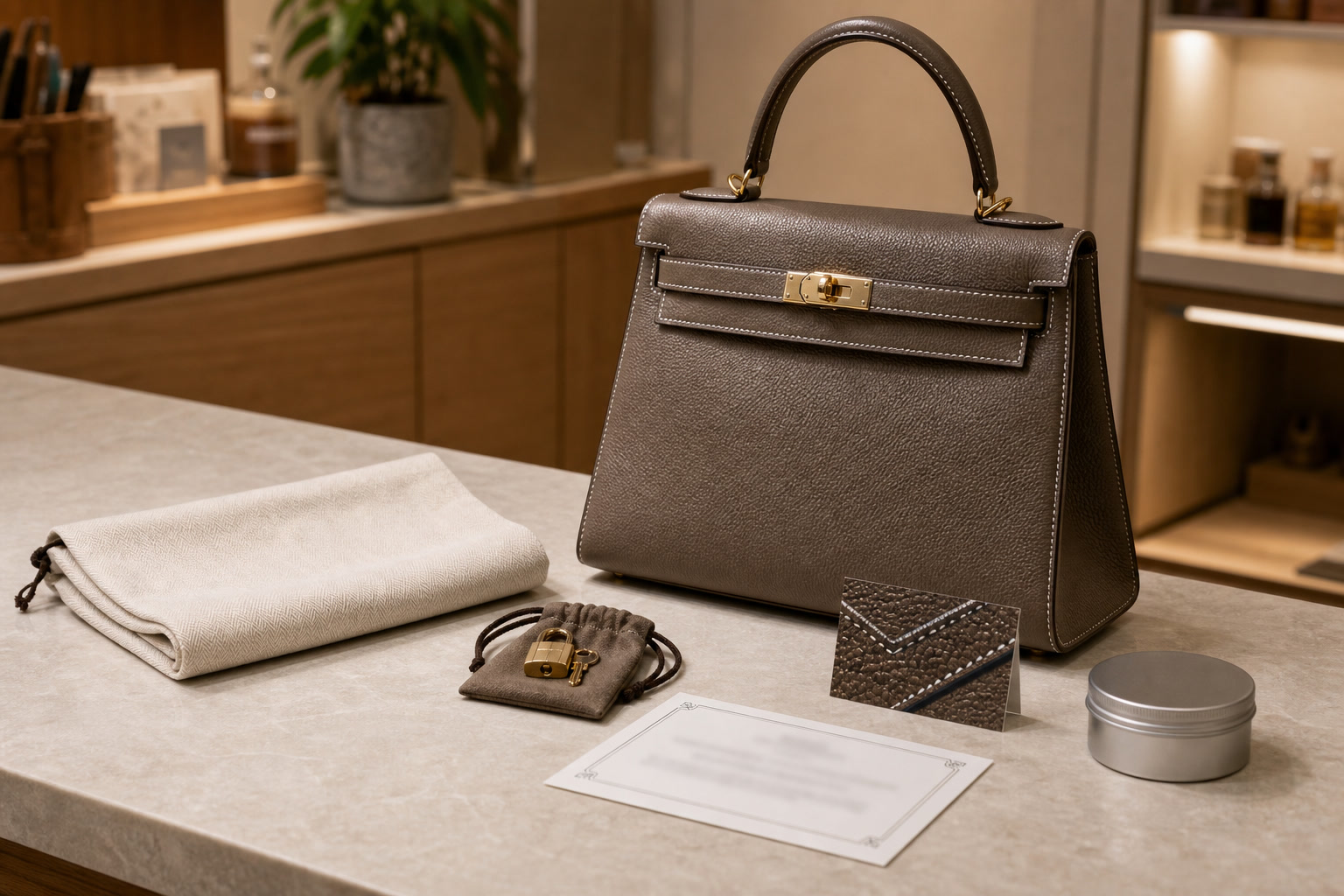
The friction of modern commerce is deliberately engineered to be zero. Clean payment gateways, algorithmic targeting, and one-click checkouts are designed to bypass the rational brain entirely, converting fleeting aesthetic appreciation into immediate financial commitment. The Wishlist Method serves as a structural intervention-a self-imposed circuit breaker designed to reintroduce necessary friction into the acquisition process. By moving a desired item out of a retailer's active cart and into an isolated, neutral environment for a predetermined cooling-off period, you fundamentally shift the dynamic from impulse to interrogation. This practice is not rooted in asceticism or the denial of pleasure; rather, it is a systematic framework for evaluating material behavior, maintenance burdens, and long-term utility before capital changes hands. It forces a direct confrontation with the physical realities of ownership, ensuring that whatever eventually enters your wardrobe, vanity, or home possesses the structural integrity and practical relevance to remain there for years.
The Architecture of a Functional Wishlist
A successful wishlist cannot exist within the ecosystem of a retailer. Leaving items in a digital shopping cart or utilizing a brand's native 'save for later' function simply invites aggressive remarketing campaigns, stock-level warnings, and targeted discount codes designed to break your resolve. To function as an objective tool, your wishlist must be housed in a sterile, third-party environment. Whether you utilize a dedicated spreadsheet, a Notion database, or a physical notebook, the environment must be entirely disconnected from the mechanism of purchasing. This separation of observation and transaction is the foundational step in neutralizing the urgency that drives impulse buying.
When logging an item, capturing the correct metadata is entirely more important than saving an idealized product image. A rigorous entry should include the date of discovery, the exact retail price, the specific material composition, and, crucially, the emotional or practical trigger that prompted the desire. Did you see it on a specific content creator? Are you trying to solve a genuine gap in your winter layering system? Documenting the context of the desire allows you to review the entry thirty days later and accurately assess whether you were responding to a genuine lifestyle requirement or simply reacting to a highly effective piece of lifestyle marketing.
The initial logging phase is also the moment to conduct a strict spatial audit. Before an item is allowed to linger on your list, you must identify exactly where it will live in your physical space. Evaluating a heavy double-faced wool overcoat requires more than admiring its drape; it demands an assessment of your hallway closet. Do you possess the vertical clearance and the heavy-duty contoured wooden hangers required to support a three-pound garment without distorting the shoulders? If you are eyeing a sculptural espresso machine, have you measured the counter depth and accounted for the clearance required to refill the water reservoir? If the physical infrastructure to support the item does not currently exist, the purchase must be delayed until the storage reality aligns with the acquisition.
Assessing Material Behavior and Maintenance Burden
The cooling-off period provides the necessary distance to look past a garment's initial visual appeal and interrogate its material reality. Retail photography is meticulously lit and styled to mask the inherent flaws of cheap textiles. During your thirty-day wait, investigate the fabric composition. A sweater marketed as 'cashmere touch' might reveal itself to be a highly pill-prone blend of acrylic and polyamide upon closer inspection of the details tab. If the garment is raw silk, linen, or a delicate viscose, you must calculate the hidden tax of ownership: the cost of specialized dry cleaning, the time spent carefully hand-washing in tepid water, or the necessity of meticulous steaming before every single wear. If you are unwilling to perform the maintenance, the item will inevitably languish at the back of a closet.
This principle of maintenance evaluation applies with equal severity to beauty and skincare acquisitions. The wishlist window allows you to analyze ingredient lists for potential conflicts with your established routine. If you are tempted by a high-concentration exfoliating acid, you must cross-reference it against your current use of retinoids or vitamin C serums to prevent compromising your skin barrier. Furthermore, consider the realistic shelf life and oxidation rate of the formula. A highly unstable L-ascorbic acid serum requires daily, dedicated use to finish before it degrades and turns orange. If your routine is already saturated with active ingredients, adding another volatile formula will likely result in expiration before completion.
For home goods and furniture, the maintenance tax is paid in daily domestic labor. A beautifully unlacquered brass faucet requires regular polishing to maintain a specific patina, while a matte black fixture may show every single water spot. Open shelving demands constant dusting and rigorous curation to avoid looking cluttered, whereas closed cabinetry forgives a multitude of organizational sins. Use the waiting period to read the manufacturer's care manuals rather than just admiring the styling lookbooks. Understanding the specific care required for oiled walnut versus sealed oak will dictate whether the piece is suited to the actual rhythm of your household or only to an idealized version of it.
Fit, Skin Reactivity, and the Returns Risk
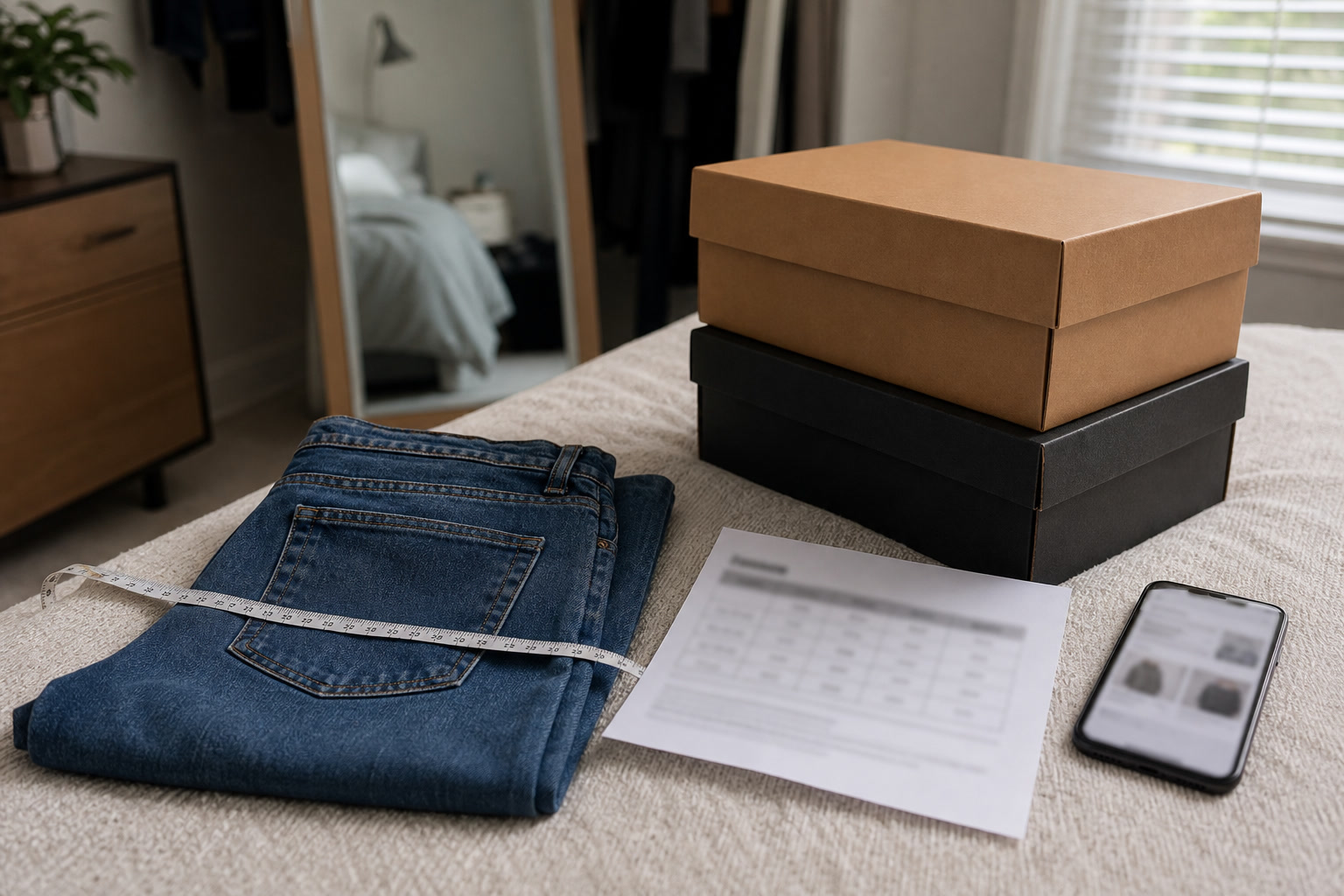
Mitigating the logistical nightmare of returning ill-fitting items is a primary benefit of the delayed purchase. Relying on a model's proportions or a brand's vague sizing descriptors (like 'oversized' or 'relaxed') is a guaranteed route to disappointment. Use the wishlist period to take precise measurements of the garments you already own that fit you perfectly. Measure the pit-to-pit width, the shoulder drop, and the inseam while the garment is lying flat. Compare these hard numbers against the detailed size charts provided by the retailer. This analytical approach strips away the guesswork and forces you to acknowledge when a brand's block simply does not accommodate your specific body type, saving you the frustration of a guaranteed return.
In the realm of beauty, the cooling-off period should be utilized to acquire a sample or a travel-size iteration of the desired product whenever possible. A foundation that swatches beautifully on the back of your hand in a climate-controlled department store may oxidize terribly or separate around your nose after six hours of real-world wear. A highly praised fragrance might induce scent fatigue or trigger a headache after a full day. By testing a smaller volume over a week, you can monitor skin reactivity, texture preference, and longevity, ensuring that when you finally commit to the full-size product, you do so with absolute certainty regarding its performance.
When an item cannot be tested or measured with complete accuracy, the friction of the retailer's return policy must be heavily scrutinized. Evaluate the financial and logistical cost of reverse logistics. Does the brand charge a restocking fee? Do they deduct return shipping costs from your refund? Are you responsible for navigating international customs documentation if the item ships from overseas? If the return process is overtly hostile, opaque, or financially punitive, the threshold for purchasing the item must be raised significantly. The wishlist method demands that you accept the worst-case scenario-a complete failure of fit or function-and ensure you have a viable, low-stress exit strategy before initiating the transaction.
Shopping Your Own Inventory and Identifying Duplication
The most revealing aspect of the wishlist method is the frequency with which it exposes the 'fantasy self' purchase. We often desire items that cater to a lifestyle we aspire to lead, rather than the one we actually inhabit. You may place a sharply tailored, structured blazer on your list, envisioning a sleek, professional aesthetic. However, a mandatory thirty-day cooling period forces you to audit your existing wardrobe. You may discover three similar blazers pushed to the back of the rail, rarely worn because your actual daily life demands the mobility of heavy knitwear. The wishlist prevents the duplication of items that serve an imaginary requirement, redirecting your budget toward practical gaps in your daily uniform.
The beauty industry thrives on micro-trends and the illusion of innovation, making it incredibly easy to stockpile redundant products. The trap lies in purchasing slight, almost imperceptible variations of items you already own in abundance. During the waiting period, physically gather all products within the same category. Swatch every neutral lipstick, line up every hydrating serum, and test every taupe eyeshadow palette currently in your possession. More often than not, you will find that you already own a functional equivalent of the item on your wishlist. If you still wish to proceed, you must enforce a strict 'one in, one out' policy, committing to finishing an existing product before allowing the new iteration to enter your routine.
This redundancy check is equally vital for home and lifestyle acquisitions. The desire for a new piece of furniture or a decorative object often stems from a feeling of stagnation within a space rather than a genuine need for more inventory. Before purchasing a dedicated reading chair, evaluate whether you simply need to rearrange the ambient lighting around your current sofa to make it more inviting. Can an existing ceramic vessel be repurposed to hold the kitchen utensils you were about to buy a new container for? The wishlist method forces a creative reassessment of your existing assets, encouraging you to shop your own home and exhaust all current possibilities before introducing new objects into your environment.
The Exit Strategy: Long-Term Use and Final Execution
The conclusion of the thirty-day (or sixty-day) waiting period is where the wishlist method proves its efficacy. When you revisit the list, you will likely find that the emotional urgency surrounding the majority of the items has entirely evaporated. The dopamine spike associated with the initial discovery has faded, leaving only a cold assessment of utility and genuine aesthetic appreciation. Deleting an item from the list at this stage does not feel like a deprivation; it feels like a relief. You have successfully protected your capital and your physical space from an object that would have eventually become clutter. This regular culling process sharpens your personal style, teaching you to distinguish between a fleeting infatuation and a lasting requirement.
For the rare items that survive the waiting period and remain highly desired, the final step before execution is calculating the projected cost-per-use over a realistic time horizon. Visualize the item integrating into your life over the next three to five years. Will this heavy-gauge wool sweater withstand fifty wears a winter without losing its structural integrity? Will this specific shade of blush remain a staple in your routine, or is it tied to a transient seasonal trend? If the item is a piece of furniture, is its design language classic enough to survive a potential move to a different architectural space? Projecting the item's lifespan forces you to prioritize durability, repairability, and timelessness over immediate gratification.
When an item has survived the rigorous scrutiny of material assessment, spatial auditing, and the prolonged cooling-off period, the act of purchasing transforms. You are no longer succumbing to a marketing tactic; you are executing a deliberate, highly researched acquisition. You can finalize the transaction without a trace of buyer's remorse, confident in the knowledge that the item has been thoroughly vetted. The satisfaction derived from this methodical approach far outweighs the fleeting thrill of an impulse buy. You are building a wardrobe, a vanity, and a home populated exclusively by objects that serve a distinct purpose, perform reliably, and bring enduring value to your daily routines.
Pre-purchase checklist
- Verify the exact material composition or ingredient list to ensure it meets your durability and safety standards.
- Calculate the hidden maintenance tax: dry cleaning costs, specialized laundering time, or daily polishing requirements.
- Conduct a spatial audit to confirm you have the exact physical infrastructure and storage space to house the item.
- Physically review your current inventory to guarantee you do not already own a functional equivalent or a slight variation.
- Read the retailer's return policy thoroughly, checking for restocking fees, return shipping deductions, and strict time windows.
Who should skip this
The Wishlist Method is designed for discretionary spending and aesthetic upgrades; it is entirely inappropriate for urgent replacements of daily essentials. If your only winter coat tears irreparably in November, your daily SPF runs out, or your primary work laptop suffers a hardware failure, you should not impose a thirty-day cooling-off period. Delaying the purchase of foundational items that are critical to your daily functioning, physical comfort, or professional obligations only creates unnecessary hardship. The method is a tool to filter out the noise of trend-driven marketing, not a mandate to endure the absence of genuine necessities. Recognize the difference between a functional emergency and a sudden desire for a lifestyle upgrade.
Affiliate transparency
FikaLooks maintains strict editorial independence. We do not accept payment for product placement, nor do we participate in algorithmic product recommendation networks. If you choose to purchase an item after applying the rigorous evaluation methods detailed in this guide, we may earn a small commission through selectively placed affiliate links. This process never influences our editorial stance, which remains focused on encouraging slower, more deliberate, and highly researched consumption habits.
FAQ
How long should the cooling-off period realistically be?
Thirty days is the standard baseline, as it is long enough for the initial dopamine spike of discovery to fade and for micro-trends to lose their novelty. However, for high-ticket items (such as a winter overcoat, fine jewelry, or large furniture), extending the period to sixty or even ninety days is advisable. The higher the financial investment and the larger the physical footprint, the longer the item should remain in quarantine.
What happens if the item goes out of stock or on sale during the waiting period?
If an item goes out of stock before your waiting period concludes, you must accept it as a natural filter. The fear of missing out (FOMO) is a primary driver of impulse purchases; allowing an item to sell out breaks that cycle. If the item goes on a significant sale during your wait, you may purchase it early only if you have already completed the material, fit, and inventory checks, and were fully prepared to pay full price.
Does this method apply to small, inexpensive purchases?
Yes, and arguably it is more important for smaller purchases. Inexpensive items (like a $15 lip gloss or a $20 t-shirt) bypass our financial defenses because the immediate cost feels negligible. However, these micro-purchases accumulate rapidly, creating immense physical clutter and significant financial drain over a year. Subjecting a low-cost item to the wishlist method forces you to evaluate its actual utility rather than just its low barrier to entry.
How do I handle limited-edition drops or exclusive collaborations?
Limited-edition drops are heavily engineered to manufacture artificial scarcity and induce panic buying, making them the enemy of deliberate consumption. The best approach is to completely opt out of the drop model. If you truly need a specific silhouette or formulation, wait for the brand to release it in their core, permanent collection. If it never returns, accept that the item was designed as a marketing event rather than a lasting, functional product.