Sale Shopping Rules
Sale Shopping Rules is a sale strategy for readers weighing discount pressure, return terms, true need, and budget boundaries. The slow-shopping framework note explains what to check before buying, who should skip it, and where the purchase can become more work than it first appears.
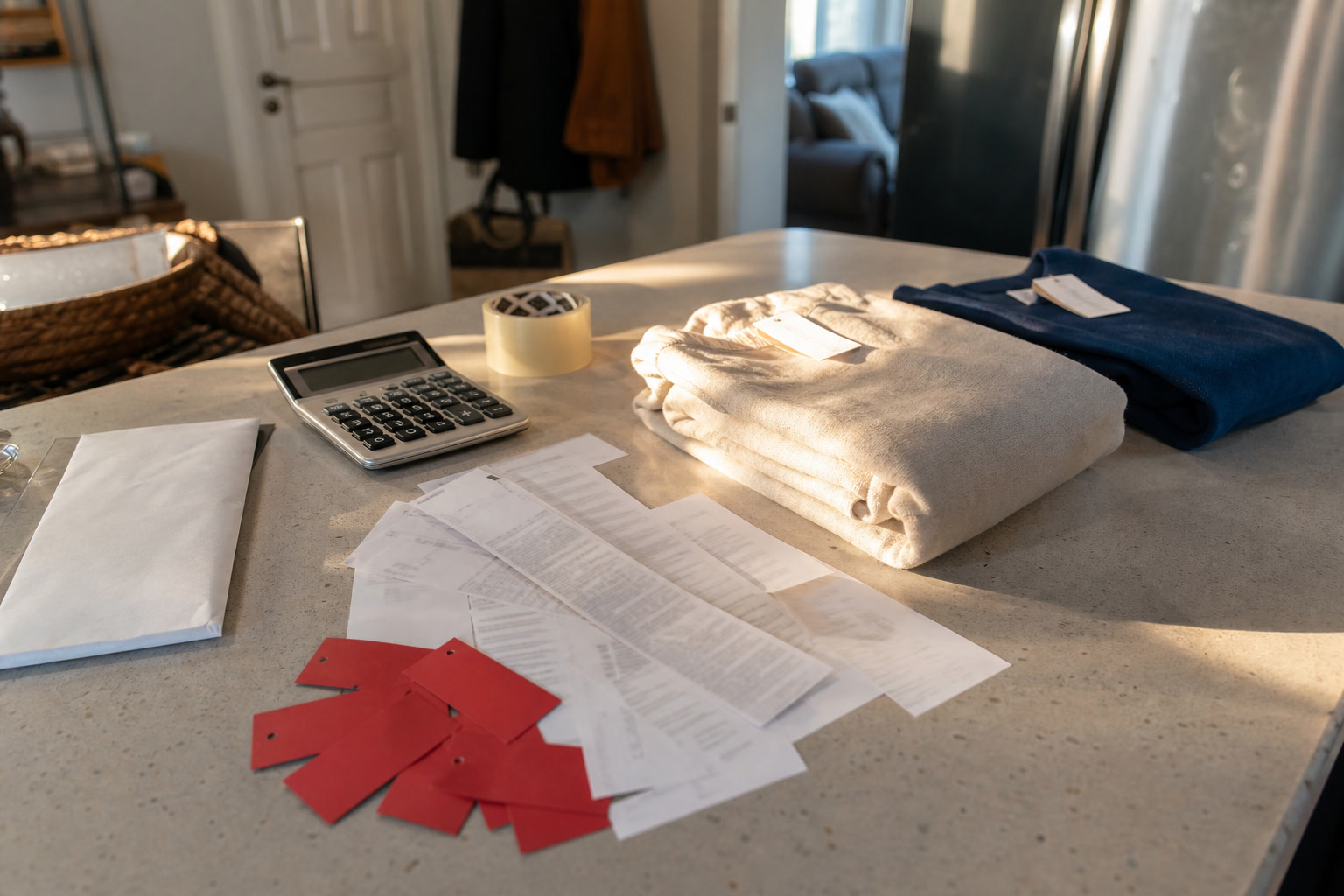
The architecture of a seasonal sale is designed to bypass rational evaluation, replacing the slow, deliberate process of acquisition with a manufactured sense of urgency. Bright red markdown tags, countdown timers, and dwindling inventory notifications trigger a scarcity mindset, shifting the consumer's focus from the intrinsic value of an object to the abstract percentage of money saved. However, the true cost of a discounted item is rarely reflected in its checkout price. A heavily marked-down garment that cannot be returned, requires expensive maintenance, or fundamentally clashes with your daily routine becomes a financial and spatial liability. Navigating discount seasons successfully requires a structural inversion of the typical shopping process: evaluating the exit strategy before acknowledging the price drop. By prioritizing return policies, material behavior, and long-term integration over the immediate dopamine hit of a bargain, you protect both your capital and the curated calm of your living space. This approach transforms the chaotic environment of seasonal sales into a controlled exercise in intentional acquisition.
The Return Policy as the True Price Tag
The most critical metric during a discount event is not the percentage slashed from the original retail price, but the precise wording of the retailer's return policy. Sale seasons are primarily inventory clearing mechanisms, allowing brands to offload deadstock, awkward silhouettes, and overproduced seasonal colors. To protect their margins, retailers frequently attach 'final sale' clauses to these heavily discounted items. Purchasing a final sale item fundamentally alters the psychological contract of shopping; you are absorbing the entire risk of the transaction. If the garment pulls across the shoulders, if the fabric feels abrasive against the skin, or if the color washes out your complexion, you are left holding a depreciating asset with no recourse for a refund.
Even when returns are permitted, the mechanics of sending an item back often contain hidden friction and costs. Restocking fees, non-refundable original shipping charges, and return postage deducted directly from your refund can quickly erode the perceived savings of a discount. Furthermore, many boutiques employ the 'store credit only' tactic for sale items. This effectively traps your capital within a specific brand ecosystem, forcing future consumption at a retailer that has already failed to provide a satisfactory product. Before adding an item to your cart, locate the specific return terms for that exact product, as policies often vary wildly between full-price and markdown inventory.
International logistics introduce an entirely separate layer of risk to sale shopping. Acquiring a heavily discounted pair of boots from an overseas boutique might seem like a triumph until you realize the return shipping will cost half the price of the item itself. The administrative burden of printing customs documents, sourcing appropriate packaging, and tracking international parcels creates a high threshold for returns. This friction frequently leads to 'return fatigue,' where the buyer simply keeps the unwanted item to avoid the logistical headache, entirely defeating the purpose of seeking a discount in the first place.
Material Reality and the Maintenance Burden
Sale racks frequently serve as final resting places for problematic materials and structural compromises. A heavy discount does not alter the physical properties of a garment; a stiff, unyielding synthetic fabric will remain uncomfortable regardless of how little you paid for it. When evaluating a marked-down item, scrutinize the material composition with the same rigor you would apply to a full-price purchase. Viscose that shrinks unpredictably, wool blends that cause immediate dermal irritation, or unlined trousers that cling awkwardly will inevitably be pushed to the back of your closet. The tactile experience of wearing a garment dictates its lifespan far more than the initial thrill of the transaction.
Beyond the immediate feel of the fabric, the hidden subscription cost of maintenance must be factored into the purchase price. A heavily discounted silk dress or a structured, complex blazer might appear to be an exceptional deal, but if the garment requires specialized dry cleaning after every second wear, the maintenance burden will rapidly eclipse the initial savings. Slow shopping demands an honest assessment of your willingness to care for an item. If you routinely avoid hand-washing delicate knits or lack a reliable, affordable dry cleaner, purchasing high-maintenance materials on sale is a guaranteed path to wardrobe stagnation.
Fit compromises represent another common trap of the sale season. The rationalization that an item is 'just one size too big, but can be tailored' frequently leads to unworn garments languishing on hangers. Complex alterations-such as adjusting the shoulders of a lined jacket, taking in a bias-cut skirt, or resizing raw denim-are expensive, time-consuming, and require a highly skilled tailor. Buying the wrong size simply because the correct size sold out and the remaining inventory is cheap guarantees a poor fit and a high total cost of ownership. If a garment requires you to change your body or undergo extensive structural modifications, it is not a bargain.
Wardrobe Integration and Storage Economics
Every physical object you acquire demands a spatial footprint in your home, and storage space carries an implicit premium. Buying bulky, heavily insulated winter coats during a spring clearance event, or acquiring oversized home goods simply because they are half-price, creates immediate spatial friction. You must store these items for months before they become relevant, occupying valuable closet real estate and contributing to visual clutter. The economics of storage dictate that an item must justify the space it occupies; a discounted piece that sits in a vacuum-sealed bag for eight months of the year rarely meets this threshold.
Discount events are particularly adept at targeting the 'fantasy self'-the aspirational version of you who attends black-tie galas, requires specialized ski gear, or strictly adheres to a complex, ten-step evening skincare routine. Sales encourage the acquisition of props for these imaginary scenarios. To counteract this, evaluate the discounted item against your actual, mundane routine. Does this architectural heel make sense for your Tuesday morning commute? Does this vibrant, patterned blouse integrate with your predominantly neutral workwear? If the item serves a lifestyle you do not currently lead, the discount is irrelevant.
The cumulative effect of acquiring disjointed sale items is severe decision fatigue. A wardrobe packed with heavily discounted, rarely worn pieces creates daily friction. The physical act of pushing past four unworn, clearance-rack sweaters to find the single reliable cashmere knit you actually enjoy wearing degrades the experience of getting dressed. A curated, highly functional wardrobe relies on cohesion and reliability. Introducing erratic, impulse-driven sale purchases disrupts this harmony, turning your closet into an archive of past retail mistakes rather than a functional toolkit for daily life.
The Alternative Test and Slower Buying Mechanics
The most effective defense against sale-induced impulse purchasing is the 'full price' test. When looking at a marked-down item, ask yourself a simple question: if this piece were sitting on the shelf at its original retail price, would I still desire it? If the answer is no, you are not attracted to the garment; you are attracted to the discount. Purchasing the markdown rather than the product guarantees that once the initial thrill of the transaction fades, you will be left with an object you never genuinely wanted. True value is found in acquiring items you deeply appreciate, regardless of the red tag attached to them.
Before proceeding to checkout, physically step away from the screen and audit your existing inventory. Walk to your closet or open your bathroom cabinet. In many cases, the desire to purchase a discounted item stems from a vague sense of aesthetic appreciation rather than an actual void in your collection. You likely already own a functional equivalent to the item in your cart. Identifying these duplicates prevents the mindless accumulation of slight variations-the fifth pair of black wide-leg trousers, or yet another hydrating serum that performs exactly like the one currently sitting half-empty on your shelf.
Implementing a mandatory cooling-off period neutralizes the manufactured urgency of flash sales and limited-time offers. High-pressure tactics, such as 'only two left in stock' banners, are explicitly designed to bypass your critical thinking faculties. By enforcing a strict 48-hour waiting period before completing a purchase, you allow the adrenaline of the sale to dissipate. If the item sells out during this window, reframe the loss: the decision was made for you, and you have successfully preserved your capital. If the item remains available and your desire for it persists, you can proceed with the confidence of a deliberate, rational choice.
Structural Longevity and the Post-Sale Lifespan
A designer label or a prestigious brand name heavily discounted does not automatically equate to a sound investment. During sale seasons, it is crucial to evaluate the physical construction of the garment rather than relying on brand cachet. Inspect the structural integrity: are the seams finished cleanly, or are there loose threads? Is the pattern matched at the seams? Are the buttons securely fastened, and is the hardware made of solid metal rather than coated plastic? A poorly constructed garment will fail regardless of the logo stitched into the collar. Prioritize items that demonstrate meticulous craftsmanship and promise durability over time.
End-of-season sales are frequently populated by items tied to fading micro-trends. Investing in extreme silhouettes, hyper-specific seasonal colorways, or viral aesthetic pieces means the item will likely feel dated before you have the opportunity to wear it consistently. Slower buying requires focusing on structural longevity-pieces that transcend rapid trend cycles and remain relevant year after year. A classic, well-tailored wool coat or a perfectly cut pair of straight-leg denim will yield a significantly higher return on investment than a heavily embellished, trend-dependent piece that was marked down by eighty percent.
Ultimately, the success of a sale purchase is measured by its cost per wear over a five-year horizon, not the percentage saved at the register. A three-hundred-dollar sweater worn one hundred times represents a vastly superior financial and ecological decision compared to a fifty-dollar sweater worn twice before it loses its shape and pills beyond repair. When evaluating a discount, project the item's lifespan into the future. Consider its repairability, its resilience to regular laundering, and its enduring aesthetic appeal. True slow shopping recognizes that the cheapest item is the one you use exhaustively, care for meticulously, and keep for a decade.
Pre-purchase checklist
- Verify the exact return policy for the specific item, checking for 'final sale' or store credit clauses.
- Calculate the total cost of ownership, including potential tailoring, dry cleaning, or specialized storage requirements.
- Identify three existing items in your wardrobe that cleanly integrate with this potential purchase.
- Confirm the sizing is exact; reject any item that requires you to change your body or undergo complex alterations.
- Wait 24 to 48 hours after adding the item to your cart before proceeding to payment.
Who should skip this
Individuals who are currently experiencing significant lifestyle transitions-such as a career change, a move to a different climate, or postpartum recovery-should entirely bypass seasonal sales. During periods of flux, your daily routine and physical requirements are unsettled, making it nearly impossible to accurately predict what garments or objects will serve your future needs. Furthermore, if you find yourself browsing sale sections as a coping mechanism for stress, boredom, or emotional fatigue, step away immediately. Shopping for a dopamine hit rather than a tangible necessity guarantees poor decision-making, resulting in the accumulation of items that will ultimately serve as physical reminders of a stressful period rather than functional additions to your life.
Affiliate transparency
FikaLooks operates on a reader-supported model. If you purchase through our links, we may earn a commission. This does not influence our editorial independence or the rigorous selection process behind our recommendations.
FAQ
How do I handle physical sample sales where everything is strictly final sale?
Approach physical sample sales with extreme caution, treating any expenditure as a sunk cost experiment. Only purchase an item if you have physically touched the fabric, thoroughly inspected the seams for structural damage, and tried it on to confirm the exact fit. Never purchase items at online sample sales unless you already own the exact brand, model, and size, as the inability to verify the garment's condition or fit removes all consumer safeguards.
Are end-of-season clearance sales worth the long-term storage hassle?
End-of-season clearance is only viable for foundational, climate-agnostic pieces or exact replacements of worn-out staples. Purchasing a highly specific, heavy winter coat in April means you must dedicate storage space to it for six months. By the time winter arrives, your aesthetic preferences, daily routine, or sizing may have shifted, rendering the coat obsolete before it is ever worn. Stick to seasonless items like lightweight cotton shirting, classic denim, or year-round home goods.
What should I do if a retailer drops the price further a week after I purchase?
Many established retailers offer price adjustments within a seven to fourteen-day window if an item you purchased is subsequently marked down further. Keep your digital receipts organized and monitor the site briefly after your purchase. However, never buy an item at a price you are uncomfortable with solely banking on a future price adjustment, as inventory fluctuations or specific sale exclusions can easily invalidate your claim.
How do I resist the psychological pressure of limited-time flash sales?
The most effective method to resist flash sales is to control your digital environment. Unsubscribe from promotional brand emails and turn off push notifications from retail applications, particularly during high-stress periods like Black Friday. Recognize that retail urgency is a manufactured metric designed to benefit the seller, not the buyer. There will always be another sale, another season, and another opportunity to purchase what you genuinely need when you are ready to make a deliberate choice.