Quiet Luxury Without Logos
Quiet Luxury Without Logos is a style note for readers weighing fabric, proportion, restraint, and construction instead of visible branding. The wardrobe decision note explains what to check before buying, who should skip it, and where the purchase can become more work than it first appears.
The absence of a logo is not merely an aesthetic choice; it is a structural demand. Stripping away recognizable branding removes the psychological shortcut that often excuses poor craftsmanship. What remains must stand entirely on the merit of its architecture, the integrity of its fibers, and the precision of its seams. This approach to dressing requires a recalibration of how value is assigned to clothing, shifting the focus from external recognition to tactile reality. Navigating this space means learning to read a garment through its drape, its hardware, and its interior finishing, rather than relying on a recognizable emblem to signal worth. The pursuit of quiet luxury without logos is an exercise in discerning the permanent from the performative, demanding a rigorous understanding of material behavior and construction techniques.
The Architecture of Anonymity
A logo functions as a visual anchor, often distracting the eye from a garment's structural flaws. Removing that anchor forces the silhouette to carry the entire weight of the design. In unbranded clothing, the cut dictates the presence. A poorly cut jacket cannot hide behind a prestigious emblem; its collapsed shoulders or awkward hem break become the immediate focal point. Therefore, the architecture of anonymity demands rigorous pattern-making. The slope of a shoulder line, the pitch of a sleeve, and the exact placement of a dart become the defining characteristics of the piece, requiring a level of precision that mass-market production rarely achieves.
This reliance on silhouette makes tailoring an unavoidable necessity rather than an optional refinement. Off-the-rack clothing is cut for a statistical average, a phantom body that rarely aligns with individual proportions. True unbranded luxury requires the intervention of a skilled tailor to adjust the drape. Taking in the waist of a cashmere coat, shortening the sleeves of a silk blouse to hit precisely at the wrist bone, or tapering a trouser leg transforms a high-quality basic into a bespoke-feeling garment. The investment shifts from the initial purchase price to the ongoing relationship with a tailor who understands how different fabrics behave under tension and movement.
Embracing this structural focus initiates a distinct psychological shift in the wearer. The clothing no longer speaks to the room at large; it communicates only to the wearer and to those with an educated eye for construction. This creates a closed loop of appreciation based on physical comfort and subtle visual cues. The confidence derived from this style does not stem from borrowed brand prestige, but from the certainty that the garment fits flawlessly and is constructed to endure. It is an inward-facing luxury, prioritizing the sensation of heavy silk against the skin or the perfect balance of a well-cut blazer over the fleeting validation of recognizable branding.
Material Honesty and the Tactile Hierarchy
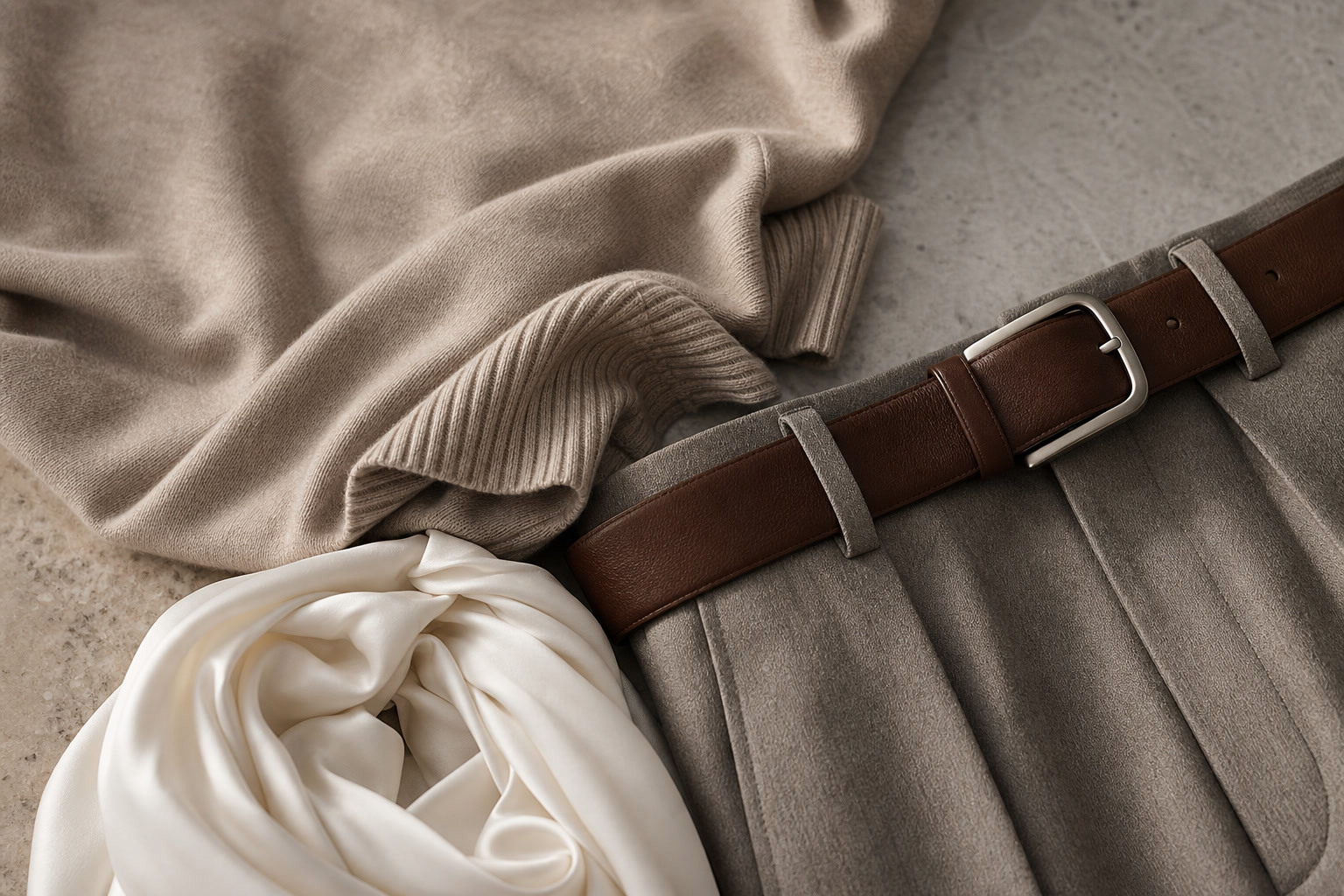
The minimalist aesthetic is frequently hijacked by brands substituting synthetic blends for natural fibers, masking cheap materials behind clean lines. Genuine unbranded luxury rejects this deception, demanding material honesty. The tactile hierarchy places raw, unadulterated fibers at the apex: dense merino wool, pure cashmere, heavyweight linen, and silk crepe de chine. These materials possess an inherent character that synthetics cannot replicate. They breathe, they regulate temperature, and they age with grace, developing a patina rather than degrading into a shiny, pilled ruin. The fabric itself becomes the signature of the garment, requiring no external validation.
Beyond composition, the weight and drape of the fabric serve as immediate indicators of quality. A lightweight, flimsy silk will cling statically and buckle at the seams, whereas a heavy silk charmeuse will fall with a liquid, uninterrupted grace. Similarly, the visual texture of a genuine Donegal tweed or a brushed Scottish cashmere offers a depth that flat, over-processed fabrics lack. This dimensional quality allows unbranded garments to catch the light and move with the body in a way that feels inherently substantial. The weight of the fabric dictates the behavior of the silhouette, making material selection the foundational step in building a wardrobe devoid of logos.
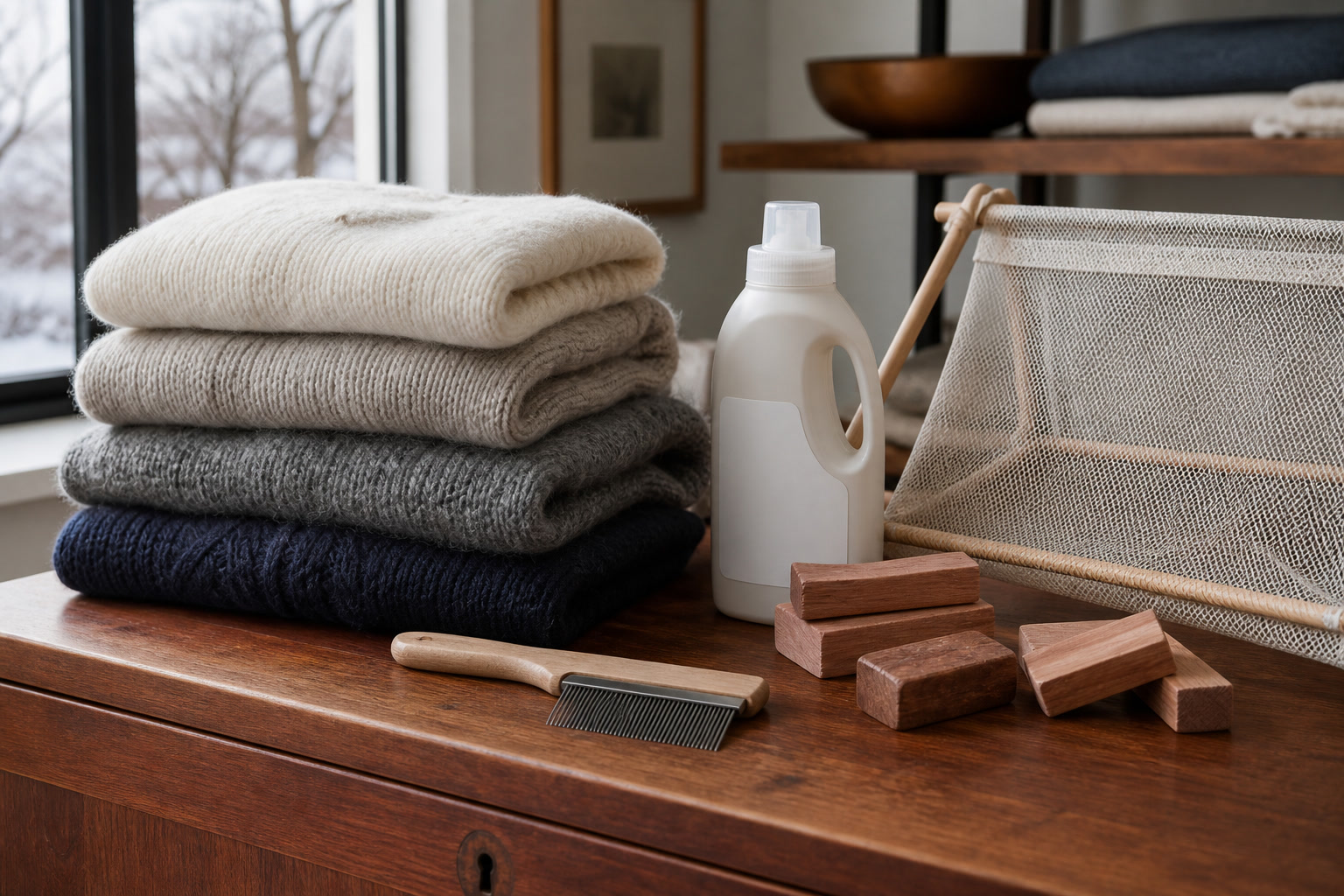
However, this commitment to material honesty introduces significant maintenance trade-offs. High-quality natural fibers demand rigorous, often laborious care. Cashmere requires regular brushing and resting between wears to prevent pilling; silk demands specialized dry cleaning or careful hand-washing; fine wool necessitates cedar blocks and vigilant moth prevention. The hidden cost of unbranded luxury is the time and capital required to maintain the integrity of the fibers. Buyers seeking a low-maintenance, machine-washable wardrobe will find this approach frustrating, as the very materials that define the aesthetic are the most vulnerable to careless laundering.
Hardware and the Micro-Details
When the broad strokes of logos and loud prints are eliminated, the micro-details of a garment are magnified. Hardware transitions from a functional afterthought to a critical design element. The presence of genuine horn, mother-of-pearl, or corozo buttons instead of dyed plastic signifies a manufacturer's commitment to the entire garment, not just its visible shell. Zippers sourced from heritage makers, featuring solid metal teeth and smooth, heavy pulls, offer a tactile satisfaction that coated plastic alternatives lack. These components are the quiet indicators of a piece designed for longevity rather than a single season.
Stitch density and interior seam finishing separate exceptional garments from merely adequate ones. A high stitch count per inch prevents seams from puckering and ensures structural stability under stress. The interior of an unbranded luxury piece should be as meticulously finished as the exterior. French seams in silk blouses, bound edges in unlined wool coats, and blind hems on trousers demonstrate a refusal to cut corners where the wearer alone will see them. This internal architecture prevents fraying and maintains the garment's shape over years of wear, proving that true quality is often hidden from public view.
The primary buying risk in this category is falling into the premium basic trap-paying exorbitant prices for plain garments that lack these crucial micro-details. A white cotton t-shirt, regardless of its marketing, has a ceiling of structural complexity. Paying luxury prices for items that rely on standard overlock stitching and basic cotton jersey simply because they lack a logo is a misallocation of funds. Buyers must learn to inspect the tension of a buttonhole, the alignment of a pattern at the seam, and the quality of the lining before committing. Without a logo to guarantee a baseline of prestige, the burden of quality control falls entirely on the consumer.
The Color Palette of Restraint
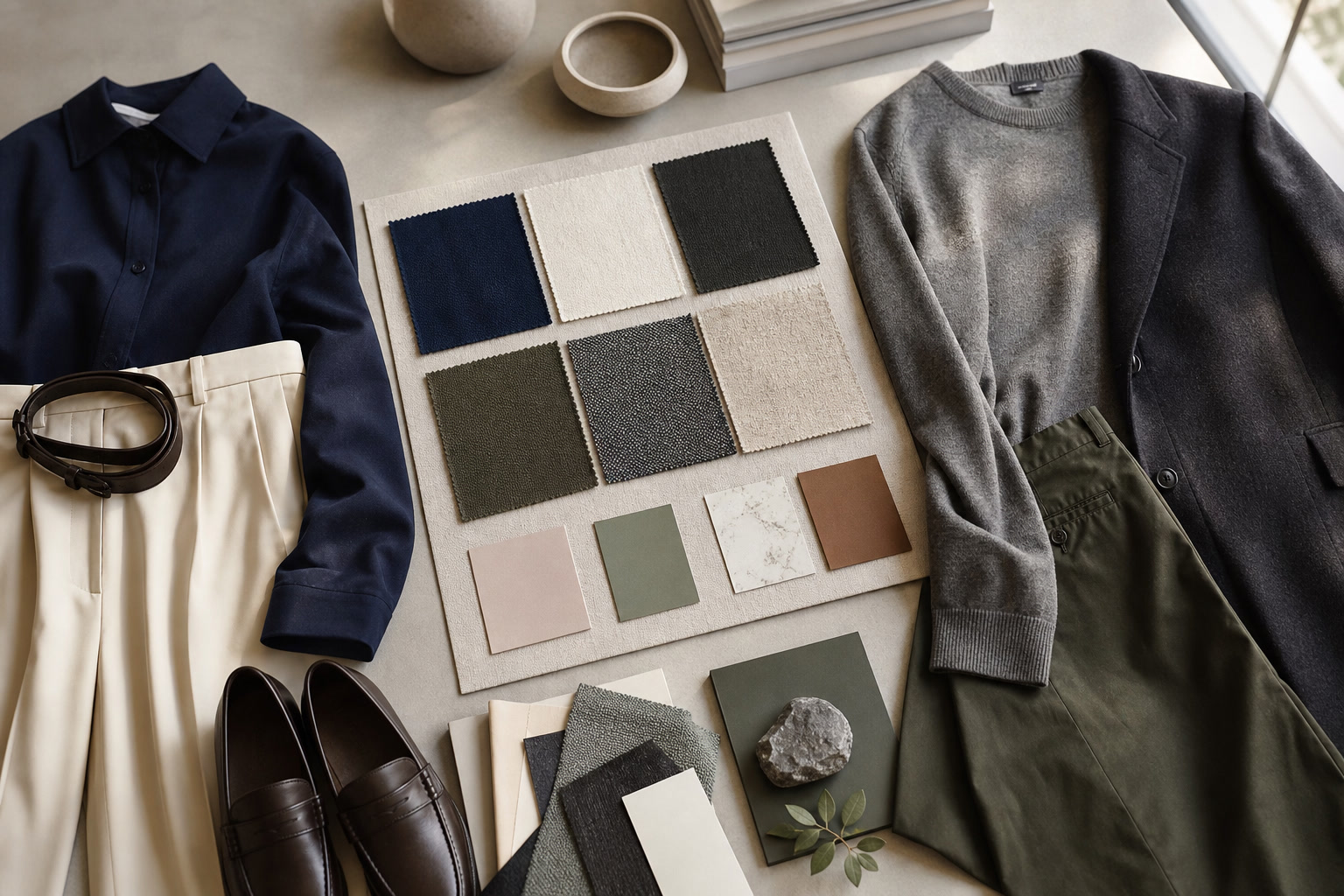
A wardrobe stripped of branding relies heavily on a restrained, highly intentional color palette. This does not mean defaulting exclusively to flat beige and gray. Instead, it involves seeking out rich, complex neutrals and deep, saturated tones that possess visual depth. A navy blue that borders on black, a deep loden green, or a warm vicuna brown offer the versatility of neutrals while providing enough character to stand alone. These tones anchor a wardrobe, allowing the texture of the fabrics and the precision of the cut to remain the focal points without overwhelming the eye.
The depth of these colors is directly tied to the quality of the dye process and the nature of the fibers themselves. High-grade natural fibers absorb dye differently than synthetics, resulting in richer, more dimensional hues that interact beautifully with light. A cheap polyester blend will render a color flat and lifeless, whereas a pure wool or silk will give the same color a subtle, luminous quality. Furthermore, high-quality dyes fade elegantly over time, softening into a desirable patina rather than washing out into a dull, uneven shadow of their former state.
Building a wardrobe around these tonal families creates a highly efficient, interchangeable system. Because the pieces are not fighting for attention through logos or aggressive patterns, they communicate with one another through subtle contrasts in texture and shade. A chunky charcoal cashmere sweater pairs without fuss with smooth, dark olive wool trousers. This cohesion reduces decision fatigue and maximizes the utility of every item owned. The investment in unbranded luxury is thus amplified by the versatility of the pieces, ensuring that each garment integrates naturally into the broader architecture of the closet.
The Economics of Unbranded Longevity
Evaluating the economics of unbranded longevity requires abandoning the concept of the initial purchase price in favor of cost per wear and structural lifespan. The fallacy of the current market is the belief that buying cheap, minimalist clothing serves as a shortcut to this aesthetic. In reality, inexpensive basics degrade rapidly, losing their shape and texture after a few washes, necessitating constant replacement. True unbranded luxury is an upfront capital investment in materials and construction that will endure for decades, provided the maintenance protocols are strictly followed. The value proposition lies in permanence, not in the initial savings.
Navigating the secondary market for these pieces presents a unique challenge and opportunity. Identifying high-quality unbranded garments vintage or secondhand requires deep, tactile knowledge. Because you cannot rely on a recognizable label or a prominent logo to verify authenticity or quality, you must evaluate the piece entirely on its physical merits. This means checking the fiber content tag, inspecting the seam allowances for future alterations, and assessing the wear on the hardware. For the educated buyer, this market offers immense value, allowing access to superior craftsmanship that might otherwise be cost-prohibitive.
The defining trade-off of committing to a logo-free wardrobe is accepting that the financial investment is entirely personal. The garments offer no external social currency to the untrained observer; a thousand-dollar unbranded cashmere coat may look identical to a mass-market alternative to the casual passerby. This style demands a wearer who is secure enough to find satisfaction in the private, tactile reality of the clothing rather than in public recognition. It is a rejection of fashion as a broadcast medium, choosing instead to treat clothing as a functional, intimate architecture designed solely for the comfort and confidence of the individual.
Pre-purchase checklist
- Inspect the buttons: Ensure they are carved from genuine horn, mother-of-pearl, or corozo, rather than molded plastic dyed to imitate natural materials.
- Examine the interior seams: Look for French seams, bound edges, or flat-felled construction that prevents fraying and indicates rigorous attention to hidden details.
- Read the composition label: Reject garments relying on acrylic, polyester, or nylon blends, unless those synthetics are strictly utilized for weatherproofing or necessary structural reinforcement.
- Evaluate the hardware: Verify that zippers are sourced from reputable makers, feature solid metal teeth, and run smoothly without catching on the surrounding fabric.
- Assess the fabric drape: Hang the garment to confirm the material falls cleanly under its own weight, without static cling or buckling along the primary seams.
Who should skip this
Individuals who view fashion primarily as a tool for immediate social signaling, or those who require a strictly low-maintenance, machine-washable wardrobe, as unbranded natural fibers demand rigorous, specialized care and offer zero external brand recognition.
Affiliate transparency
FikaLooks curates wardrobe and lifestyle investments independently. If you acquire a piece through our links, we may earn a commission that supports our editorial research.
FAQ
How do I distinguish between a high-quality unbranded piece and a generic fast-fashion basic?
The distinction lies entirely in the tactile and structural details. High-quality pieces feature dense natural fibers, solid metal or natural horn hardware, and finished interior seams. Fast-fashion basics typically rely on synthetic blends, plastic hardware, and raw overlock stitching that degrades quickly under stress.
Does a logo-free wardrobe require sticking exclusively to beige and gray?
Not at all. A restrained palette benefits immensely from deep, saturated tones like loden green, dark navy, and vicuna brown. The focus should be on the depth of the dye and the visual texture of the fabric rather than restricting yourself to flat, pale neutrals.
What is the most critical maintenance step for unbranded natural fibers?
Resting the garments between wears is paramount. Wool and cashmere require at least twenty-four hours to release moisture and regain their shape. Additionally, investing in proper cedar storage and breathable garment bags is essential to prevent moth damage and fabric degradation.
Is it worth paying luxury prices for a plain cotton t-shirt?
Rarely. Cotton jersey has a structural ceiling, meaning the difference between a mid-tier and a luxury t-shirt is often negligible in terms of longevity. Investment capital is better allocated to complex garments like tailored jackets, heavy knitwear, and leather goods where craftsmanship and material quality drastically alter the lifespan of the piece.