Linen Shirt Care and Fit
Linen Shirt Care and Fit is a fabric note for readers weighing linen shrinkage, shoulder fit, collar collapse, and washing habits. The wardrobe decision note explains what to check before buying, who should skip it, and where the purchase can become more work than it first appears.
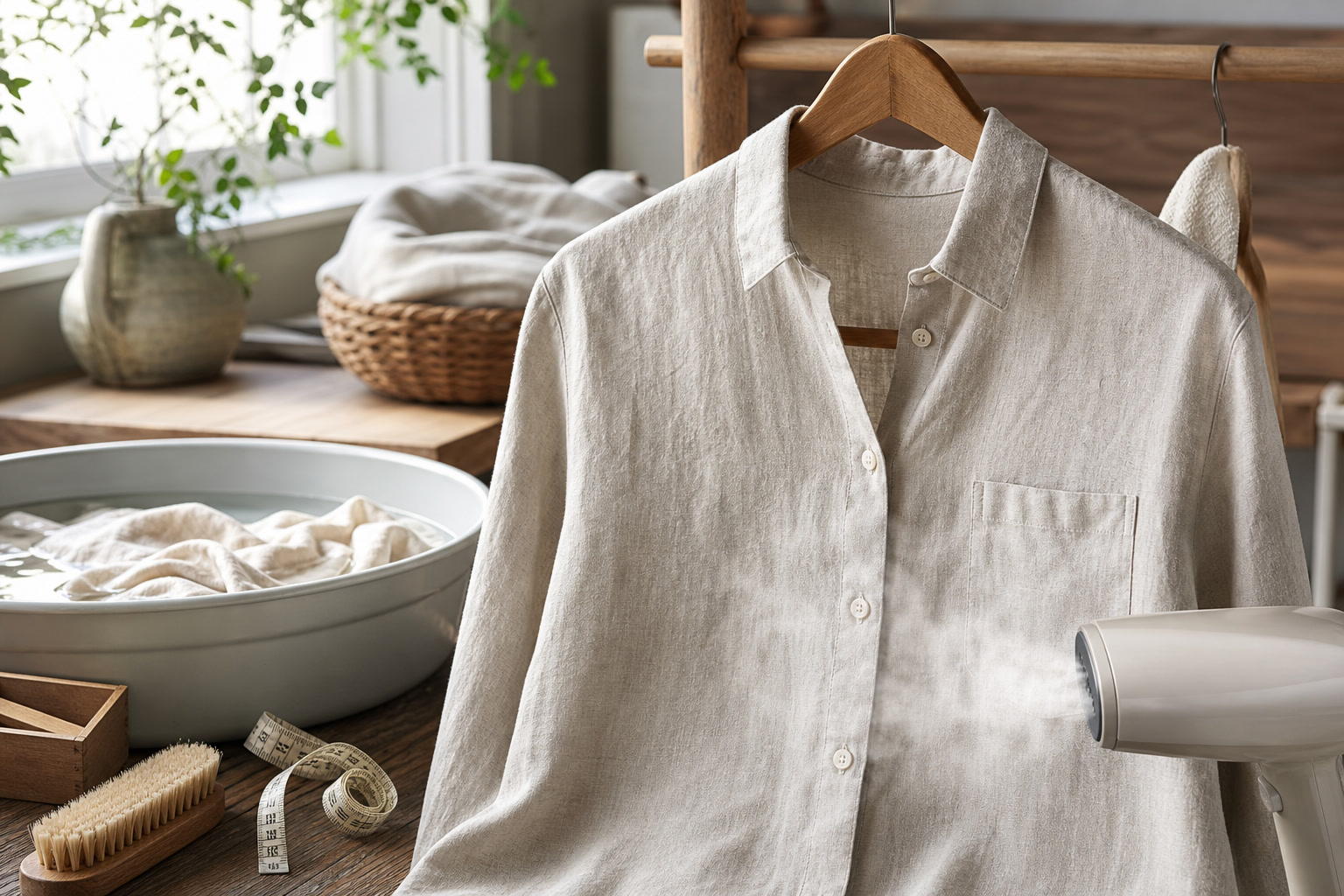
The linen shirt occupies a highly romanticized space in the modern wardrobe, frequently marketed alongside images of Mediterranean coastlines and low-fuss summer languor. However, the reality of purchasing, wearing, and maintaining flax-derived garments is far more demanding than the editorial campaigns suggest. Linen is a rigid, cellulosic fiber with zero natural elasticity and a cellular structure that permanently records every bend, fold, and movement of the wearer. Buying a linen shirt is not a casual seasonal acquisition; it is a commitment to a specific textile behavior. The contemporary market is flooded with heavily processed, loosely woven iterations that feel like sandpaper, turn transparent in daylight, and warp beyond recognition after a single wash. Making a slower, more deliberate buying decision requires understanding the agricultural mechanics of the flax plant, the geometry of non-stretch garment construction, and the undeniable labor burden of proper maintenance. This guide dissects the architecture of a well-made linen shirt, moving past the aesthetic allure to address the structural realities of fit, sheerness, shrinkage, and the long-term cost of ownership.
The Fabric Reality: Weight, Weave, and the Sheerness Problem
The most immediate point of failure for a new linen shirt is the opacity. High-street brands frequently reduce costs by decreasing the density of the weave, resulting in a low-GSM (grams per square meter) fabric that acts as a sheer veil rather than a substantial garment. A high-quality linen shirt should possess enough structural integrity to obscure the exact contours and colors of your undergarments. When evaluating a piece, hold a single layer of the fabric up to a light source. You should see a tight, grid-like intersection of yarns with minimal light piercing through the gaps. If the light easily penetrates the weave, the shirt will not only be transparent against the skin but will also lack the tensile strength required to survive repeated washing.
Beyond weight, the texture of the yarn dictates both comfort and longevity. Flax fibers naturally contain 'slubs'-small, thicker nodules along the length of the yarn where the fibers have clustered. While a moderate amount of slubbing indicates natural provenance and adds visual depth, excessive or massive slubs are a hallmark of lower-grade, short-staple flax. These large irregularities create weak points in the weave, prone to snapping under tension or abrasion. Premium linen, particularly those woven from long-staple European flax, exhibits a smooth, relatively uniform surface with only subtle, consistent slubbing. This uniformity translates directly to a softer hand-feel against the skin, eliminating the scratchy, abrasive sensation commonly associated with cheap summer resort wear.
The dyeing and finishing processes further alter the fabric's behavior. Natural, unbleached linen retains the highest structural strength, as it has not been subjected to harsh chemical stripping. Optical white linen, while visually striking, undergoes intensive bleaching that inherently weakens the cellulose fibers, making it marginally more susceptible to tearing and premature wear. Furthermore, yarn-dyed linen-where the threads are dyed prior to weaving-yields a richer, more dimensionally stable color that fades elegantly over time. Piece-dyed garments, which are submerged in color after construction, often exhibit a flatter, more uniform hue but can suffer from uneven fading along the seams and collar edges as the garment ages.
The Shrinkage Variable and Return Risks
Shrinkage is the silent, often uncalculated variable that ruins the fit of a linen shirt. Flax fibers are highly hydrophilic; they swell when wet and contract as they dry. During the weaving process, the warp yarns (the vertical threads) are held under immense tension on the loom. When the finished garment is submerged in water for the first time, this tension is released, causing the yarns to relax and shorten. Consequently, linen shirts shrink disproportionately in length rather than width. Even garments explicitly labeled as 'pre-washed' or 'garment-washed' carry a residual shrinkage rate of approximately 3 to 5 percent. Raw, unwashed linen can shrink up to 7 percent in the sleeves and body length.
This physical reality drastically alters the try-on protocol and increases the risk of keeping a garment that will become unwearable. When evaluating a new linen shirt at home, you must project its dimensions post-laundering. If the sleeves hit exactly at your wrist bone straight out of the box, they will likely retreat to an awkward length above the wrist after the first wash. Similarly, if the hem barely covers your waistband, the shirt will become too short to tuck in securely. You must account for losing roughly half an inch to a full inch in the sleeves and body length. Failing to calculate this margin is the primary reason linen shirts are relegated to the back of the closet after a single wear.
To mitigate this risk, never judge the final fit of a linen garment until it has been washed according to the manufacturer's instructions. If you are purchasing from a brand with a strict return policy that forbids washed items, you must be ruthlessly critical of the raw measurements. Opt for shirts with slightly longer tails and sleeves that break lower on the hand. It is always possible to have a tailor shorten a sleeve or hem a body that remains too long after the initial shrinkage has occurred, but it is physically impossible to stretch shortened flax fibers back to their original dimensions.
The True Cost of Maintenance: Washing and Ironing
The maintenance burden of linen is exceptionally high, and accepting this labor is a prerequisite for ownership. Linen cannot be treated with the same careless routine as synthetic blends or heavy cottons. The washing process must be gentle to preserve the integrity of the fibers. Always use cold or lukewarm water, as high temperatures accelerate shrinkage and weaken the cellulose. Crucially, the spin cycle must be set to the lowest possible speed. High-speed spinning forces the rigid fibers into sharp, hard creases against the drum of the machine. These spin-induced creases can become semi-permanent, severely damaging the yarn and making the ironing process nearly impossible.
Detergent selection requires equal care. Standard commercial detergents often contain optical brighteners and harsh enzymes designed to break down protein stains. Over time, these chemicals degrade the natural flax fibers, causing the fabric to become brittle and prone to tearing, particularly at high-friction points like the elbows and collar fold. Utilize a mild, pH-neutral liquid detergent. Powdered detergents should be avoided entirely, as the undissolved granules can lodge in the weave and cause localized abrasion. Never use chlorine bleach, even on white linen, as it destroys the structural integrity of the fabric and inevitably causes a permanent yellowing effect.
Ironing linen is not a quick touch-up; it is a dedicated ritual governed by the physics of heat and moisture. Attempting to iron a bone-dry linen shirt is an exercise in futility; the heat will scorch the surface before the creases release. Linen must be ironed while it is uniformly damp. If the shirt has dried completely, it must be aggressively misted with a spray bottle and allowed to sit for ten minutes so the moisture can penetrate the core of the fibers. Using a heavy iron on the highest heat setting, press the fabric firmly. The combination of high heat and moisture creates steam within the fabric itself, relaxing the cellulose and allowing the yarns to realign smoothly. Garment steamers are generally ineffective on medium to heavy-weight linen, as they cannot provide the mechanical pressure required to flatten the fibers.
Long-Term Storage, Patina, and Alternatives
The lifecycle of a well-maintained linen shirt is measured in decades, not seasons. Over years of wear and washing, the friction softens the microscopic edges of the flax fibers, resulting in a buttery, draped texture known as patina. However, achieving this state requires meticulous off-season storage. Never store linen in plastic dry-cleaning bags. Plastic traps ambient moisture, creating a microclimate that breeds mildew and accelerates the oxidation of residual skin oils, leading to severe yellowing. Instead, store linen shirts in breathable cotton canvas garment bags. If folding the shirts for long-term storage, avoid pressing sharp creases into the folds, as the rigid fibers can permanently snap if left folded under weight for several months.
Hanging is generally preferable to folding, provided you use the correct hardware. Thin wire or cheap plastic hangers will distort the shoulders, creating permanent puckers in the fabric. Utilize wide-shouldered wooden hangers that distribute the weight of the garment evenly. Ensure the closet is completely dry and well-ventilated. Because linen is a natural cellulosic fiber, it is susceptible to silverfish and, to a lesser extent, clothes moths. Cedar blocks or lavender sachets provide a natural deterrent, but routine inspection and maintaining a clean storage environment are the only guaranteed methods of prevention.
For those who appreciate the visual texture of linen but refuse to accept the maintenance burden or the inevitable wrinkling, alternative bast fibers and blends offer a compromise. Ramie and hemp share a similar visual profile to flax but are generally stiffer and highly durable, though they wrinkle just as severely. The most practical alternative for the maintenance-averse is a linen-lyocell or linen-viscose blend. The addition of these semi-synthetic, wood-pulp-derived fibers introduces a fluid drape and significantly reduces the fabric's memory, meaning wrinkles fall out naturally with body heat and gravity. While blends sacrifice the pure, crisp heritage of 100% flax, they drastically reduce the required ironing time and offer a highly functional entry point for high-humidity environments.
Pre-purchase checklist
- Hold a single layer of the fabric up to a bright light to verify the density of the weave; excessive light penetration indicates a weak, overly sheer garment.
- Inspect the collar points and cuffs for fused interlining; stiffness that feels like cardboard will likely bubble and warp after the first wash.
- Verify the presence of a back box pleat, side pleats, or a split yoke to ensure the rigid fabric has enough mechanical ease to accommodate shoulder movement.
- Check the internal care label for dry-clean-only mandates; high-quality linen should always be washable, and dry-cleaning chemicals strip the natural oils from the flax.
- Assess the sleeve and hem length during the try-on, mentally subtracting at least half an inch to account for the inevitable warp-yarn shrinkage after the first cold wash.
Who should skip this
Consumers who require a crisp, immaculate appearance past 9:00 AM should entirely bypass pure linen shirting. The fabric's cellular structure guarantees that the hollow fibers will bend and set into creases the moment you sit down, cross your arms, or lean against a surface. If you work in a formal corporate environment with strict dress codes, or if the mere sight of a wrinkled sleeve causes you psychological distress, investing in linen will only result in frustration and a garment that never leaves the closet. Furthermore, individuals who are unwilling to dedicate twenty minutes to damp-ironing a single shirt on a weekend should look toward high-twist cottons or lyocell blends. Linen demands a specific, relaxed posture toward one's appearance and a willingness to perform manual garment care; without both, it is a poor financial investment.
Affiliate transparency
FikaLooks is an independent editorial publication entirely supported by our readership. When you evaluate and purchase garments through the external links embedded in our fabric guides and brand analyses, we may earn a transparent affiliate commission. This structure allows us to maintain our rigorous, slow-consumption editorial standards without relying on sponsored placements or brand-dictated advertorials. We only recommend textiles and specific garments that align with our criteria for durability, construction geometry, and long-term wardrobe viability.
FAQ
How do I soften a new, severely scratchy linen shirt?
Scratchy linen is usually the result of short-staple fibers or heavy chemical sizing applied at the factory. To accelerate the softening process without damaging the garment, soak the shirt overnight in a basin of cold water mixed with one cup of distilled white vinegar. The mild acidity of the vinegar helps dissolve the industrial sizing and relaxes the cellulose structure. Follow this with a standard cold wash using a gentle detergent. Avoid using commercial fabric softeners, as they coat the flax fibers in a silicone residue that destroys linen's natural breathability and moisture-wicking properties. Ultimately, mechanical friction through regular wear and washing is the only permanent way to achieve a soft patina.
Why does my white linen shirt develop yellow stains at the collar, and how do I remove them?
Yellowing at the collar and armpits is not a failure of the fabric, but a chemical reaction between the natural sebum (skin oils) produced by your body, aluminum-based antiperspirants, and the ambient oxygen. When these oils sit on the fabric, they oxidize and turn yellow. Do not use chlorine bleach, which will permanently damage the fibers and often exacerbate the yellowing. Instead, treat the area with an enzymatic stain remover or a paste made from oxygen bleach (sodium percarbonate) and water. Gently work the paste into the collar with a soft-bristled brush, let it sit for an hour to allow the enzymes to digest the proteins, and then wash the shirt on a cold setting.
Can I pack linen shirts for travel without them looking completely destroyed upon arrival?
While you cannot prevent linen from wrinkling in a suitcase, you can control the type of wrinkles. Folding a linen shirt normally and compressing it under other clothes will create sharp, aggressive creases that resemble a grid. To avoid this, utilize the rolling method or the tissue-paper method. Lay the shirt flat, fold the sleeves backward, and roll the garment from the hem up to the collar as tightly as possible. This creates soft waves rather than sharp creases. Alternatively, fold the shirt around a core of acid-free tissue paper; the paper provides a frictionless barrier that prevents the fabric from grinding against itself. Upon arrival, hang the shirt in a steamy bathroom to relax the soft travel waves.
What exactly does 'European Flax' or 'Masters of Linen' mean on the tag?
These designations are not mere marketing terms; they refer to the agricultural and processing provenance of the flax. The coastal band stretching from Northern France through Belgium and the Netherlands possesses a unique damp, temperate climate and rich soil that produces the longest, strongest flax fibers in the world. 'European Flax' certifies that the raw material was grown in this specific region without artificial irrigation or GMOs. 'Masters of Linen' is a stricter certification indicating that the entire production process-from the agricultural harvesting to the spinning of the yarn and the final weaving of the fabric-occurred entirely within Europe, ensuring high labor standards and exceptional textile density.