Fabric Labels That Matter
Fabric Labels That Matter is a material signal note for readers weighing fiber content, care symbols, blends, and durability clues. The slow-shopping framework note explains what to check before buying, who should skip it, and where the purchase can become more work than it first appears.
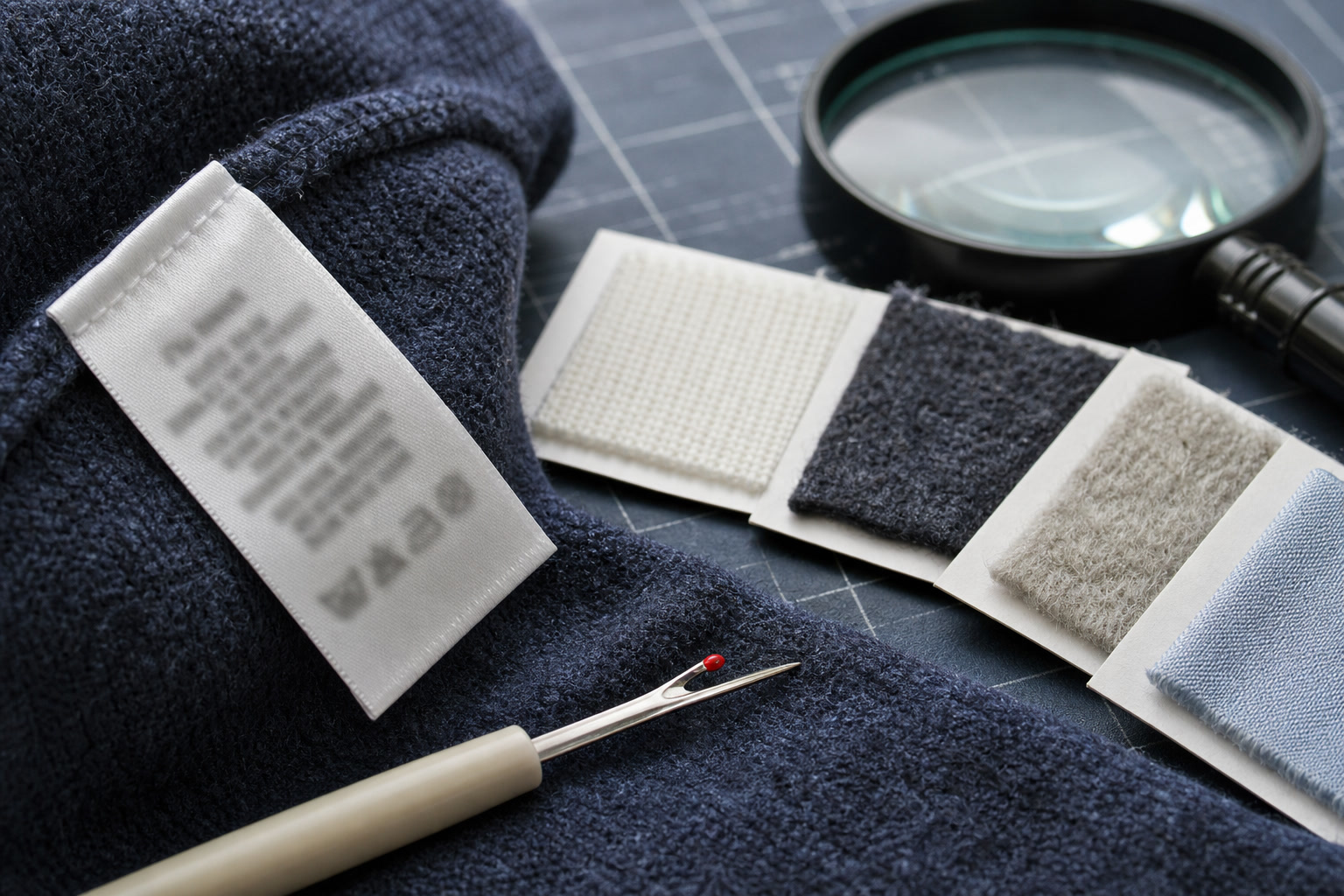
The disconnect between the romantic language of e-commerce and the physical reality of a garment is entirely contained within a small, often itchy white tag sewn into the inner side seam. Modern retail relies heavily on adjectives masquerading as nouns-terms like "silky," "cashmere-feel," and "plant-based" are deployed to obscure the actual composition of the clothing we buy. The slow shopping philosophy demands a reversal of this dynamic. It requires us to ignore the marketing copy entirely and read the composition label first, treating it as a binding contract. This tag dictates exactly how a garment will drape, how it will react to the heat of your skin, how it will degrade under friction, and the precise burden of maintenance it will demand. Understanding these material realities is the only reliable defense against paying premium prices for temporary, high-maintenance synthetics.
The Blend Deception: Paying for Ghost Fibers
The legal threshold for naming a garment after a luxury fiber is remarkably low. Brands routinely market a sweater as a "Cashmere Blend" or an "Alpaca Knit" when the composition tag reveals it contains 85% acrylic, 10% polyester, and exactly 5% of the titular animal hair. This marketing strategy capitalizes on the luxury association and perceived warmth of the minor ingredient, while the garment performs entirely based on its dominant synthetic fibers. You are effectively paying a premium markup for a ghost material that offers absolutely no functional benefit to the wearer.
To sell these heavily synthetic blends, manufacturers rely on tactile illusions in the fitting room. Brands utilize industrial chemical softeners and heavy silicone washes to make rigid acrylic and cheap polyester feel incredibly plush and inviting on the hanger. However, this artificial finish is entirely superficial. It washes out after the first or second laundry cycle, stripping away the illusion to reveal the squeaky, stiff plastic reality underneath. The initial softness is a temporary chemical coating, not an inherent structural property of the textile.
The physical reality of wearing these blends becomes apparent within hours. Acrylic, engineered as a cheap substitute for wool, consists of short, weak fibers that snap, tangle, and ball up under minimal friction. Within three wears, high-contact areas like the underarms, the sides of the torso, and the shoulder where your bag rests will develop stubborn, unsightly pills. Unlike the pills on high-quality wool, which can be gently shaved away, synthetic pills are anchored by incredibly strong plastic threads, requiring aggressive force to remove and often tearing the surrounding knit.
Furthermore, these blends represent a complete failure of thermal regulation. Natural animal fibers like merino, cashmere, and alpaca are highly breathable and naturally thermoregulating; they trap warm air close to the body but allow excess moisture vapor to escape. Synthetics, conversely, are entirely hydrophobic. An acrylic-blend sweater acts as an impermeable plastic barrier, trapping sweat against the skin. This creates a deeply uncomfortable clammy sensation indoors, followed by a sharp, freezing drop in body temperature the moment you step outside into a cold breeze.
The Greenwashing of Synthetics: Vegan Leather and Bamboo
Few marketing terms have been as successful, or as misleading, as "vegan leather." While the phrase appeals directly to ethical sensibilities and environmental consciousness, the material reality is almost exclusively polyurethane (PU) or polyvinyl chloride (PVC). These are direct petroleum derivatives. Unlike animal hides, which are a highly durable byproduct of the agriculture industry possessing immense tensile strength, PU is essentially a thin layer of liquid plastic bonded to a woven fabric backing. It offers none of the breathability, flexibility, or longevity of the material it mimics.
The degradation timeline of polyurethane is finite and non-negotiable. Traditional animal leather responds to friction, body heat, and natural oils by developing a rich patina, softening and molding to the wearer's specific anatomy over decades. Vegan leather, by contrast, begins to die the moment it leaves the factory. Exposure to ambient sunlight, normal temperature fluctuations, and routine mechanical stress causes the chemical plasticizers to migrate. Within a few seasons, the top plastic layer inevitably bubbles, cracks, and flakes off, rendering the garment unwearable and entirely unrepairable.
Another ubiquitous buzzword in the realm of greenwashing is "bamboo," frequently marketed as a sustainable, breathable, and naturally antibacterial miracle fabric. However, the rigid bamboo plant must undergo severe chemical processing to be transformed into a soft textile. The raw bamboo is dissolved in harsh industrial solvents-typically carbon disulfide, sodium hydroxide, and sulfuric acid-to create a viscous pulp, which is then extruded into a fiber. The resulting textile is simply rayon or viscose, stripped of any natural bamboo characteristics.
While viscose does offer a fluid, attractive drape and feels initially cool against the skin, it is structurally fragile and demanding. It loses up to half of its tensile strength when wet, making it highly susceptible to tearing, stretching, and warping in a standard washing machine. It also shrinks aggressively when exposed to heat and requires meticulous, time-consuming steaming to restore its original dimensions and eliminate deep-set wrinkles. Buying "bamboo" means committing to the high-maintenance reality of delicate, chemically dependent semi-synthetics.
Structural Integrity and the Returns Risk
A common error in digital shopping is purchasing a garment solely for its photographed silhouette, without considering if the material can actually support that shape in reality. Fabric dictates form. A sculptural, voluminous sleeve requires a crisp, tightly woven textile like cotton poplin, silk taffeta, or heavy linen to hold its architecture. If that exact same design is executed in a cheap polyester crepe or a flimsy viscose, the sleeve will collapse limply against the arm, entirely ruining the intended proportions of the garment.
The sabotage of cheap linings is another critical structural issue. A beautifully tailored coat made of heavy, double-faced wool is entirely compromised if the brand cuts manufacturing costs by lining it with 100% polyester. The lining is the microclimate layer directly touching your body or your indoor clothing. A synthetic lining traps body heat, causes severe static cling, and prevents the breathable wool shell from functioning, effectively turning a significant winter investment piece into a wearable, unbreathable sauna.
Mitigating the high risk of online returns requires treating the zoom function as a diagnostic tool. Because you cannot perform tactile tests-scrunching the fabric to check for wrinkle recovery, or holding it up to a window to gauge opacity-you must rely entirely on the composition tab and visual evidence. Look closely at the weave in the macro photographs. Is the yarn loose and prone to snagging? Does the fabric pull tightly at the seams on the model? Does the material look shiny in areas of high tension?
It is important to note that not all plastic fibers are inherently bad; their value depends entirely on utility. A 2% elastane content in rigid denim provides necessary mechanical stretch for joint mobility and ensures the fabric recovers its shape after sitting. Ten percent nylon spun into a delicate alpaca knit provides a strong, invisible core yarn that prevents the fragile animal hairs from snapping under their own weight. In slow shopping, synthetics should serve a distinct architectural purpose, not act as cheap, bulky filler.
Building a Slower, Material-First Wardrobe
Shifting away from trend-based consumption requires viewing clothing as a collection of engineered textiles rather than just shapes and colors. When you prioritize material integrity above all else, your purchasing naturally slows down. You begin to reject poorly constructed, heavily synthetic garments immediately upon reading the tag, drastically narrowing your options to pieces that actually warrant your financial investment. This material-first approach acts as a natural filter against impulse buying, forcing you to evaluate the physical substance of the item rather than its marketing campaign.
The true luxury of high-quality textiles lies in their aging process. While cheap synthetics degrade immediately, natural fibers evolve. Heavyweight linen starts out stiff but softens into a fluid, incredibly comfortable textile after dozens of washes. Raw denim molds precisely to the mechanical movements and creases of your specific body. High-twist wool resists wrinkling and drapes elegantly year after year, while full-grain leather develops a unique patina that cannot be replicated in a factory. Investing in these materials means buying garments that improve with wear.
This approach drastically recalibrates the concept of cost per wear. A dense, tightly woven merino wool sweater might cost three times as much as a fluffy acrylic alternative at checkout, but its functional lifespan is exponentially longer. Furthermore, because wool is naturally antimicrobial and resists holding onto body odors, it requires laundering far less frequently than synthetics. The true cost per wear plummets when a garment remains structurally sound, visually appealing, and hygienic without the constant friction of the washing machine.
The final material audit occurs right before adding an item to your cart. Ask yourself if the fabric composition aligns perfectly with the garment's intended function in your daily life. Does a summer dress feature breathable, moisture-wicking natural fibers? Does a tailored winter coat have a cupro or viscose lining that allows for easy layering? Does a workout top utilize high-quality, engineered synthetics for sweat management? Aligning the textile with the task is the foundational step in building a wardrobe that functions cleanly and lasts indefinitely.
Pre-purchase checklist
- Locate the physical composition tag sewn into the inner side seam, entirely ignoring the product title, hangtags, and online marketing descriptions.
- Verify the lining material of outerwear and tailored trousers; reject polyester linings in favor of breathable cupro, viscose, or silk.
- Scrutinize blends to ensure the advertised luxury fiber (cashmere, silk, alpaca) constitutes at least 20% of the garment, rather than a token 5%.
- Assess the care label against your actual domestic habits; if you refuse to hand-wash or visit the dry cleaner, leave delicate semi-synthetics on the rack.
- Examine the tension of knits by gently pulling the fabric; if it does not immediately snap back to its original shape, it lacks recovery and will bag out at the elbows.
Who should skip this
Individuals who view clothing as seasonal, disposable entertainment should bypass the rigorous material checks advocated here. If your priority is capturing a fleeting silhouette for a specific event or a single season, investing the time and capital into high-quality natural fibers is an unnecessary allocation of funds. Furthermore, those who rely entirely on high-heat machine washing and aggressive tumble drying for all their laundry should strictly avoid wool, silk, and delicate cellulosic fibers, as this harsh laundering process will permanently destroy the structural integrity, drape, and fit of these textiles within a single cycle.
Affiliate transparency
FikaLooks maintains strict editorial independence and does not accept payment for fabric evaluations, brand endorsements, or material recommendations. If you choose to purchase a garment through links provided in our broader wardrobe guides, we may earn a small commission. This operational process never influences our rigorous analysis of textile quality, construction standards, or our overarching commitment to slower, more deliberate consumption.
FAQ
Why do brands use the term 'vegan leather' instead of just saying polyurethane or plastic?
The term 'vegan' carries a strong halo effect, implying ethical production, environmental consciousness, and modernity. By rebranding polyurethane (PU) or polyvinyl chloride (PVC) as 'vegan leather,' marketing departments successfully obscure the fact that the material is a petroleum derivative. This linguistic shift allows brands to charge premium prices for synthetic materials that are incredibly cheap to manufacture and have a severely limited lifespan compared to traditional animal hides.
Is viscose considered a natural fiber since it comes from plants or bamboo?
Viscose is classified as a semi-synthetic or regenerated cellulose fiber. While the raw starting material is natural (wood pulp or bamboo), the manufacturing process requires intense chemical intervention. The cellulose is dissolved in harsh solvents like carbon disulfide to create a viscous liquid, which is then extruded through a spinneret to form threads. Consequently, viscose behaves more like a delicate synthetic-losing strength when wet and shrinking easily-than a robust natural fiber like cotton or linen.
How can I tell if a sweater will pill before I actually buy and wear it?
Pilling is caused by short fibers breaking loose and tangling together under friction. To predict pilling, look at the composition and the yarn structure. Sweaters made primarily of acrylic or those featuring a very fuzzy, brushed surface on the hanger are highly susceptible. Gently rub the fabric against itself; if it immediately sheds or looks disturbed, it will pill rapidly. Tightly spun yarns, high-twist wools, and longer staple fibers naturally resist pilling because the individual hairs are securely anchored within the thread.
If synthetics are generally discouraged for slow shopping, why do high-end brands still use elastane or nylon?
In slow shopping, the goal is not to demonize all synthetics, but to reject synthetics used purely as cheap filler. Nylon and elastane have specific, highly valuable mechanical properties. A 2% elastane addition in rigid cotton denim provides essential recovery, preventing the knees from bagging out after a day of sitting. Similarly, spinning delicate alpaca or mohair fibers around a thin nylon core provides necessary tensile strength, preventing the knit from snapping under its own weight. When used in small, deliberate percentages, these synthetics extend the garment's functional lifespan.