Denim Fit Checklist
Denim Fit Checklist is a sizing check for readers weighing rise, thigh room, fabric recovery, and return-window testing. The wardrobe decision note explains what to check before buying, who should skip it, and where the purchase can become more work than it first appears.
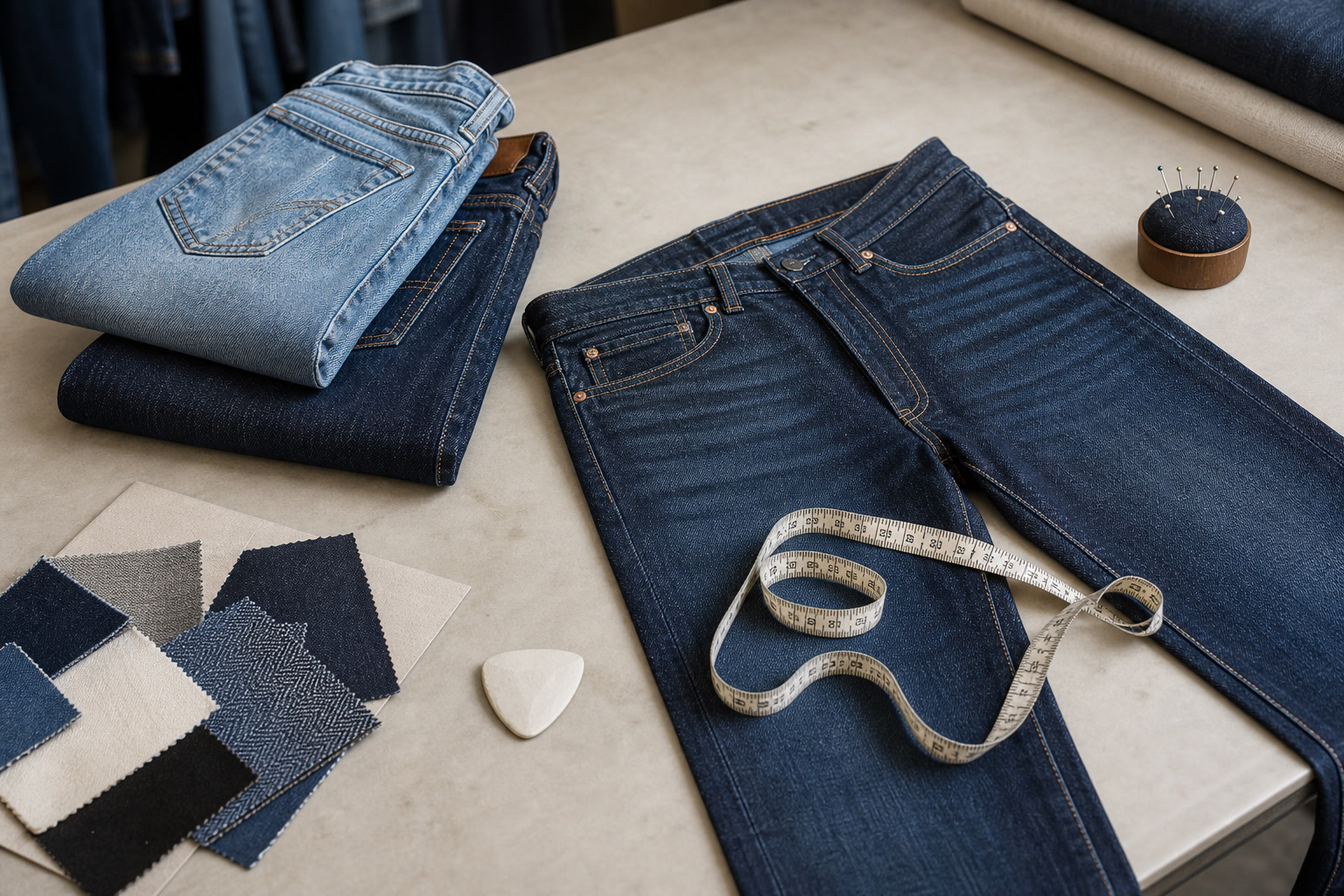
Denim is arguably the most demanding textile in a modern wardrobe, requiring a physical break-in period and a tolerance for shifting dimensions. The fitting room mirror provides only a static snapshot of a dynamic garment. Evaluating jeans requires moving beyond the initial silhouette to understand how the warp and weft will react to body heat, friction, and eventual laundering. A proper fit check is an exercise in predicting textile behavior: anticipating where rigid cotton will yield, where elastane will fail, and how the geometry of the waist, hips, and knees will adapt to your daily routine. Purchasing denim with intention means accepting that the initial try-on is merely a baseline, and the true fit is determined by how the garment evolves through weeks of wear and the inevitable mechanical stress of your lifestyle.
The Waist and Pelvic Articulation
The waist measurement of a pair of jeans is entirely theoretical until the garment is subjected to the mechanics of sitting. When transitioning from a standing to a seated position, the human pelvis tilts and the lower abdomen expands, requiring the waistband to accommodate a sudden shift in volume. A waistband that sits flush while standing may become severely restrictive when seated, pressing uncomfortably into the diaphragm or hip bones. To properly evaluate the waist, you must sit in a hard chair for at least five minutes. Pay attention to the pressure exerted on your lower ribs in high-rise cuts, or the friction against your hip points in mid-rise variations. If the hardware digs into your skin to the point of distraction, the jeans are cut too narrow for your pelvic structure.
Conversely, the lower back gap remains one of the most common structural failures in denim fitting. This gap occurs when the jeans are cut with a straight waistband rather than a curved one, failing to account for the natural lordosis of the spine and the projection of the glutes. While a tailor can dart the back waistband or take in the center back seam, this alteration frequently pulls the rear pockets too close together, distorting the visual balance of the seat. If you can fit more than two fingers between the waistband and your lower back while standing naturally, the pattern block is fundamentally incompatible with your proportions.
The composition of the denim dictates how the waist will behave over time. Rigid, one hundred percent cotton denim will stretch up to a full inch in high-tension areas like the waistband as the cotton fibers relax under body heat and mechanical stress. Therefore, rigid denim should feel distinctly snug-but never painful-upon initial try-on. Elastane blends, however, behave differently. While they offer immediate comfort, the synthetic fibers lack the memory of pure cotton. Over time, elastane degrades, leading to a waistband that permanently expands and requires constant adjustment or a belt to remain anchored.
Hip Drape and Thigh Tension
The fit through the hips and upper thighs dictates the entire structural integrity of the jeans. The most immediate visual indicator of a poor hip fit is the presence of lateral tension lines, often referred to as pulling across the fly or crotch. If horizontal creases radiate outward from the zipper, the hip measurement is objectively too narrow. This tension not only flattens the seat and restricts stride length, but it also places immense stress on the crotch seams, drastically accelerating the likelihood of a blowout. The fabric should drape cleanly over the widest part of your hips without requiring the pocket bags to stretch open. If the white cotton lining of the front pockets is visible, the jeans are too tight.
Denim weight heavily influences how the fabric interacts with the thighs. Lightweight denim, generally anything under eleven ounces, will cling to the contours of the leg, highlighting the anatomy but often sacrificing the architectural lines that make denim visually appealing. Mid-weight to heavyweight denim possesses enough structural rigidity to fall cleanly from the hip, masking the exact shape of the thigh and creating a more uniform, straight silhouette. However, heavier weights require a higher tolerance for initial stiffness. During the first few weeks of wear, heavy denim will crease sharply behind the knees and at the hip flexors, creating deep whiskers that eventually mold to your specific gait.
The placement and scale of the rear pockets are critical to the visual proportion of the hips. Pockets that are scaled too small for the surface area of the seat will visually expand the hips, while pockets placed too far apart will flatten the rear profile. Ideally, the bottom of the rear pocket should hit just above the curve of the glutes; pockets that extend down onto the upper thigh drag the visual weight downward, creating a sagging appearance regardless of how well the waist fits. Evaluating the rear view requires a three-way mirror to ensure the yoke provides the correct depth and lift for your anatomy.
Knee Articulation and Hem Dynamics
Knee bagging is the inevitable result of textile fatigue, occurring when the fabric across the kneecap is repeatedly stretched during walking and sitting but fails to recover its original shape. This phenomenon is particularly aggressive in denim woven with low-quality elastane or in extremely tight fits where the fabric has no room to travel. When you bend your knee, the fabric must pull upward from the calf and downward from the thigh. If the jeans are skin-tight through the lower leg, the fabric becomes trapped, forcing the knee area to absorb the entirety of the stretch. To test for potential knee bagging, perform a deep squat in the fitting room. If the fabric binds tightly at the calves and refuses to slide up, you will experience severe knee deformation within hours of wear.
The hem of the jeans dictates how the garment interacts with your footwear, fundamentally altering the perceived length of your legs. A full break, where the fabric pools heavily over the shoe, works well with heavyweight, rigid denim that stacks in crisp, architectural folds. However, lightweight or stretch denim will simply look sloppy and crumpled if left too long. A slight break or no break-where the hem grazes the top of the shoe or sits just above the ankle bone-offers a cleaner line and prevents the hem from fraying against the pavement. When evaluating length, always try the jeans on with the style of shoe you intend to wear most frequently, as the heel height and vamp volume will drastically change the drape.
Hemming denim requires specific technical considerations. Chopping three inches off a tapered jean will widen the final leg opening, altering the entire silhouette from a taper to a straight or even slightly flared cut. Furthermore, factory hems are often finished with a chain stitch using specialized machinery, which creates a distinct roping effect after washing. Standard lock-stitching at a local dry cleaner will result in a flat, lifeless hem. If you are investing in premium denim, it is necessary to factor in the cost and logistical burden of sending the jeans to a specialist tailor who can replicate the original chain stitch and preserve the intended drape.
The Reality of Post-Wash Changes
The assumption that jeans will remain exactly the same size after laundering is a primary cause of wardrobe failure and high return rates. All denim, unless heavily treated with synthetic stabilizers, reacts to water and agitation. Unsanforized, or shrink-to-fit denim, bypasses the pre-shrinking process at the mill and will shrink up to ten percent in length and width upon its first exposure to water. Buying unsanforized denim requires sizing up by at least two inches in the waist and three inches in the inseam, followed by a dedicated soaking process to set the final dimensions. Even sanforized denim, which has been pre-shrunk, will typically experience a one to three percent shrinkage rate after the first wash, tightening slightly in the thighs and losing up to an inch in length.
The maintenance burden of denim is directly proportional to its dye process and fabric composition. Raw, unwashed indigo denim carries a high risk of dye transfer, bleeding onto light-colored upholstery, footwear, and even your skin during the first few months of wear. Washing raw denim requires a specific protocol to prevent the indigo from marbling or streaking: the jeans must be turned inside out, washed in cold water with a specialized dark detergent, and removed immediately before the spin cycle creates permanent crease marks. This rigorous routine makes raw denim unsuitable for those seeking low-maintenance clothing.
Heat is the ultimate enemy of denim longevity, particularly for pairs containing elastane. Subjecting stretch jeans to the high temperatures of a tumble dryer effectively cooks the synthetic fibers, causing them to become brittle and snap. This results in the puckered, wavy texture often seen along the seams of old stretch jeans, permanently destroying the fit. All denim must be air-dried flat or hung by the belt loops in a well-ventilated space. The drying process will leave pure cotton denim feeling stiff and board-like, but this is temporary; the fabric will soften and relax back to its molded shape within an hour of body heat and movement.
Storage, Care, and Denim Alternatives
Proper storage preserves the structural integrity of denim between wears. Hanging jeans by folding them over a thin wire hanger will create a sharp, permanent crease across the thighs or knees, degrading the fabric at the fold line. The optimal storage method for heavy denim is to hang them by the rear belt loops using sturdy S-hooks on a closet rod, allowing the weight of the fabric to pull out any minor wrinkles from daily wear. For softer, lighter-weight denim, folding them flat and stacking them on a shelf is sufficient, provided the stacks are not so high that the weight crushes the pairs at the bottom.
Infrequent washing is often recommended to preserve the indigo dye, but this practice must be balanced against the physical degradation of the fabric. Dirt, skin cells, and environmental grit inevitably work their way into the cotton fibers. When left unwashed for extended periods, this microscopic grit acts like sandpaper, grinding against the warp and weft threads during movement and drastically accelerating crotch blowouts and fraying at the hems. A practical maintenance schedule involves washing the jeans every ten to fifteen wears, or immediately if they become heavily soiled, to flush out the abrasive particles and re-hydrate the cotton fibers.
For individuals who find the rigidity of traditional denim intolerable or the maintenance of stretch denim frustrating, the market offers several robust alternatives. Heavyweight cotton twill trousers or canvas work pants provide a similar level of durability and structure but are woven differently, resulting in a softer initial drape and a less abrasive texture against the skin. Moleskin trousers offer a matte, brushed surface that feels immediately comfortable while maintaining a sharp silhouette. Recognizing that denim is not a mandatory wardrobe component allows you to direct your purchasing power toward fabrics that better align with your sensory preferences and lifestyle requirements.
Pre-purchase checklist
- The 10-Minute Sit Test: Sit in a hard chair for ten full minutes to verify the waistband does not compress your diaphragm or dig painfully into your hip bones.
- The Pocket Lining Check: Stand naturally and inspect the front pockets; if the internal white pocket bags are visible, the hip and thigh measurements are too narrow.
- The Squat and Stair Protocol: Perform a deep squat and simulate climbing stairs to ensure the fabric can travel up the calf without permanently bagging at the kneecap.
- The Two-Finger Waist Rule: Insert two fingers into the back waistband while standing; if there is more room than this, the pattern block fails to accommodate your lower back curve.
- The Hem Break Evaluation: Try the jeans on with your most frequently worn footwear to confirm the hem breaks cleanly without sloppy pooling or exposing the ankle bone prematurely.
Who should skip this
Individuals with sensory processing sensitivities to stiff, abrasive textiles, or those who experience rapid, frequent weight fluctuations, should bypass rigid, pure cotton denim entirely. The extensive break-in period requires weeks of physical friction and restricted movement, which can be highly distracting and uncomfortable. Furthermore, rigid denim offers zero forgiveness for bloating or minor weight shifts, meaning a pair that fits perfectly in the morning may become unwearable by the evening. If your daily routine involves sitting at a desk for eight to ten hours, the rigid waistband of traditional heavy denim will likely cause severe abdominal discomfort, making softer twills or trousers with side-adjusters a far more practical and comfortable investment.
Affiliate transparency
FikaLooks maintains strict editorial independence. The fitting methodologies and material analyses detailed in this guide are based on objective textile science and structural garment evaluation. We do not accept payment for favorable reviews. If you choose to purchase denim or care products through the links provided in our broader brand directories, we may earn a commission, which funds our independent research and allows us to continue producing detailed, slower-consumption wardrobe manuals.
FAQ
Why do my jeans fit perfectly in the morning but sag heavily around the waist and seat by the afternoon?
This is a natural reaction of cotton fibers to body heat and ambient moisture. As you move, the friction and warmth cause the tightly woven yarns to relax and expand. In pure cotton denim, this expansion is normal and will reset upon washing. In stretch denim, severe afternoon sagging indicates that the elastane fibers are either of low quality or have been degraded by heat damage from tumble drying, losing their ability to snap back into shape.
Can a tailor permanently fix a severe gap at the back of the waistband?
A tailor can reduce a waist gap by taking in the center back seam or adding darts, but there are strict geometric limits. Removing more than one to one-and-a-half inches will pull the rear pockets unnaturally close together and distort the side seams, throwing off the entire balance of the jeans. If the gap exceeds two inches, the jeans are fundamentally the wrong cut for your body type, and tailoring will not yield a satisfactory result.
How much will rigid, pure cotton denim actually stretch over time?
Rigid denim will typically stretch between half an inch to a full inch in areas subjected to high mechanical tension, specifically the waistband, hips, and knees. However, this stretch is not permanent; the fabric will shrink back to its original dimensions after washing and air drying. You should never buy pure cotton jeans that are painfully tight under the assumption they will stretch enough to become comfortable; they should be snug but manageable from the first wear.
Is it normal for the crotch of my jeans to wear out and tear within a year of purchase?
Crotch blowouts are common but usually preventable. They are caused by a combination of friction from your thighs rubbing together, tension from the jeans being too tight in the hips, and infrequent washing. When denim is not washed regularly, microscopic dirt and grit accumulate in the fibers, acting as an abrasive that grinds away the cotton threads during movement. Ensuring a proper fit with sufficient room in the top block and washing the jeans every ten to fifteen wears will significantly delay structural failure.