Capsule Shopping List
Capsule Shopping List is a list method for readers weighing gap lists, duplicate prevention, priority order, and delayed buying. The slow-shopping framework note explains what to check before buying, who should skip it, and where the purchase can become more work than it first appears.

The concept of a capsule wardrobe often devolves into a rigid, joyless exercise in accumulating beige basics. A true capsule shopping list, however, operates as a dynamic architectural blueprint for daily dressing. It requires shifting focus from isolated garments to the negative space between them-how a collar sits against a lapel, or how a hem breaks over a shoe. This methodology demands rigorous fabric scrutiny and an honest assessment of daily friction points. Constructing this list is an exercise in editing out the fantasy self to serve the actual person, bypassing fleeting trend cycles in favor of structural integrity, textile longevity, and the discipline of highly intentional acquisition.
The Core Architecture: Foundational Garments
Foundational garments bear the highest frequency of wear, demanding exceptional structural integrity. A simple t-shirt or tailored trouser must withstand constant abrasion, laundering, and body heat. Selecting these pieces requires ignoring the immediate visual appeal on a hanger and examining the fiber length and twist. Long-staple cottons, such as Pima or Egyptian, offer a smoother surface that resists pilling over time, while worsted wool provides a resilient drape for trousers that recovers its shape after hours of sitting. The architecture of a capsule relies entirely on these base layers holding their tension without sagging or warping.
Fit at this foundational level dictates the geometry of the entire wardrobe. A high-rise trouser establishes a specific waistline that requires tops of a corresponding length, either cropped to meet the waistband or voluminous enough to tuck cleanly without creating bulk. If the base layer introduces awkward proportions, every subsequent layer will require adjustment, leading to the exact decision fatigue a capsule is meant to eliminate. Precision in the shoulder seam of a blouse or the pitch of a trouser leg ensures that the garment moves with the skeletal structure rather than fighting it.
The primary buying risk here is investing heavily in an idealized silhouette rather than a practical one. Purchasing rigid, heavyweight selvedge denim might align with a heritage aesthetic, but if daily life involves constant movement or floor-level play with children, those jeans will remain unworn. Foundational pieces must map directly onto the wearer's actual routine. A successful core architecture prioritizes ease of movement and tactile comfort, ensuring that the garments act as a second skin rather than a restrictive uniform.
The Connective Tissue: Knitwear and Mid-Layers
Mid-layers serve as the connective tissue of a capsule, bridging the gap between lightweight foundations and heavy outerwear. Knitwear introduces texture, depth, and crucial thermal regulation. The selection process here hinges on the micron count of the wool and the density of the knit. A loosely knitted cashmere sweater might feel luxurious in a showroom, but it will lose its shape and pill rapidly under the friction of a coat lining. Conversely, a densely knitted merino or lambswool offers superior longevity and wind resistance, maintaining its structural boundaries even after years of regular rotation.
Maintenance trade-offs become starkly apparent within this category. High-quality knitwear demands a commitment to specific care rituals that cannot be bypassed. Moths, friction, and improper drying are constant threats. Integrating three wool sweaters into a capsule list means accepting the reality of hand-washing with specialized detergents, flat-drying on mesh racks, and seasonal storage in breathable cotton canvas bags. Buyers who rely entirely on machine washing and high-heat drying must pivot their list toward heavy-weight cotton knits or engineered synthetics, accepting a different drape and thermal profile in exchange for laundering convenience.
Versatility in knitwear relies heavily on neckline and hem construction. A V-neck cardigan functions as a standalone top when buttoned, a layering piece over a silk camisole, or an open jacket during transitional weather. A crewneck sweater must possess a neckline wide enough to accommodate the collar of a foundational shirt without bunching, yet snug enough to trap heat when worn alone. The ribbing at the cuffs and hem should possess strong recovery, allowing sleeves to be pushed up without permanently stretching the fibers, ensuring the garment adapts to fluctuating temperatures throughout the day.
The Outer Shell: Coats and Jackets
Outerwear represents the most significant financial outlay on a capsule shopping list, requiring a ruthless evaluation of cost-per-wear and weather reality. A coat is the external face of the wardrobe for several months of the year; therefore, its silhouette must harmonize with the varied proportions of the garments beneath it. A classic trench coat or a tailored wool overcoat offers enduring appeal, but the specific textile dictates its utility. Tightly woven gabardine repels water through structural density rather than chemical coatings, while double-faced wool provides immense warmth without the bulk of heavy linings, allowing for a cleaner drape.
The internal construction of a coat is as critical as its exterior shell. A high-quality lining facilitates smooth layering over textured knitwear, preventing the sleeves from catching and bunching. Cupro, a regenerated cellulose fiber, offers breathability and a silk-like slip, making it vastly superior to standard polyester linings that trap sweat and generate static electricity. Examining the stitching along the lining, the reinforcement of the pockets, and the anchoring of the buttons reveals the garment's true lifespan. These details separate a seasonal trend piece from a generational investment.
Sizing outerwear for a capsule requires anticipating the maximum volume of the mid-layers. A coat that fits perfectly over a thin t-shirt will restrict movement across the back and shoulders when worn over a chunky fisherman knit. Opting for a raglan sleeve or a slightly dropped shoulder accommodates varying internal volumes without appearing oversized when worn over lighter layers. The length of the coat must also be calibrated to the longest hemline in the core wardrobe, ensuring that skirts or blazers do not awkwardly protrude beneath the coat's edge, breaking the visual line.
The Grounding Elements: Footwear
Footwear anchors the capsule, dictating the formality and functional range of the entire list. Because a capsule relies on a reduced number of items, each pair of shoes endures exponentially higher mileage. Construction methods directly correlate to longevity. Shoes built with a Goodyear welt or a Blake stitch allow for multiple resolings, transforming the purchase from a consumable good into a maintainable asset. Full-grain leather uppers develop a patina and mold to the foot over time, whereas corrected-grain leathers coated in plastic will inevitably crack and peel at the flex points.
The strict limitation of a capsule demands a strategic rotation protocol. Leather requires a minimum of twenty-four hours to release absorbed moisture and recover its shape after a day of wear. A functional list must include at least two pairs of daily shoes to alternate, preventing premature degradation of the insoles and stitching. This maintenance reality requires an investment in unvarnished cedar shoe trees and a commitment to regular conditioning. Ignoring this step rapidly accelerates the destruction of expensive footwear, undermining the economic logic of the capsule methodology.
The geometric relationship between the shoe and the trouser hem is a frequent point of failure in capsule planning. A chunky loafer demands a different trouser break than a sleek ankle boot or a minimalist sneaker. The vamp of the shoe-where it cuts across the top of the foot-determines how much ankle is exposed, altering the perceived length of the leg. Selecting footwear requires physically testing the shoes with the specific trousers on the list, ensuring the silhouettes complement rather than clash. A shoe that only works with one specific pair of pants violates the core interlocking principle of the capsule.
The Variables: Accessories and Accents
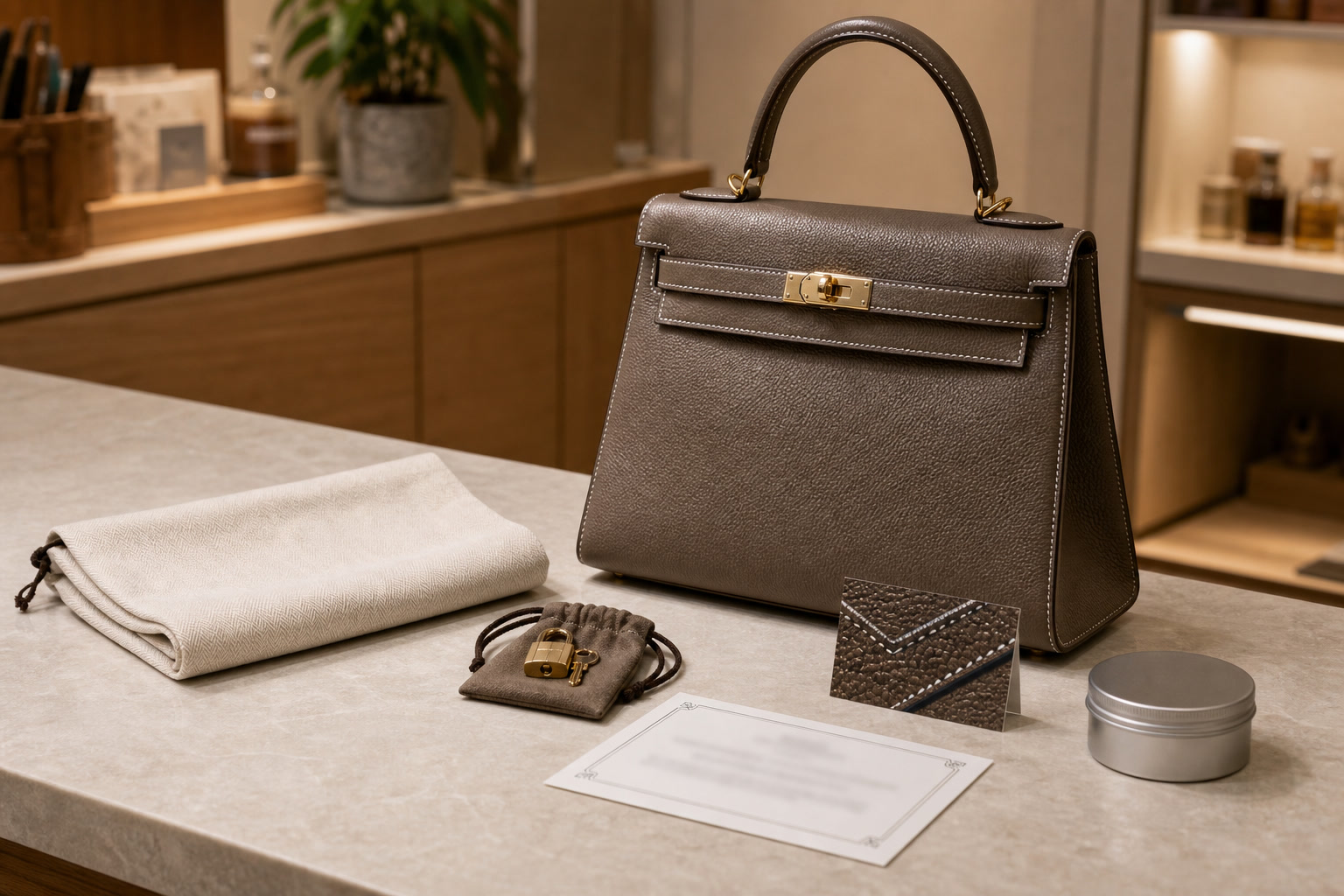
Accessories function as the variables within the fixed equation of a capsule wardrobe. They introduce necessary friction and personality into an otherwise streamlined collection of highly functional garments. Leather belts, structured bags, and hardware provide visual punctuation. The cohesion of a capsule is often subtly reinforced by maintaining consistency in hardware tones-committing to either solid brass or sterling silver across buckles, zippers, and jewelry. This deliberate limitation prevents visual clutter and ensures that any bag can be carried with any belt or coat without creating a discordant clash of metals.
Textiles play a crucial role in this category, offering a low-risk avenue for color and pattern. A generously proportioned silk scarf or a textured wool wrap can entirely alter the focal point of a neutral outfit. Silk, in particular, offers an exceptional warmth-to-weight ratio, serving as a functional barrier against cold drafts while introducing a luminous finish that contrasts with matte wools and cottons. These elements require minimal storage space but exponentially expand the styling permutations of the core architecture, preventing the wearer from feeling trapped in a repetitive uniform.
The primary risk in the accessory category is the accumulation of cheap, trend-driven accents that degrade the perceived quality of the foundational pieces. Pairing a meticulously tailored worsted wool trouser with a flimsy, bonded-leather belt immediately compromises the integrity of the look. Accessories in a capsule must meet the same rigorous standards of material and construction as the primary garments. A single, impeccably crafted leather tote bag serves the wardrobe far better than a rotating collection of poorly constructed seasonal bags, reinforcing the overarching philosophy of buying fewer, vastly superior items.
Pre-purchase checklist
- Fabric Weight Compatibility: Verify that every mid-layer can comfortably slide over the foundational tops and under the outerwear without restricting shoulder mobility.
- The Triplicate Rule: Confirm that any new addition to the list can be styled cleanly with at least three existing pieces currently in your rotation.
- Care Protocol Realism: Audit the maintenance requirements of the list against your actual weekly schedule, ensuring you have the time and willingness for hand-washing or leather conditioning.
- Hardware Cohesion: Check that the zippers, buckles, and jewelry tones across the selected items do not create unintentional visual conflict.
- Climate Truth: Ensure the fabric composition matches the reality of your local weather patterns rather than an idealized, cinematic version of the season.
Who should skip this
Individuals experiencing rapid or frequent fluctuations in body sizing will find the rigid numerical limits of a capsule deeply frustrating and economically punishing. Those who utilize fashion as a daily, maximalist creative outlet, drawing energy from wild pattern mixing and constant novelty, will feel stifled by the inherent repetition. Additionally, individuals living in extreme, highly volatile micro-climates that necessitate vast arrays of specialized technical gear may find the streamlined aesthetic of a traditional capsule incompatible with their survival and comfort needs.
Affiliate transparency
FikaLooks curates this list through independent editorial research and a commitment to slower consumption. We do not accept payment for placement. If you purchase through our links, we may earn a commission that funds our ongoing textile research and editorial operations.
FAQ
How do I transition a capsule list between drastically different seasons?
A successful transition relies on manipulating the mid-layers rather than overhauling the foundation. The core architecture-trousers, skirts, and lightweight tops-often remains static year-round. As temperatures drop, the focus shifts to introducing dense knitwear and heavy outerwear. Storing off-season items out of sight is crucial; keeping heavy wool coats next to linen shirts creates visual clutter and decision fatigue. Rotate the visible wardrobe to reflect the current climate, ensuring the active capsule remains tightly edited.
What is the acceptable failure rate for a new capsule addition?
Even with meticulous planning, a zero percent failure rate is an unrealistic expectation. Fabrics drape differently in motion than they do in a fitting room, and lifestyle demands shift unexpectedly. An acceptable failure rate is roughly one in ten items. When a piece fails to integrate-perhaps the collar constantly shifts, or the fabric requires too much ironing-it should be removed immediately. Forcing yourself to wear an irritating garment out of guilt undermines the ease that a capsule is designed to provide.
How do I handle formalwear or highly specific events within a strict capsule framework?
Formalwear exists outside the daily capsule parameters. Attempting to force a daily workwear blazer to serve as a tuxedo substitute usually results in a compromised look for both occasions. Maintain a small, separate micro-capsule for formal events-one impeccably tailored suit or an elegant, structured dress-that remains untouched during daily life. For highly specific, rare events, renting garments or borrowing from a network is far more efficient than purchasing an item that will hang dormant in a closet for years.
Does a capsule require sticking exclusively to neutral colors?
A capsule does not mandate a palette of beige, black, and navy, though neutrals simplify the interlocking process. The requirement is cohesion, not neutrality. A capsule can be built entirely around deep jewel tones, varied shades of green, or contrasting primary colors, provided the wearer commits to a specific color theory. The key is establishing a dominant base color and selecting two or three accent colors that reliably complement it, ensuring that any top can be worn with any bottom without clashing.