Start with the denim
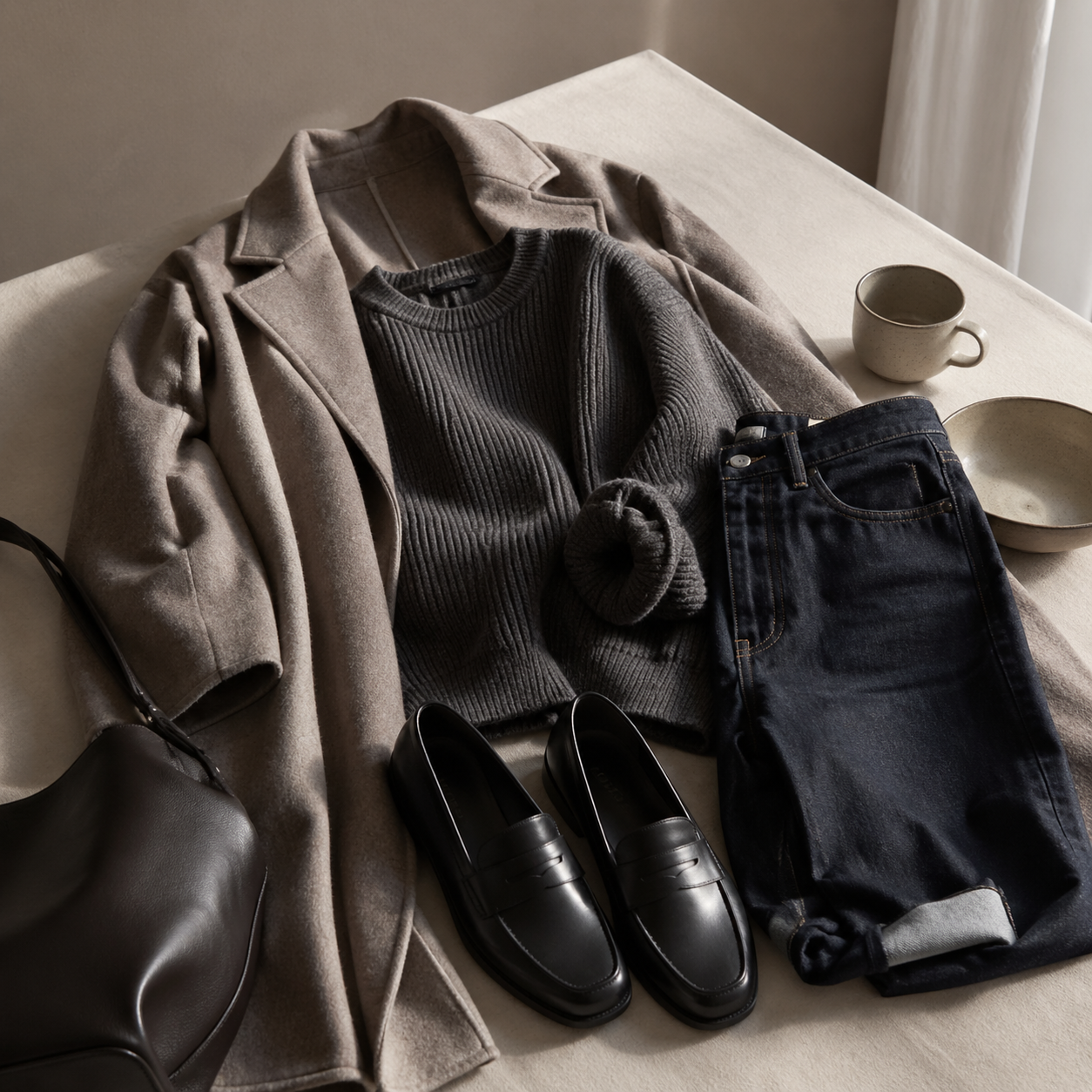
Dark denim is the cleanest anchor for a weekend uniform because it reads pulled together without asking much of the wearer. A deep indigo, black-blue, or washed charcoal pair will move from errands to dinner more convincingly than pale blue denim, especially in cities where pavements are wet, buses are crowded, and caf茅s are warmly lit rather than sun-drenched. The best cut is neither sprayed-on nor baggy: look for a straight or softly tapered leg with enough room at the thigh to sit comfortably, then a hem that meets the top of a loafer without pooling.
Fabric weight matters. A rigid denim around the midweight mark will soften with repeat wear and hold its line better than very stretchy cloth, which can bag at the knee by mid-afternoon. A small amount of stretch is useful if you walk a lot or cycle short distances, but avoid anything that feels slick or overly elastic. Wash dark denim inside out, cold, and infrequently; air it between wears and spot-clean when possible. Indigo can transfer onto pale knitwear, canvas bags, or light car seats, so give new denim a few home wears before pairing it with anything cream.
Let texture do the work
Textured knitwear gives the outfit its softness and depth. A plain fine-gauge jumper can look a little office-adjacent with dark denim, while a rib, waffle, moss stitch, or compact cable brings enough surface interest to make the simplest outfit feel considered. For changeable weather across the UK, northern Europe, coastal Canada, or southern Australia in cooler months, a medium-weight knit is the most useful layer: warm under a coat, but not so heavy that you overheat in a bakery queue or on a tram.
Fit should sit close at the shoulder but not cling through the body. A slightly boxy crew neck works well with straight denim, while a half-zip or short cardigan can be practical if your day moves between cold pavements and heated interiors. Wool is resilient and resists odour, but it needs rest; do not wear the same knit hard for three days in a row and expect it to keep its shape. Merino is smooth and easy under coats, lambswool feels warmer and drier, and cotton blends suit milder climates but may stretch at the cuff. Use a knit comb gently, dry flat after washing, and fold rather than hang.
Choose loafers for real walking
Loafers sharpen denim quickly, but the pair has to match the day rather than an imagined photograph of it. For errands, coffee, and dinner, a low-profile loafer in leather, suede, or a polished grain can bridge casual and smart without looking as though you changed shoes at six. A rounder toe is easier with relaxed coats and knitwear than a very narrow one, which can make denim look top-heavy. Soles are the quiet test: leather soles are elegant but slippery on wet stone, while rubber or a discreet grip sole is often the wiser choice in rainy cities.
Comfort begins before the first long walk. Make sure the heel does not lift more than slightly, the vamp does not press across the top of the foot, and there is enough width for socks if you live somewhere with a proper winter. Bare ankles can look crisp in warm weather, but in a damp November or a breezy June evening, a fine ribbed sock in navy, charcoal, brown, or deep green is both more practical and more finished. Let wet loafers dry naturally away from direct heat, use shoe trees if you have them, and brush suede once fully dry rather than while marked with moisture.
The relaxed coat sets the tone
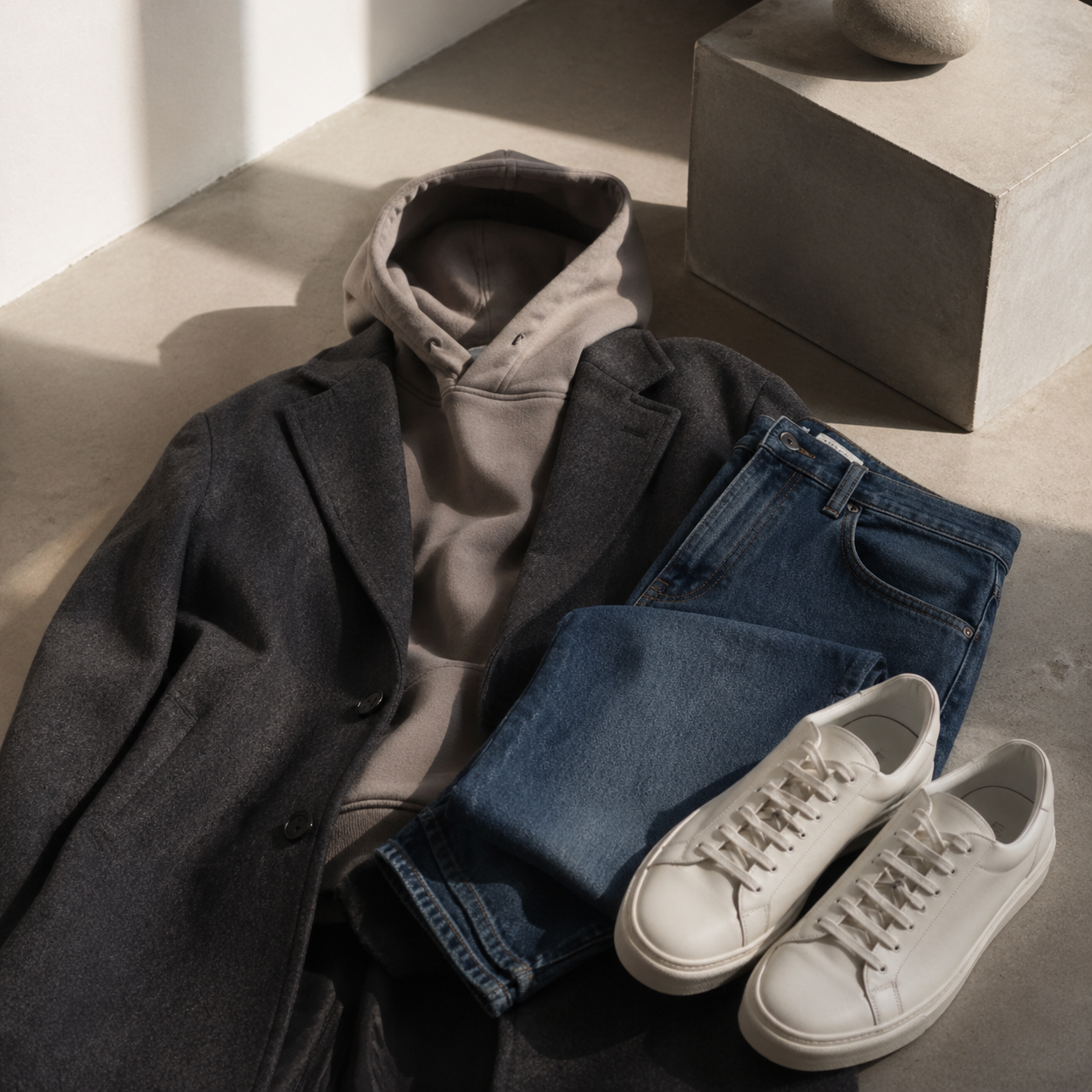
A relaxed coat is the piece that decides whether the weekend uniform feels modern or merely practical. The right one has ease through the shoulder, enough length to cover the knit, and a clean line that does not collapse into sloppiness. A soft wool coat, unstructured car coat, brushed cotton mac, or lightly padded coat can all work, depending on climate. The key is proportion: with straight dark denim, a coat ending between mid-thigh and just above the knee usually looks balanced. Cropped jackets can work, but they tend to make the outfit feel more casual and less dinner-ready.
Consider the weather you actually live with. In London, Dublin, Vancouver, Melbourne, Copenhagen, or Glasgow, a coat that tolerates drizzle is often more useful than one that only looks good dry. Wool handles cold beautifully but needs brushing and airing; if it soaks through, let it dry slowly on a broad hanger. A coated cotton or dense twill is better for damp, windy days, though it may need a warmer knit beneath. Check pockets before you buy: a weekend coat should hold gloves, keys, a phone, and perhaps a paperback without distorting the front. That small practical point affects how often you reach for it.
Make it last all day
The sharpened weekend uniform works because it accepts repetition. You might wear the same dark denim and loafers both Saturday and Sunday, changing only the knit or coat according to weather. That is not a compromise; it is the point. The outfit has enough structure for a dinner table but enough comfort for a hardware shop, a market, or a long walk between plans. Keep the palette grounded: ink, charcoal, bitter chocolate, oatmeal, forest, tobacco, and soft grey all combine easily without drifting into matchy dressing. If you want contrast, use it sparingly through a sock, scarf, or shirt collar visible under the knit.
The final check is movement. Sit down before leaving. Reach into the coat pocket. Walk a few blocks. If the jeans pinch, the knit rides up, the coat sleeve catches, or the loafers rub, the outfit is not yet doing its job. Good casual style is built on these unglamorous decisions. Pressed denim is unnecessary, but a clean hem matters. A brushed coat looks fresher than a linted one. Knitwear with rested fibres looks more expensive than knitwear worn to exhaustion. Sharpening the weekend uniform is less about dressing up and more about removing the small distractions that make clothes feel careless.