The softer structure
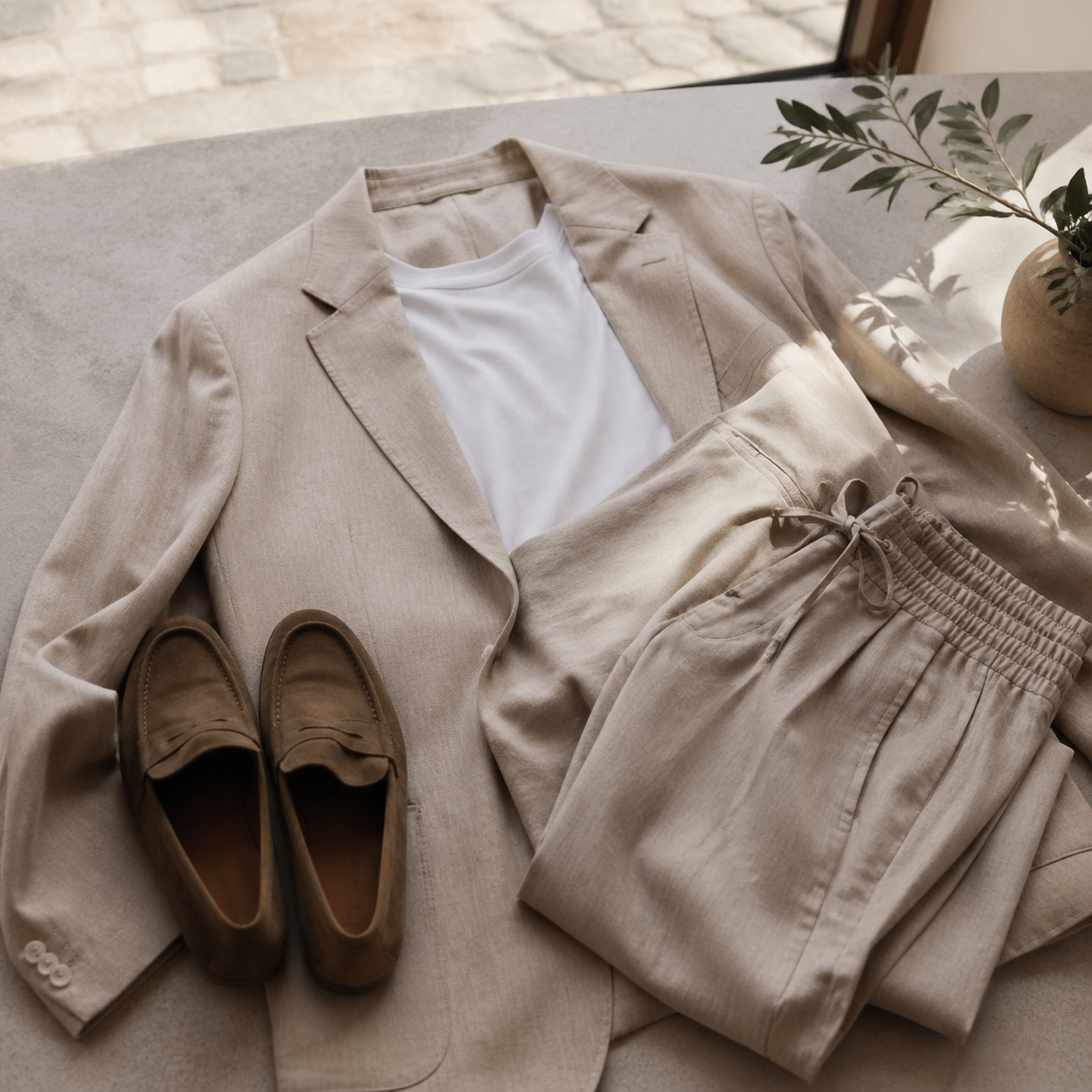
A true weekend blazer begins with construction. Unlike a sharper office jacket, it should not rely on heavy padding, rigid canvassing, or a pressed military line through the shoulder. Look for an unstructured blazer with a natural shoulder, a lighter chest, and enough drape to move with the body. The point is not sloppiness; it is relaxed control. When the jacket is right, it sits cleanly from the collar, skims the torso, and leaves room for a tee or fine knit without pulling at the button.
Fabric does much of the work. Cotton twill, garment-dyed cotton, linen blends, wool hopsack, soft corduroy, and brushed wool all make sense depending on climate. In the UK, northern Europe, and Canada, a wool blend or sturdier cotton can carry you through cool spring and early autumn days. In Australia or southern Europe, a linen-cotton blend or airy hopsack will be more useful. Avoid anything too shiny or corporate-looking. A weekend blazer should have a matte surface, a bit of texture, and enough resilience that minor creasing reads as life, not neglect.
Denim changes the tone
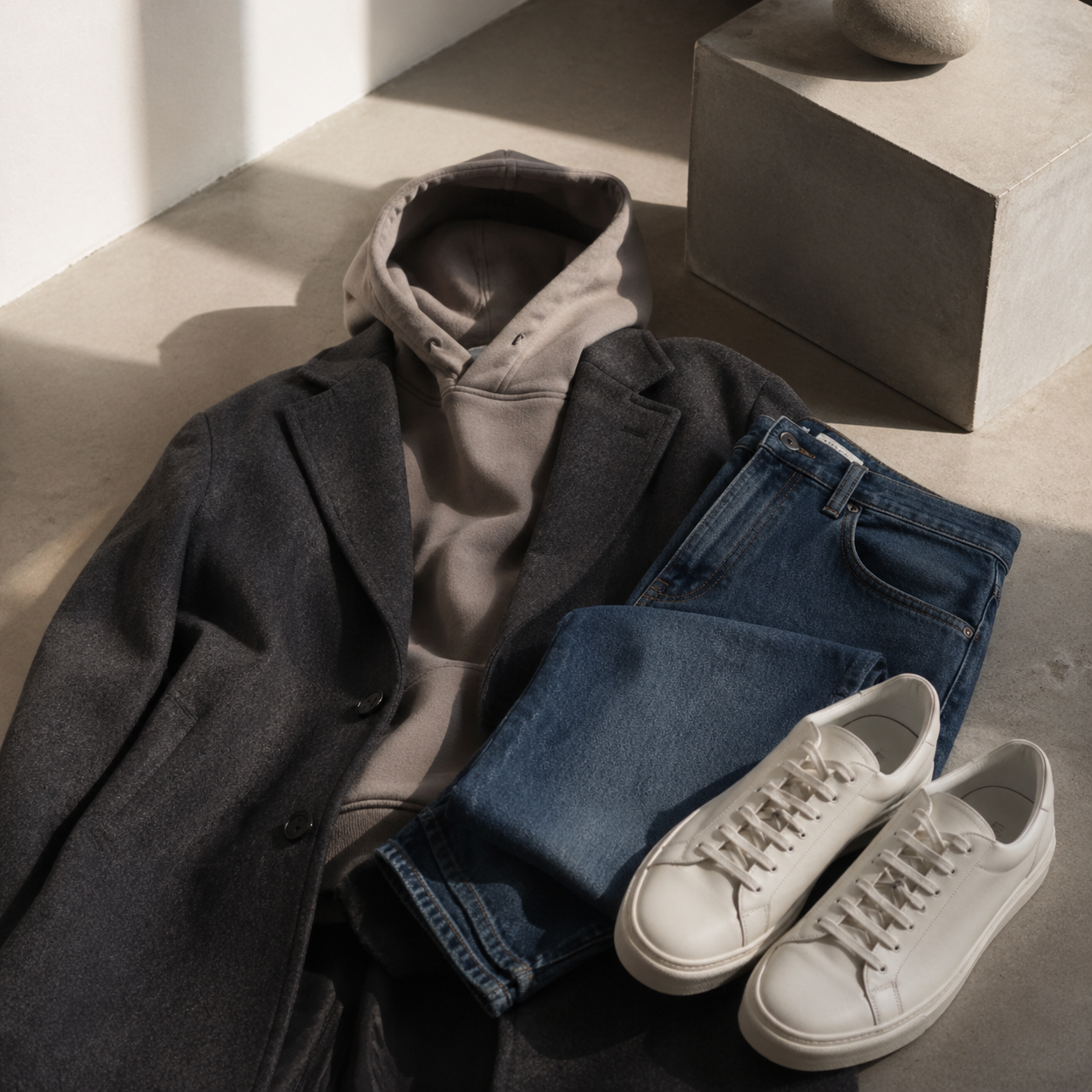
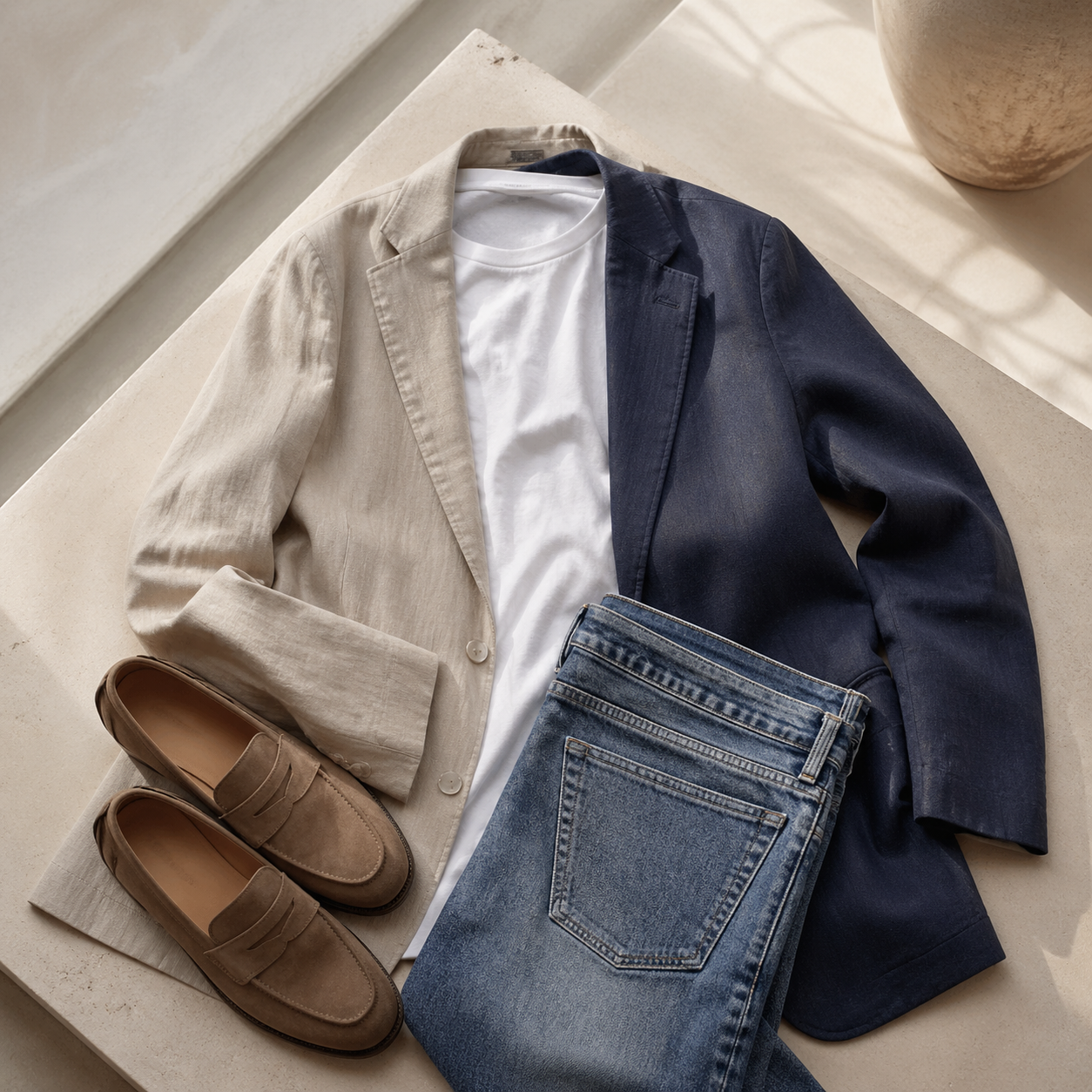
Denim is the simplest way to pull a blazer away from the office. The most reliable pairing is straight or gently tapered jeans in mid-blue, washed black, or deep indigo. Very skinny denim can make the jacket look top-heavy, while very wide denim needs a more deliberate eye for proportion. The blazer should either end around the upper hip for a neater line or fall slightly longer if the denim is straight and substantial. If the hem of the jacket fights with the pocket placement of the jeans, the outfit will feel awkward no matter how good the pieces are separately.
The wash matters. A heavily distressed jean can undercut the quiet polish of the blazer, especially in restaurants, casual workplaces, or travel settings where you want to look composed. A softer faded blue feels relaxed without becoming careless. Raw or dark denim looks smarter but can transfer dye onto pale jackets, particularly in damp weather or on long journeys. If you wear dark denim with a light cotton or linen blazer, wash the jeans first and be cautious with cream upholstery, pale tote bags, and sudden rain.
The tee underneath
The cotton tee is where many weekend blazer outfits succeed or fail. A thin, sagging tee makes even a good jacket look tired; a stiff, boxy one can bunch under the lapels. Choose a mid-weight cotton with a clean neckline and enough opacity that it holds its own. Crew necks are the safest option because they frame the lapel neatly, while a shallow V-neck can work if the overall mood is relaxed rather than dressy. White is classic, but off-white, grey marl, navy, faded black, and soft olive often feel easier to repeat.
Fit is more important than novelty. The shoulder seam of the tee should sit close to your natural shoulder, and the sleeve should not fight the jacket sleeve. If the tee is long, tuck it loosely or choose a cleaner hem that finishes around the high hip. In warmer weather, a breathable cotton tee helps the blazer avoid feeling like a costume. In cooler months, the same formula can shift to a fine cotton jersey or lightweight merino layer, but the principle remains: the layer under the blazer should be quiet, clean, and comfortable against the skin.
Loafers and the ground line
Loafers give the weekend blazer its final note of casual polish. They are smarter than trainers but less formal than lace-up shoes, which is exactly the balance this outfit needs. Penny loafers, soft suede loafers, and flexible leather styles all work, provided they suit the fabric weight of the jacket and denim. A heavy lug sole can be useful in wet British or Canadian weather, but it should not overwhelm a light linen blazer. Conversely, a very delicate loafer can look underpowered with thick denim and a brushed wool jacket.
The trouser break deserves attention. Jeans that puddle over loafers can make the whole look tired, while a hem that is too cropped may feel fussy in cooler climates. A slight break or a clean full-length hem is usually best. Socks depend on season and setting: fine ribbed socks in navy, charcoal, brown, or ecru are practical for cooler days, while no-show socks may suit warm evenings if the shoe is comfortable enough. Bare ankles in cold rain rarely look as effortless as intended.
Care, weather, repeat wear
The best weekend blazer is one you can wear often without treating it like a museum piece. After each wear, hang it on a broad hanger and let it air before returning it to the wardrobe. Brush wool or textured cotton lightly to remove dust and lint. Steam rather than press when possible, especially with linen blends and unstructured jackets, because hard pressing can flatten the softness that makes the piece useful. Dry cleaning should be occasional, not automatic; too much cleaning can strip texture, fade colour, and shorten the life of the cloth.
Weather is the practical test. In drizzle, a darker cotton twill, wool blend, or textured navy jacket is more forgiving than pale linen. On hot days, an unlined or half-lined blazer with open-weave fabric will breathe better, though it will crease more readily. That trade-off is acceptable if the fit is intentional. For repeat wear, choose colours that sit naturally with your existing denim and tees: navy, tobacco, olive, charcoal, soft brown, and washed black are more versatile than they sound. The weekend blazer should not ask for a new wardrobe around it. It should make the clothes you already reach for look a little more settled, a little more adult, and still entirely at ease.