Start with the weather you actually get
Spring rain is rarely one thing. In the UK and much of northern Europe, it can mean fine mist in the morning, a bright lunch hour and a cold downpour on the way home. In Canada, shoulder-season weather can swing from sleet to mild rain within a week. In parts of Australia, a spring shower may be warm, heavy and brief. The best spring rain jacket is chosen with that pattern in mind, not with an idealised forecast.
For most wardrobes, water resistance is more useful than full stormproofing. A heavy waterproof parka can feel oppressive once the temperature rises, especially over knitwear or on public transport. Look for a coat that sheds rain for a commute, a school run, a dog walk or an outdoor lunch, but does not trap so much heat that you immediately want to take it off. If you regularly walk long distances in heavy rain, taped seams and a proper hood matter. If your days are mostly town-based, a dense mac cloth or lightweight shell may be enough.
The practical test is simple: can it cover the outfit you already wear in April or October, depending on your hemisphere? If it only works with leggings and trainers, but your real wardrobe is denim, fine knits, ankle boots and tailored trousers, it will not earn repeat wear. The jacket should belong to your clothes, not sit apart from them as emergency equipment.
The mac is the quiet option
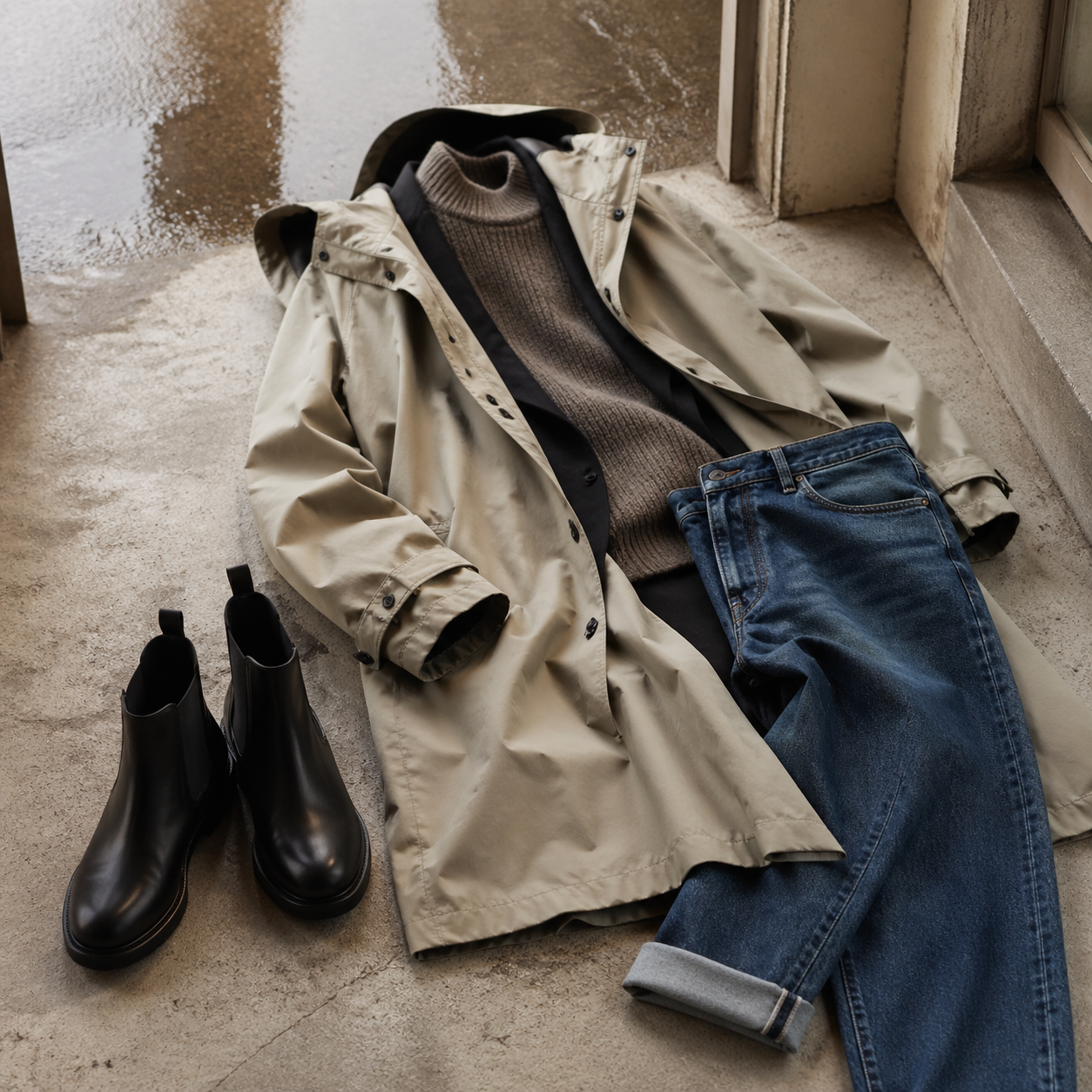
A mac coat remains one of the most useful answers to spring rain because it looks intentional even when the weather is not. The clean front, straight fall and collar give structure without stiffness, which is why a mac works over blue denim, black jeans, a ribbed knit or a simple cotton shirt. It does not need dramatic details. In fact, the plainer it is, the easier it is to wear three or four times a week without feeling as if the coat is dictating the outfit.
Fabric is where the judgement sits. Cotton-rich gabardine has a dry hand and a polished look, but check that it has a water-repellent finish if you need it for rain rather than just wind. A cotton-polyester blend can be more practical, drying faster and creasing less, though very shiny finishes tend to look cheaper and can mark more obviously. If the coat is lined, make sure the lining does not cling to knit sleeves. If it is unlined, it should still have enough weight to hang cleanly rather than collapse around the hips.
Length is crucial. A mid-thigh mac is easy with jeans and boots, but a knee-length version offers better coverage and often looks more grown-up over dresses and wider trousers. The shoulder should be relaxed enough to take a fine jumper, not so oversized that rain runs down a dropped seam and the whole shape looks borrowed. Sleeves that finish just past the wrist bone are ideal; too long, and the coat starts to look careless when wet.
When a shell jacket is the smarter choice
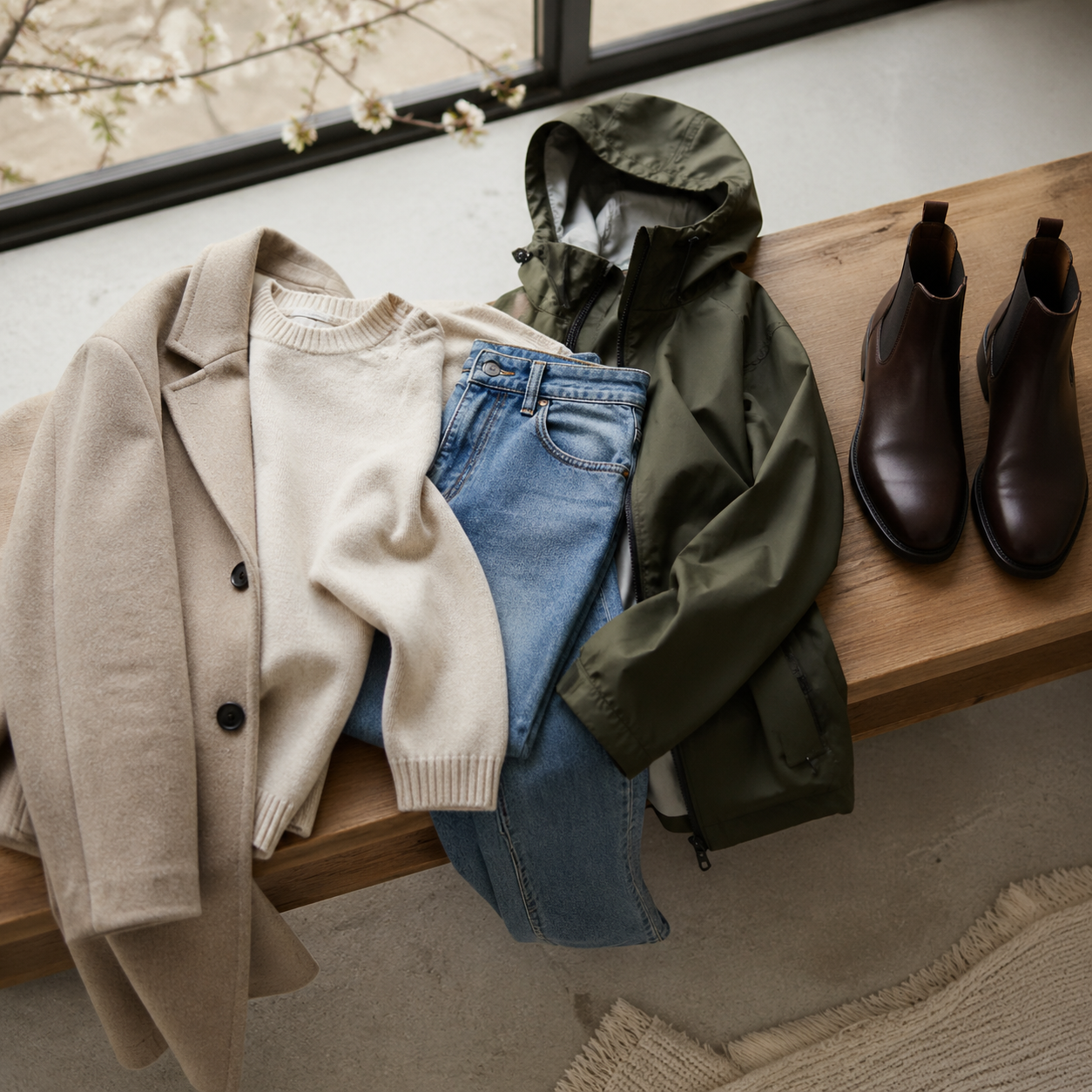
The shell jacket has improved enormously in recent years, but it still needs careful handling if the aim is not to ruin the outfit. The best versions for everyday spring wear are light, matte and relatively pared back, with minimal contrast zips and a hood that sits neatly rather than bunching behind the neck. A shell with a slight A-line or boxy cut can look crisp over straight denim and a crew-neck knit, especially when the hem finishes at the high hip or lower hip rather than cutting across the widest part of the body.
Performance fabric deserves a little attention. A waterproof membrane helps in real rain, but breathability is just as important. If the jacket feels clammy after ten minutes indoors, it will spend most of its life in your bag. Pit zips or discreet vents can be useful, particularly in warmer climates or on days when the weather is wet but not cold. Taped seams are worth considering if you commute on foot or by bike, while a water-repellent finish alone is better suited to short exposures.
The styling trick is to let the shell look deliberate rather than apologetic. Wear it with straight-leg denim, a substantial knit and leather or rubber-soled boots, and the contrast between technical fabric and everyday texture feels modern. Wear it over a delicate blouse with no other casual element, and it may look like the forecast defeated you. Colour matters too: navy, stone, olive, charcoal and soft black usually integrate better than bright outdoor shades, unless your wardrobe already favours strong colour.
Build the outfit underneath
A spring rain jacket works best when the layers underneath are not fighting it. Denim is a reliable anchor because it has enough texture to stand up to both mac coats and shell jackets. Straight and relaxed cuts tend to sit better under rainwear than very bulky wide legs, which can collect water at the hem and look heavy with boots. If you wear cropped denim, make sure the gap between jean and boot is intentional; cold rain on bare ankles rarely feels as chic as it looks in a still photograph.
Knitwear needs the same level of realism. A fine merino, cotton knit or compact rib is easier under a rain jacket than a lofty, hairy jumper, which can bunch at the armhole and hold damp air. In cooler regions, a thin thermal or long-sleeved jersey layer under a knit is often more comfortable than one very thick sweater. The neckline should also work with the coat: a crew neck under a mac collar looks clean, while a half-zip or funnel neck can sit well under a shell, provided the bulk is controlled.
Boots are the finishing point, not an afterthought. Smooth leather with a treated surface, waxed suede used carefully, or rubberised boots with a refined shape all make sense. A lug sole gives grip on wet pavements, station steps and cobbles, but the boot still needs proportion. Slim ankle boots can look sharp with a mac; chunkier boots balance a shorter shell. After wet wear, let boots dry away from direct heat and brush off grit before conditioning. The jacket may keep the outfit dry, but neglected footwear is often what makes a rainy-day look fall apart.
Care, fit and repeat wear
Rainwear fails gradually, so care matters. Water-repellent finishes can wear down through abrasion, washing and city grime. If water stops beading and begins to soak into the surface, the coat may need cleaning and reproofing according to its care label. Avoid fabric softener on technical shells, as it can interfere with performance. Mac coats with cotton content may need a gentler approach: brushing off dried marks, spot cleaning where possible and airing properly before returning them to a wardrobe.
Fit should be assessed with real layers, not over a T-shirt in a changing room. Try the jacket over the knit you wear most, then sit down, reach forward and carry a shoulder bag. The front should close without pulling across the chest or hips. The hood, if present, should move with the head rather than blind the sides of the face. Pockets should be deep enough for cold hands or a phone, but not so bulky that they distort the line when used.
The most dependable spring rain jacket is the one that remains useful after the novelty has gone. It should work on a mild wet Monday, a windy weekend, a travel day and an evening when rain is likely but not guaranteed. A mac coat gives polish and coverage; a shell jacket gives lightness and weather confidence. Both can protect the outfit rather than obscure it. The decision is not about choosing between style and practicality, but about insisting that a spring rain jacket does its job without asking the rest of the wardrobe to disappear.