Start with the skirt line
The midi skirt is often the most useful starting point for cooler days because it gives coverage without the commitment of a full-length hem. For repeat wear, the strongest length usually sits somewhere between the lower calf and just above the ankle, depending on height and boot shape. Too close to the widest part of the calf and it can shorten the leg; too long in wet weather and it becomes impractical at crossings, on station steps, or when getting in and out of cars.
Fabric changes the whole mood of the outfit. A fluid viscose blend or wool-mix crepe falls softly and works well with a closer ribbed knit. A heavier twill, brushed cotton, corduroy, or compact wool can take a chunkier jumper, provided the waistband does not become bulky. Pleats need particular judgement: fine pleats look graceful under a long coat, but they can collapse if sat on all day or if stored badly. A-line and bias-cut midis are easier for weekends because they move well, layer well over tights, and do not demand constant adjustment.
Check the waistband before anything else. If it twists, digs in, or creates a ridge under knitwear, the outfit will not feel good after the first hour. A flat waistband or clean elasticated back is often more comfortable than a stiff, fully tailored band, especially for lunch plans or travel. For colder climates in Canada and northern Europe, a lined skirt can help cut wind; in milder parts of the UK or Australia, an unlined wool blend may be enough when worn with opaque tights.
Match knit weight to skirt movement
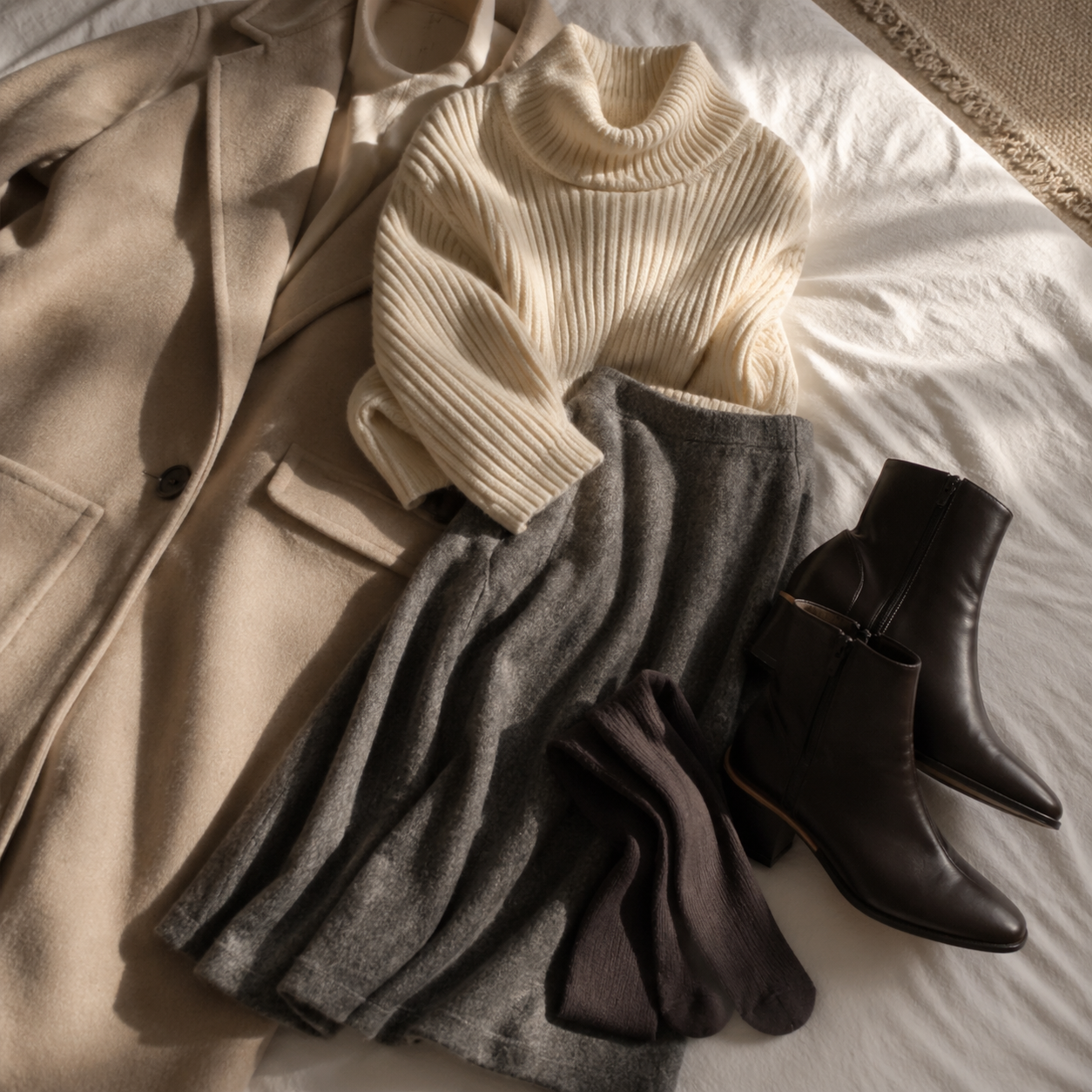
Ribbed knits are excellent with skirts because they add texture without shouting. Fine ribbing gives a close, clean line and is useful when the skirt has volume, pleats, or a gathered waist. A denser rib, especially in wool, cotton-wool, or merino blends, gives more structure and can hold its shape under a coat. Very soft, fluffy yarns look appealing, but they can shed onto darker skirts and pill quickly where a bag strap or coat sleeve rubs, so they need more care than they appear to.
Proportion is the real work. With a straight or bias midi, a slightly relaxed knit that finishes at the high hip can look effortless, but it should not balloon over the skirt. With an A-line or pleated skirt, a neater jumper, half-tuck, or short cardigan keeps the waist visible. If the knit is long, it helps to choose a skirt with less bulk underneath, otherwise the middle of the outfit becomes heavy. A front tuck works best with pliable ribbed knits; thick jumpers are better left untucked or folded under at the hem for a cleaner break.
Sleeve length also matters. A long, generous sleeve can look considered when the body of the knit is neat, but if the jumper is wide through the torso and the sleeves are oversized, the skirt often disappears. On cool weekends, when coats come on and off, a knit that sits comfortably under outerwear is worth more than one that only looks good indoors. Raise your arms, sit down, and try the coat over it before deciding the outfit works.
Use boots and tights to finish the vertical line
Boots are what turn a skirt and knit into a practical cold-weather outfit. The most forgiving pairing is a midi skirt with boots that rise under the hem, leaving no bare gap for wind. Knee-high boots work particularly well with A-line, straight, and softly flared skirts. Ankle boots can be just as good, but the height of the shaft and the colour of the tights become more important. If there is a visible break between hem, tight, and boot, keep the colours close to avoid chopping the leg into sections.
Opaque tights in black, charcoal, navy, chocolate, or deep burgundy are the dependable option for wet or windy weekends. Sheer tights can look refined but are less forgiving in cold weather and more vulnerable to snags from boots, rough benches, or woven skirts. In Canada and northern Europe, thermal or fleece-lined tights may be welcome, though they can create static under lighter fabrics. A slip, anti-static spray used sparingly, or choosing a skirt with more weight can prevent cling. In Australia or milder UK weather, a denser 40 to 80 denier tight may be enough.
Heel height should suit the day rather than the fantasy of the outfit. A low block heel, lug sole, or flat riding-style boot gives stability on damp pavements, cobbles, tram stops, and muddy car parks. Very slim heels can look elegant with a bias skirt, but they are not always the best choice for a long weekend walk. If the boot has a strong sole, let the skirt be slightly cleaner in shape; if the boot is sleek, the skirt can carry more movement.
Let the coat control the silhouette
A long coat is the piece that makes this combination feel intentional. Ideally, the coat should either cover most of the skirt or finish clearly above the skirt hem. The awkward point is a coat that ends at the same place as a full midi, creating two competing horizontal lines around the calf. A coat that falls to just below the knee works with many midi lengths, while a longer coat, mid-calf or lower, gives the most warmth and visual calm. In rain-prone places, avoid hems that sweep too close to the ground.
Wool and wool-blend coats offer warmth and structure, but they need space for knitwear underneath. If the shoulder pulls, the sleeve lining grips, or the coat will not button without compressing the jumper, the outfit will feel restrictive. A slightly dropped shoulder can be useful, but too much volume can overwhelm a skirt unless the rest of the outfit is narrow. Belts are useful for shape, especially with straight skirts, but they can look bulky over a thick ribbed knit. Sometimes leaving the coat open over a visible column of knit, skirt, tights, and boots is neater.
Care is part of proportion because worn fabric changes shape. Brush wool coats to remove lint from knits, hang them on broad hangers, and let damp hems dry fully before storing. Ribbed knits should be folded rather than hung, as gravity can stretch the shoulders and length. Skirts with pleats need room in the wardrobe; crushing them between coats and denim will make the outfit look tired before it is even worn.
Build outfits you can repeat
The best skirt knit outfit for cool weekends is one you can wear more than once without feeling as if it belongs to a single occasion. A charcoal ribbed knit with a black wool midi, opaque tights, black boots, and a navy or grey long coat is quiet but highly useful. A cream knit with a brown corduroy or brushed cotton skirt feels softer for daytime, especially with chocolate boots and warm-toned tights. A fine navy rib with a dark green or burgundy skirt can be polished enough for dinner while still comfortable for travel.
Colour does not need to be complicated. In cooler light, closely related tones often look richer than high contrast: stone with oatmeal, charcoal with black, navy with ink, brown with olive. If the skirt has print or texture, keep the knit plain and let the ribbing provide interest. If the knit is textured or marled, choose a calmer skirt. This restraint helps the outfit survive coat removal, indoor heating, and different weekend settings without looking overworked.
Before leaving, do a practical check. Can you sit without the skirt riding too high? Does the knit bunch under the coat? Do the boots rub against the hem? Will the tights cope with the temperature? These small questions are where good style lives. For cool weekends, the aim is not perfection but ease: warm enough outside, comfortable inside, and composed enough that you are not thinking about your clothes every few minutes.