Why moss reads neutral
The most wearable moss greens sit between olive, forest, and grey. They are not jewel tones, and they are not khaki in the dry, beige sense. They carry enough brown to work with denim, enough grey to sit beside black, and enough green to soften the face more gently than stark navy can in late autumn light. This is why a moss loden coat often feels easier than a brighter coloured coat: it has presence, but it does not dominate the room.
Texture is the deciding factor. Dense wool, felted loden, ribbed knits, pebbled leather, and washed cotton all break up the colour, giving it shadows and variation. That variation matters because moss green can look flat in thin synthetics or overly smooth jersey. On a screen, two shades may appear nearly identical; in daylight, the one with a nap, slub, or grain will usually look more expensive and easier to repeat.
For quiet colour accents, treat moss as you would a restrained brown. It is useful in the same places: outerwear, knitwear, belts, boots, bags, and overshirts. If you are building moss green outfits rather than buying a single novelty piece, begin with materials you already trust in your climate. In damp British or Canadian autumns, wool and leather earn their place. In milder Australian or southern European winters, lighter knits and denim layers may do the same work without feeling heavy.
Start with outerwear
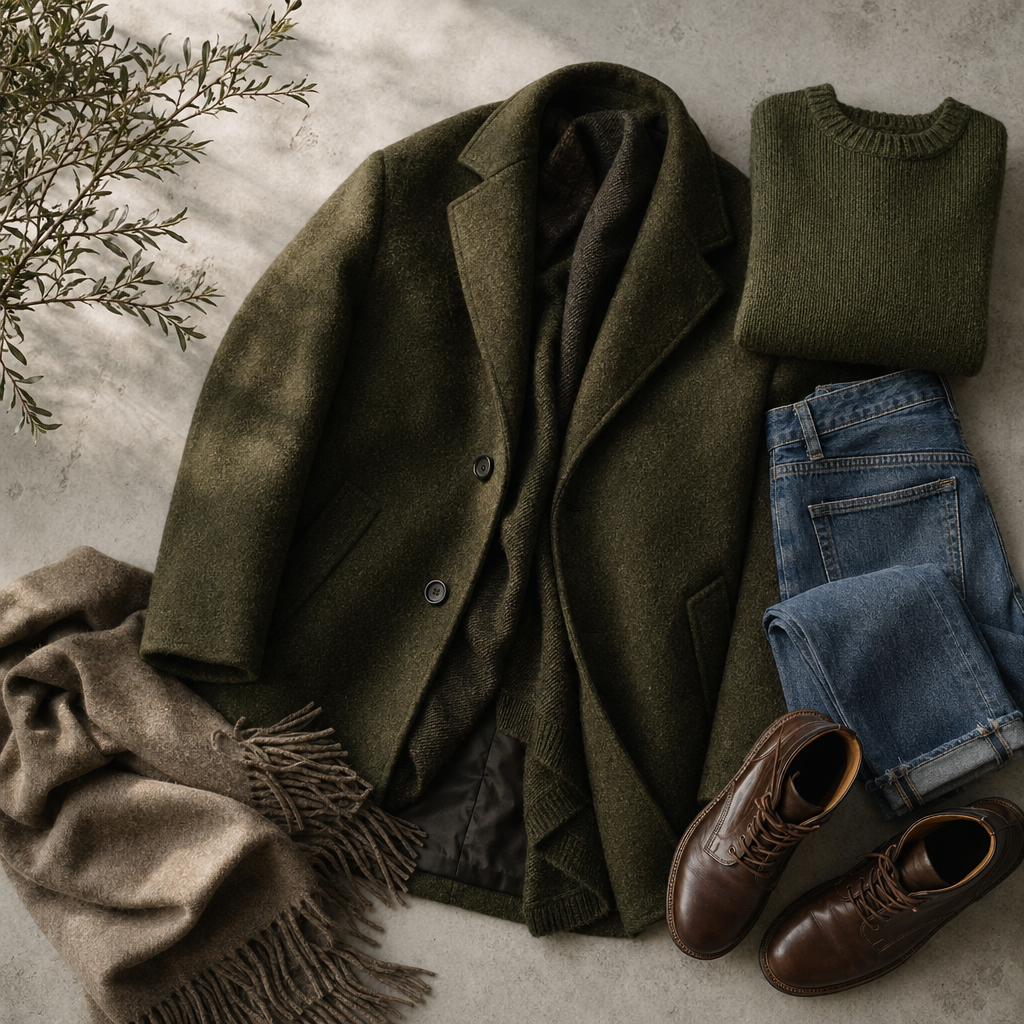
A loden coat is one of the clearest ways to understand moss green as a neutral. Traditional loden cloth is dense, woollen, and slightly weather-resistant because of its fulled surface. It will not replace proper rainwear in a downpour, but it handles mist, wind, and cold pavements with a composure that thinner coats rarely manage. In moss green, it also avoids the severity that black outerwear can bring to pale winter skin and the formality of dark navy.
Proportion is important. A moss coat looks most modern when it has enough room for a medium-weight knit underneath, but not so much volume that the shoulders collapse. Look for a sleeve that reaches the wrist bone, a hem that clears the top of tall boots if the coat is long, and pockets that sit where your hands naturally fall. If the coat is knee-length, it will work with straight denim, wide wool trousers, and skirts. If it is cropped, it needs a more deliberate bottom half, such as high-rise denim or a long column of wool.
Care is part of the appeal. A good wool coat does not need constant cleaning; in fact, over-cleaning can shorten its life. Air it after wear, brush off lint and dried marks with a clothes brush, and let damp wool dry away from direct heat. Moss hides minor city dust better than cream and shows less lint than black, which makes it practical for repeat wear during weeks when the weather is changeable and mornings are short.
Knits with depth
Olive knits are the softer route into moss green outfits. They bring colour close to the face without the commitment of a coat, and they are especially useful with denim, grey wool, tobacco leather, and cream shirts. The shade should be judged in natural light. If it turns neon beside your skin, it is too clear; if it looks muddy in a way that drains you, try a version with more grey or more yellow-brown. Moss is not one fixed colour, and the best one is the one that settles well with what you already wear.
The knit structure changes the mood. A fine merino crew neck in moss can replace a navy jumper under a blazer or coat. A ribbed cardigan feels more relaxed and practical for home-working days, train travel, or cool evenings when the temperature drops after sunset. A chunky wool knit is appealing, but it needs balance: wear it with straight or tapered denim rather than equally bulky trousers, unless you want a deliberately oversized silhouette.
Comfort and maintenance deserve honest attention. Pure wool is warm and resilient, but not every neck tolerates it. If you find high collars itchy, choose a crew neck with a cotton shirt underneath, or a softer blend where the wool still provides warmth and shape. Fold knits rather than hanging them, depill gently with a fabric comb, and wash sparingly according to the care label. A moss knit that keeps its shape will be worn far more often than a dramatic piece that bags at the elbows after two afternoons.
Denim, wool, leather
Moss green works particularly well because it meets familiar textures halfway. With denim, it feels grounded rather than precious. Mid-blue jeans make the green look casual and outdoorsy; dark indigo sharpens it; washed black gives it a city edge without turning the whole outfit severe. The safest denim shapes are straight, relaxed straight, or a gentle barrel leg, depending on your proportions. Very skinny denim can make a substantial loden coat look top-heavy, while extremely wide denim may need a shorter jacket or tucked knit to keep the line clear.
Wool trousers are the quieter companion. Grey flannel and moss green are a natural pairing because both have softness and depth. Brown wool, especially in a herringbone or subtle twill, brings warmth. If you wear black often, moss can still work, but choose a shade with a cooler, greyer cast and repeat the darkness elsewhere, perhaps with black leather shoes or a dark belt. This keeps the green from looking like an afterthought.
Leather adds the useful contrast. A moss knit with brown leather boots and a belt feels settled, while black leather makes a moss coat more urban. Green leather can be beautiful in small doses, especially as a glove, belt, or bag, but it should not be too glossy if you want the colour to read neutral. Pebbled or matte leather is kinder to moss. It also wears in more gracefully, showing creases as character rather than damage, provided it is conditioned occasionally and kept away from radiator heat after rain.
How to repeat it
The trick with moss green is not to over-style it. One substantial moss piece is usually enough: a coat, a cardigan, a wool skirt, a leather bag, or a pair of boots. If you repeat the shade, vary the texture so the outfit does not look matched in a forced way. A moss wool coat with an olive knit can work when the knit is finer or slightly warmer in tone. A moss leather bag beside a loden coat is better when the leather is darker or more brown, allowing the eye to read the combination as layered rather than uniform.
For everyday wear, build around the weather. On a wet 8-degree morning, a moss loden coat over a merino knit, straight denim, wool socks, and leather ankle boots is practical and polished without demanding attention. For a dry but cold day, swap denim for grey wool trousers and add a scarf in oatmeal, charcoal, or muted blue. In milder climates, an olive cotton knit or overshirt with ecru denim and leather sandals or loafers gives the same quiet colour effect without winter weight.
There are caveats. Moss green can look dull beside very crisp pastels, and it may fight with bright white unless the fabric has enough richness. Cream, stone, faded blue, charcoal, and tobacco are usually easier. Be careful with too many military references at once: loden, cargo pockets, heavy boots, and khaki trousers can tip into costume. The strongest moss green outfits are the ones that feel useful first. When the cloth has depth, the fit allows movement, and the colour sits naturally with wool, denim, and leather, moss becomes less of an accent and more of a dependable base.