Start with the weave
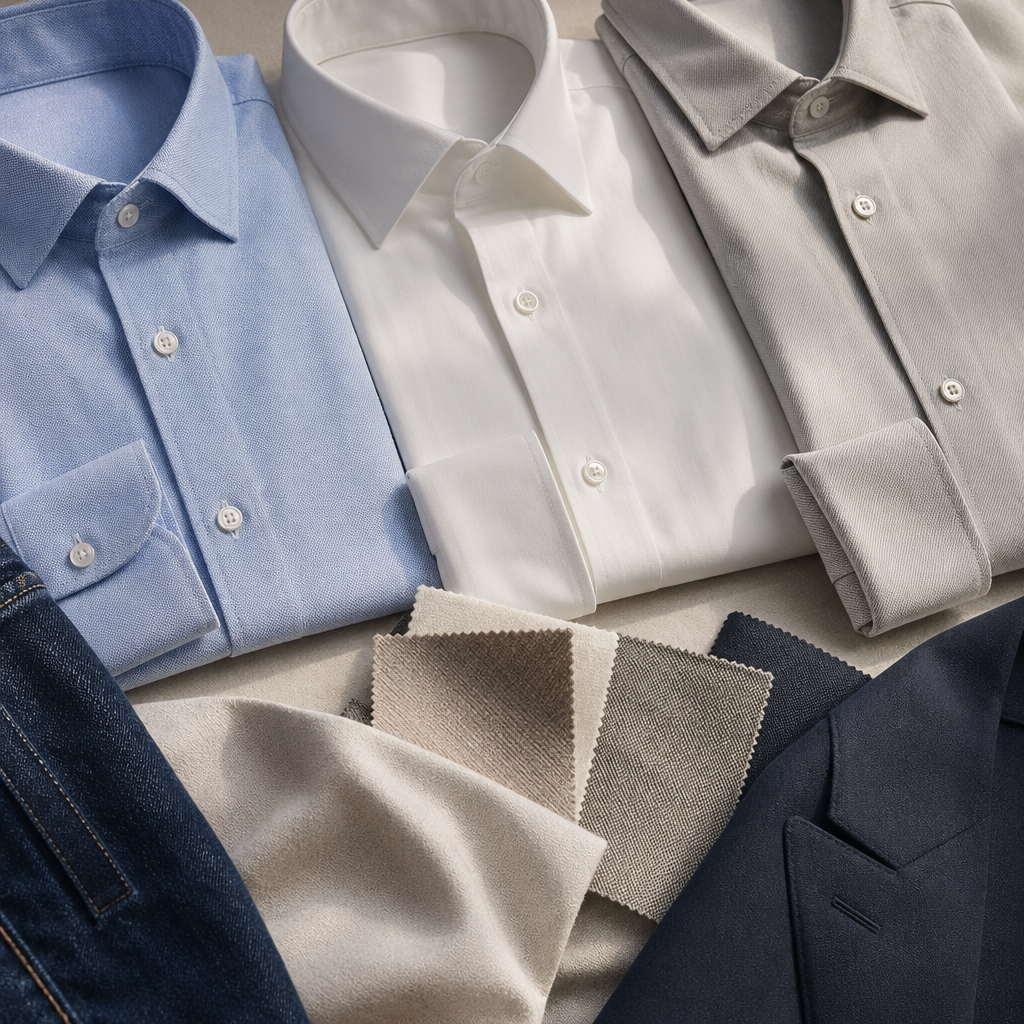
Most shirt decisions begin with colour or collar, but fabric is what determines whether the shirt feels crisp at 8am and tired by 3pm. Oxford cloth is a basket weave, usually with a slightly raised, textured surface and a little more body than smoother dress shirtings. Poplin is a plain weave with a fine, tight structure; it feels cool, flat and clean against the skin. Twill is woven with a diagonal rib, which gives it a softer hand, a subtle sheen and better resistance to sharp creasing. Denim, when used for shirts rather than jeans, is typically lighter than trouser denim but still carries a denser, more casual character.
These differences are not academic. A poplin shirt in pale blue can look precise under tailoring, but it may show every fold after a commute or long sit-down lunch. An oxford shirt can be worn hard, washed often and still look deliberate when the cloth softens. Twill sits between polish and comfort, particularly useful for travel or long working days. Denim is the least formal of the group, but in a refined cut it can add useful weight and texture to wool trousers, cotton chinos or an unstructured jacket.
Oxford cloth: reliable, not rough
Oxford cloth is often described as casual, but that can undersell it. A well-cut oxford shirt has a practical ease that suits year-round shirting, especially in climates where the day begins cool and ends warm. It has enough body to sit cleanly over a T-shirt in spring or under a jumper in winter, and it does not collapse the moment you roll the sleeves. In the UK, Canada and northern Europe, it is one of the most useful fabrics for repeated wear because it tolerates layering, washing and imperfect ironing better than finer cloths.
The caveat is thickness. Some oxford shirts are light and supple; others are dense enough to feel warm indoors. For summer, look for a softer, lighter oxford with a slightly open hand rather than a stiff, heavy version. The collar matters too. Button-down collars suit oxford cloth because the fabric supports the roll without looking fussy. If wearing one with tailoring, keep the proportions generous enough to avoid pulling at the chest, but not so loose that the hem bunches under a jacket. Oxford is forgiving, not shapeless.
Care is straightforward. Wash cool or warm according to the label, avoid over-drying, and press while the cloth is still faintly damp if you want a sharper finish. Many oxford shirts look better with age, as the surface breaks in and the collar softens. That does not mean neglect: frayed cuffs and greyed whites still read as tired. Choose medium blue, university stripe, ecru or soft pink if you want shades that forgive repeat wear more gracefully than stark white.
Poplin: crisp, cool, unforgiving
Poplin is the shirt fabric for clarity. It has a smooth, flat surface that makes colours look clean and collars look exact. Under a tailored jacket, especially a sharper wool suit or a neat blazer, poplin creates the most formal impression of the fabrics here. It is also one of the better choices for warm weather because it is usually lightweight and cool to the touch. In southern Europe or an Australian summer office, a fine poplin shirt can feel far more comfortable than a dense oxford or twill.
The trade-off is visibility. Poplin shows creases, tension and, in lighter colours, whatever sits beneath it. If the shirt pulls at the buttons, the fabric will announce it. If the armhole is too low, the body will shift every time you reach forward. If you dislike ironing, poplin may test your patience. It rewards a good fit: enough room through the chest and upper back, a sleeve that does not strain at the elbow, and a collar that sits close without pinching. Very slim poplin shirts often look neat on the hanger and uncomfortable in motion.
For year-round use, poplin is best as the smart layer rather than the only shirt you own. White and pale blue are the obvious choices, but fine stripes can disguise small creases more effectively. A slightly heavier poplin can work beyond summer, especially beneath knitwear, though it will not have the cosy presence of oxford or twill. Iron from damp where possible, use moderate heat, and pay attention to the placket and cuffs; those areas reveal whether the shirt has been cared for.
Twill: soft polish and better travel manners
Twill is sometimes overlooked because it does not have the collegiate familiarity of oxford or the formal crispness of poplin. Its diagonal weave gives it a fluid, slightly weightier drape, which can be very flattering when the cut is right. It tends to resist creasing better than poplin, making it useful for flights, train days, conferences, long commutes and any setting where a shirt has to remain presentable after hours of sitting. It also feels softer against the skin, a point worth considering for those who find crisp cottons abrasive by the end of the day.
There are several moods within twill. A fine twill in white or blue can be office-appropriate and sits well with tailoring. A heavier twill feels more relaxed, almost overshirt-adjacent, and works with denim, cords or robust wool trousers. Because twill can have a faint sheen, it is worth being selective. Too much shine can make a shirt look synthetic even when it is cotton. A matte or gently lustrous twill usually has more mileage across work and weekends.
Fit should respect the fabric鈥檚 drape. Twill looks best when it skims rather than clings, with enough space for the diagonal weave to fall cleanly. It can be tucked into tailored trousers, but heavier versions may create bulk at the waistband. If you plan to wear twill under a jacket, test the sleeve and shoulder movement; the cloth鈥檚 comfort should not be cancelled out by a tight cut. For care, it is generally low-drama: wash inside out for darker shades, smooth the seams before drying, and press the collar and cuffs even if you leave the body lightly relaxed.
Denim shirts and tailoring
A denim shirt is not a substitute for a dress shirt, but it can be one of the most useful pieces in a year-round wardrobe. Lightweight denim brings texture without the stiffness of a jacket, and it pairs naturally with tailoring that has some ease: unstructured blazers, flannel trousers, tweed, cotton suits and softly cut wool. The contrast is important. A denim shirt under very sharp formal tailoring can look forced, while a soft-shouldered jacket gives the fabric room to make sense.
Colour and weight do most of the work. Mid-blue denim is the most adaptable because it lightens with wear and sits well with navy, grey, brown, olive and cream. Dark indigo feels smarter at first but can transfer dye, particularly onto pale trousers, jackets or bags, so wash separately and be cautious in wet weather. Very pale denim is relaxed and summery, but it can look flat if the rest of the outfit is equally washed out. For proportion, avoid heavy western-style detailing if the aim is to wear the shirt with tailoring; clean pockets, a neat collar and a moderate hem length will travel further.
The best shirt wardrobe usually contains more than one answer. Poplin for heat and sharpness, oxford for dependable daily wear, twill for softness and long days, denim for texture and informal tailoring. Rather than ranking them, judge by climate, laundering habits and how the shirt will be worn for the third, tenth and thirtieth time. A shirt that looks immaculate once but annoys you every wear is not a good choice. The better fabric is the one that fits your life, holds its shape, and still feels right when the weather or the day changes.