Style Gifts That Fit the Person
Style Gifts That Fit the Person is a style gift note for readers weighing size uncertainty, accessories, fabric taste, and personal style clues. The gift decision note explains what to check before buying, who should skip it, and where the purchase can become more work than it first appears.
The human wardrobe is an intensely private infrastructure, built on years of trial, error, and physical self-awareness. When we attempt to gift clothing, we often cross an invisible boundary, imposing our own aesthetic preferences and physical assumptions onto another person's daily routine. The impulse is entirely generous-we see a beautiful wool coat or a sharply tailored shirt and imagine the recipient looking magnificent in it. However, this entirely bypasses the mechanical reality of how garments interact with individual bodies, sensory thresholds, and maintenance habits. Gifting apparel requires guessing a person's dimensions in an industry entirely devoid of standardized sizing, while simultaneously assuming their tolerance for dry cleaning bills and specific fabric textures. A successful style gift does not dictate how someone should present themselves to the world; rather, it offers them high-quality materials, flexible utility, or the financial autonomy to make their own precise wardrobe decisions. Moving away from highly tailored, size-dependent garments toward adaptable accessories, tactile upgrades, and supported shopping experiences transforms a potentially awkward exchange into a genuine act of care.
The Geometry of Fit and the Burden of Returns
The fundamental flaw in gifting tailored clothing lies in the myth of standardized sizing. The apparel industry relies heavily on vanity sizing and proprietary fit models, meaning a medium in a minimalist Scandinavian label will drape entirely differently than a medium from a heritage French house. Eyeballing someone's size is a mathematical gamble that almost always fails at the critical anchor points of a garment: the shoulder seam, the armhole depth, and the rise of the trouser. When you guess incorrectly, you are not just giving a poorly fitting garment; you are inadvertently sending a highly charged message about how you perceive their physical body. A garment that is too tight can trigger immediate body dysmorphia, while one that is drastically too large implies a disconnect in how you view their silhouette.
Beyond the psychological friction, an ill-fitting gift immediately transfers a logistical chore to the recipient. The moment they unwrap a tailored piece that does not fit, they are burdened with the task of returning it. This involves navigating the original retailer's specific return windows, retaining the original packaging, and often standing in line at a post office or courier drop-off. If the gift was purchased from an independent boutique with a strict store-credit-only policy, the recipient is now forced to shop at a store that may not align with their personal style, simply to salvage the value of your gift.
Furthermore, the social theater of receiving clothing often forces the recipient into an uncomfortable performance. They must feign delight, hold the garment up to their chest, and assure you that it is exactly what they wanted, all while mentally calculating how to ask for the gift receipt without causing offense. To remove this friction entirely, the focus must shift away from garments that require precise geometric alignment with the wearer's body. If a piece requires a specific shoulder width, bust measurement, or inseam length to function correctly, it is inherently unsuitable as a surprise gift.
Material Behavior and the Maintenance Tax
Clothing is not merely a visual medium; it is a tactile environment that sits directly against the skin for hours at a time. When you select a garment for someone else, you are making assumptions about their sensory tolerances. A heavy mohair sweater might look incredibly chic on a hanger, but for someone with sensitive skin, it functions as a wearable torture device. Similarly, rigid raw denim requires months of painful breaking in, and non-breathable synthetic blends can cause immediate discomfort in warmer climates. The physical behavior of the material-how it breathes, how it causes friction, and how it reacts to body heat-is just as critical as its silhouette.
Equally important is the maintenance tax associated with different fabrics. Gifting a delicate silk blouse or a structured linen blazer to someone who relies exclusively on a washer-dryer cycle is effectively gifting them a recurring chore. High-maintenance fabrics demand hand-washing, flat drying, steaming, or expensive trips to the dry cleaner. If the recipient's current wardrobe consists of robust, machine-washable cottons and technical fabrics, introducing a garment that requires specialized care disrupts their domestic routine. A gift should never create ongoing labor or financial expense for the person receiving it.
We must also consider how a material ages and integrates into an existing wardrobe ecosystem. A brightly colored, heavily patterned statement piece might catch your eye in a boutique, but it requires the recipient to possess the specific neutral grounding pieces necessary to style it. If the garment does not cleanly slot into their daily rotation, it becomes a museum piece-something admired on the hanger but never actually worn. The most successful material gifts are those that offer a tactile upgrade to their existing routine: a significantly softer version of a basic they already wear, crafted from robust, low-maintenance fibers that do not demand a change in their laundry habits.
Pivoting to Flexible Wearables and Accessories
To bypass the pitfalls of sizing and maintenance entirely, the most elegant solution is to pivot toward flexible wearables and high-utility accessories. These items operate on a one-size-fits-most paradigm, relying on drape, wrap, or adjustable hardware rather than fixed seams. A generously proportioned cashmere wrap, for instance, offers the warmth and luxury of a sweater without requiring any knowledge of the recipient's shoulder measurements. It can be layered over a winter coat, worn on a drafty flight, or used as a blanket in a cold office, adapting entirely to the user's immediate needs.
Accessories such as premium leather gloves, structured canvas totes, or high-quality umbrellas represent the ideal intersection of luxury and utility. These are items that experience heavy daily use, yet people rarely invest in top-tier versions for themselves, making them perfect candidates for gifting. A beautifully crafted leather belt-provided it has ample adjustability or can be easily trimmed by a cobbler-offers a daily tactile pleasure without the anxiety of a tight waistband. When selecting these items, the focus should be entirely on the integrity of the materials and the quality of the construction, rather than trend-driven details.
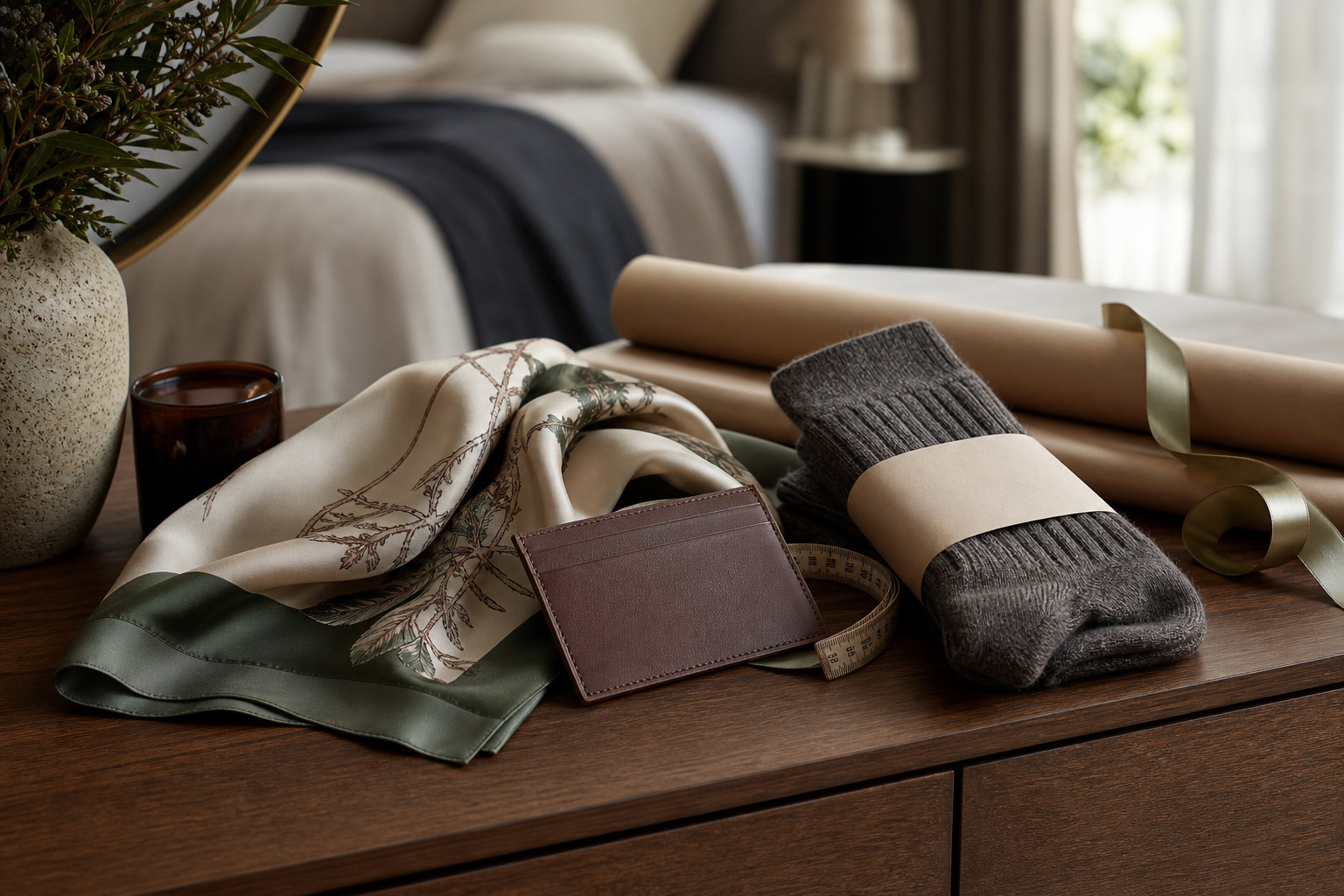
Smaller, foundational upgrades also make exceptional, low-risk gifts. Consider the items that form the invisible baseline of a wardrobe: exceptionally well-made merino wool socks with hand-linked toes, pure silk pillowcases that protect hair and skin, or heavy-gauge sterling silver collar stays. Because these items do not dictate the outward-facing aesthetic of the recipient, they do not impose a specific style identity. Instead, they quietly improve the physical comfort and longevity of the recipient's existing wardrobe, operating as supportive tools rather than demanding centerpieces.
Reframing the Gift Card and the Shopping Experience
The gift card has long suffered from a reputation as a thoughtless, last-minute resort, but when executed with intention, it is the ultimate expression of respect for the recipient's autonomy. The key to making a gift card feel considered is specificity. A voucher for a massive, generic department store feels transactional; a gift card to a highly specific, niche retailer-such as a specialized denim outfitter, a boutique perfumery, or an independent knitwear brand they have previously admired-demonstrates that you pay attention to their tastes while allowing them the final say on fit and color. It provides the financial freedom to invest in a piece they truly want, rather than settling for a compromise.
For a more intimate approach, the gift of clothing can be transformed into a shared experience. Funding a specific purchase and accompanying them on the shopping trip removes all guesswork while creating a memory. Framing the gift as an afternoon dedicated to finding their perfect winter boots or a new tailored jacket shifts the dynamic from a simple handover of goods to a collaborative event. You provide the budget and the company, but they retain complete control over the fitting room process, ensuring the final item is something they will actually wear.
Alternatively, consider gifting services that enhance the wardrobe they already own. A prepaid voucher for a highly regarded local tailor allows the recipient to finally alter the trousers that have been sitting in their closet for months, or to repair the lining of a beloved vintage coat. You might also fund a custom shirt-making session, where the recipient gets to choose their own fabrics, collars, and cuffs while being professionally measured. These service-based gifts focus on longevity, repair, and perfect fit, aligning perfectly with a slower, more intentional approach to personal style.
Storage Realities and the Lifecycle of the Gift
A frequently overlooked aspect of gifting physical items is the spatial demand they place on the recipient's home. Clothing and accessories require dedicated, climate-controlled real estate. Gifting a voluminous puffer jacket, a rigid, wide-brimmed felt hat, or a pair of knee-high leather boots to someone living in a compact urban apartment creates an immediate storage crisis. If the item cannot be easily folded, compressed, or slotted into a standard closet configuration, it becomes a physical obstacle in their daily life. Before purchasing any substantial wearable item, one must realistically assess the recipient's living situation and storage capacity.
When an awkward or ill-fitting gift cannot be easily stored or worn, it enters a prolonged phase of guilt-inducing limbo. The recipient feels obligated to keep the item because it was a gift, yet they resent the space it occupies. They cannot confidently donate or consign it for at least a year, out of fear that you might ask about it or expect to see them wearing it. This creates a toxic lifecycle where the item slowly degrades in a dark corner of a closet, serving no functional purpose other than generating low-level anxiety every time it is moved out of the way.
To ensure a positive long-term lifecycle, gifts should be designed for quiet integration and graceful aging. Items crafted from uncoated, full-grain leather that develops a unique patina over time, or dense, tightly woven cotton canvas that softens with use, are ideal. These materials do not require pristine preservation; they are meant to be used, battered, and lived in. By choosing items that demand minimal storage infrastructure and improve with daily friction, you ensure that your gift remains an active, appreciated part of their routine for years, rather than a pristine burden hanging at the back of the wardrobe.
Pre-purchase checklist
- Does this item require specialized maintenance-such as dry cleaning, hand washing, or steaming-and does that align with the recipient's current laundry habits?
- Is the sizing entirely dependent on precise geometric measurements like shoulder width, bust, or inseam, rather than a flexible, adjustable drape?
- Will the specific material cause sensory discomfort, such as coarse wool on sensitive skin, or non-breathable synthetics in a warm climate?
- Does the recipient possess the physical closet space to store this item properly without it becoming a spatial burden in their home?
- Have I included a physical or digital gift receipt with a clear, extended return window to completely remove the pressure of keeping a mismatched item?
Who should skip this
You should entirely skip gifting apparel if your motivation is to 'upgrade,' 'fix,' or 'push' the recipient's personal style in a new direction. Using a gift as a Trojan horse to alter someone's aesthetic is inherently critical and rarely well-received. Furthermore, if you have not spent significant time with the person recently and are unaware of their current physical dimensions, lifestyle changes, or daily routines, guessing their clothing needs is a high-risk endeavor. Finally, if you are purchasing from a retailer that does not offer a clean, free return policy or requires the recipient to pay for return shipping, you should abandon the purchase; a gift should never cost the recipient money to reject.
Affiliate transparency
FikaLooks maintains strict editorial independence. The strategies and material assessments discussed in this guide are based on long-term wardrobe management principles and fabric behavior analysis, not brand partnerships. If we link to specific retailers or products as examples of flexible sizing or high-quality materials, we may earn a commission on purchases made through those links. However, our primary recommendation remains prioritizing the recipient's autonomy, utilizing local tailoring services, and supporting transparent return policies.
FAQ
How do I gift clothing if the recipient has explicitly asked for a specific item?
If they have requested a specific garment, ask them to provide the exact link, size, and color preference. Do not attempt to improvise by purchasing a 'similar but better' alternative or guessing a different colorway that you prefer. The success of fulfilling a specific request lies in exact compliance, ensuring they receive the precise item they have already mentally integrated into their wardrobe.
Are shoes or boots ever considered a safe style gift?
Footwear is almost never a safe gift unless you are directly replacing an identical, worn-out pair they already own. Shoes involve complex variables including arch support, toe box width, heel slip, and painful break-in periods. Instead of guessing their footwear needs, opt for a gift card to their preferred cobbler for repairs, or a voucher for a brand they already wear consistently.
What is the most elegant way to present a gift card so it does not feel impersonal or lazy?
Pair the gift card with a small, highly tangible companion item that relates to the retailer. For example, if you are giving a voucher for a premium knitwear brand, present it alongside a cedar clothing brush or a high-quality fabric comb. If it is for a footwear brand, include a tin of neutral leather conditioner. This grounds the financial gift in a physical object and demonstrates thoughtful curation.
How should I handle the situation if I notice the recipient never wears the clothing or accessory I gifted them?
You must say absolutely nothing. Once a gift is handed over, your ownership and control over the item immediately cease. It belongs entirely to the recipient to use, store, alter, or donate as they see fit. Asking why they aren't wearing it only generates guilt and awkwardness, completely negating the original generosity of the gesture.